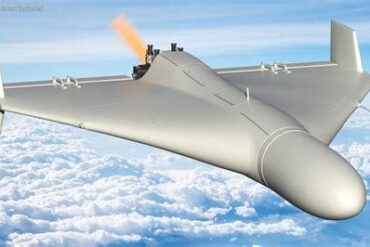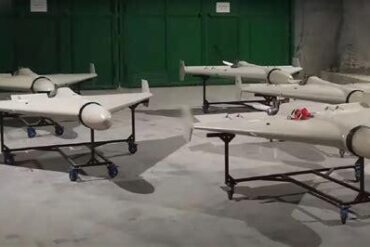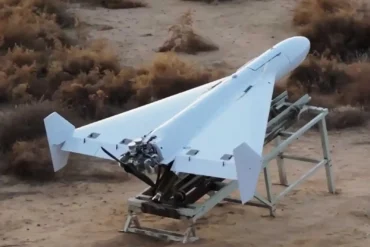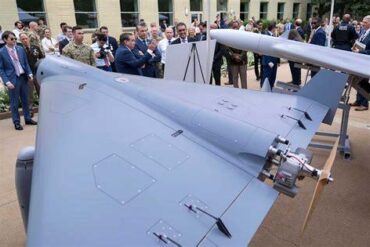
Russia has escalated its drone warfare capabilities by arming the Shahed-136/Geran-2 drone with the 9K333 Verba MANPADS, marking a bold new phase in low-cost aerial threats against Ukraine’s air assets. The move significantly expands the drone’s role beyond kamikaze strikes, integrating air-to-air capabilities that complicate existing defensive strategies.
Shahed-136 Turned Into Air Defense Threat
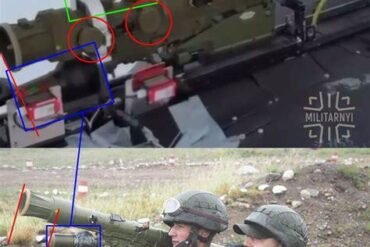
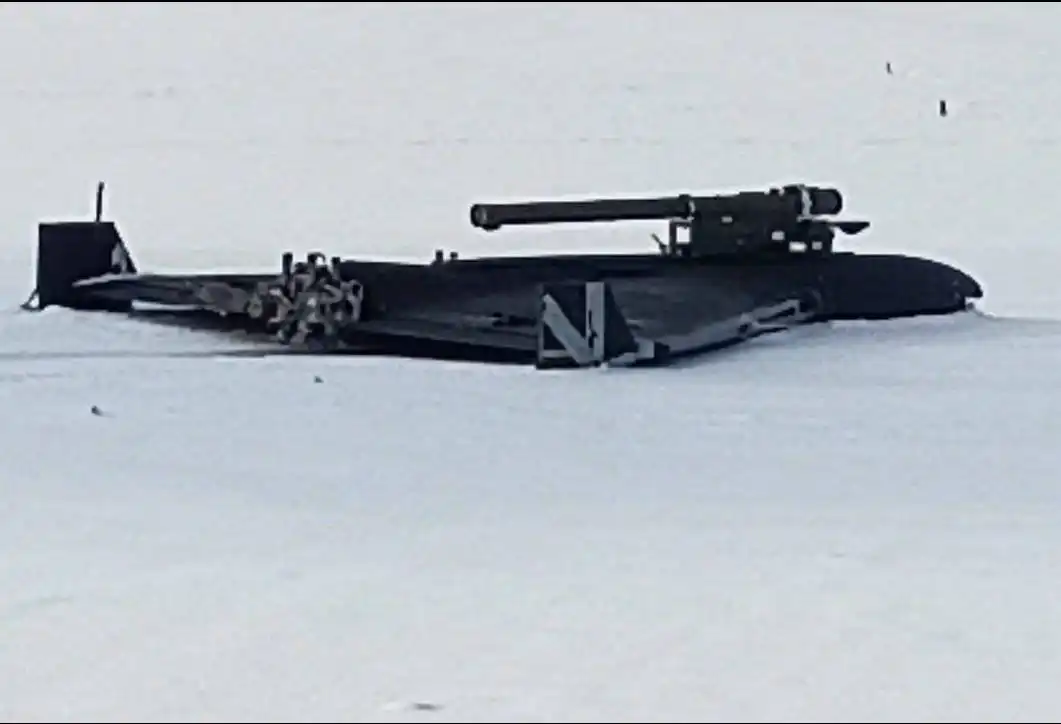
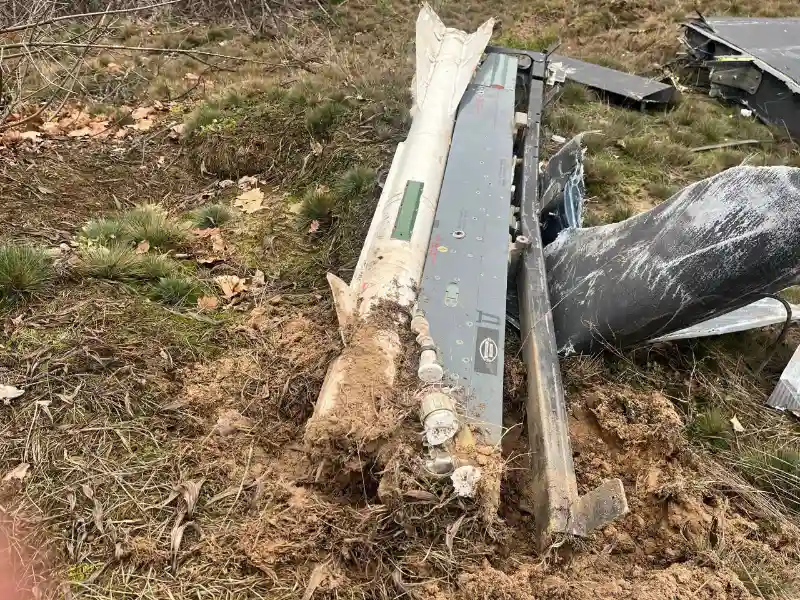
The nearly intact wreckage of a Shahed-136, modified into a veritable flying MANPADS platform, was recovered in the Chernihiv region of Ukraine. The images, shared by Ukrainian expert Serhii “Flash” Beskrestnov, reveal a drone equipped with the Verba MANPADS launcher, identifiable by the transport-launch container (9K333/9P521) and visual differences from previous-generation Igla tubes.
The Verba system, a fourth-generation Russian man-portable air defense system, was designed to replace the legacy Igla. Since 2015, it has been in use across Russia’s motorized rifle brigades, airborne troops, and tank units. This system has seen extensive combat throughout the Ukraine conflict, used effectively against a wide range of airborne targets.
Lethality of the Verba: Multispectral Missile Capabilities
At the heart of the Verba system is the 9M336 missile, distinguished by its tri-spectral optical seeker combining ultraviolet, near-infrared, and mid-infrared sensors. This configuration dramatically improves target verification, enabling the system to resist jamming and evade decoys like flares. Compared to its predecessors, the Verba offers tenfold better resistance to electronic countermeasures, making it uniquely suited for hostile environments.
This is the first documented instance of a Shahed-136 equipped with a MANPADS. The modified drone reportedly features remote control capability via a mesh radio modem and carries a front- or rear-mounted camera, providing Russian operators the ability to visually guide it from a distance. This level of real-time control allows operators to fly the drone into optimal range for the Verba to lock onto aerial targets.
Tactical Implications: Aerial Denial and Pilot Risk
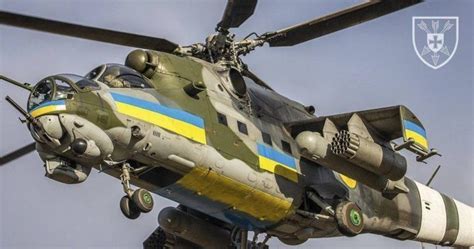
Russia’s innovation changes the rules of engagement for Ukrainian air operations. By arming a slow-flying kamikaze drone with a heat-seeking missile, the Shahed-136 becomes a dual-purpose weapon—a loitering munition capable of both suicide attacks and anti-air warfare. This hybrid capability may particularly threaten rotary-wing aircraft like the Mi-8 and Mi-24 helicopters, often forced to fly lower due to Russian air superiority from fighters like the Su-35.
Even fixed-wing aircraft may not be immune. The uncertainty around which Shahed drones are armed—whether with Verba MANPADS or earlier R-60 air-to-air missiles—compels Ukrainian pilots to adopt more conservative tactics. The psychological and tactical pressure alone creates a strategic win for Russia.
From R-60 to Verba: A Growing Arsenal
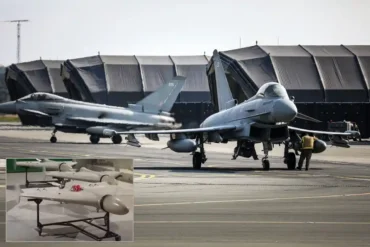
This Verba integration follows Russia’s late 2025 experiment with attaching Soviet-era R-60 (AA-8) missiles to Geran-2 drones. While the R-60’s 44-kilogram weight and 2.1-meter length make it a feasible loadout, the Verba offers several advantages:
- Simplified integration: Unlike the R-60, which required an adaptor launch rail, the Verba can be mounted using its native launch tube.
- Reduced weight: The lighter MANPADS better aligns with the Shahed’s limited payload capacity.
- Operational flexibility: Easier deployment from varied platforms and swifter adaptation in field conditions.
Still, the two systems may not be mutually exclusive. Russian forces might deploy a mix of both, further muddying the waters for Ukrainian defense planners.
Infrared LED Flashlights: Blinding the Opposition
In a separate but related development, Shahed-136 drones have been spotted equipped with rear-facing infrared LED flashlights, designed to disrupt night vision optics. These lights aim to blind both manned helicopter pilots and interceptor drones reliant on infrared sensors.
Serhii Beskrestnov described one such drone in Telegram posts, noting it as the first sighting of this kind. Military commentators suggest that while basic interceptors using simple IR guidance could be blinded, high-end interceptors with thermal imaging systems would be unaffected—though such systems are more expensive.
Escalating Drone Modifications and Their Strategic Roles
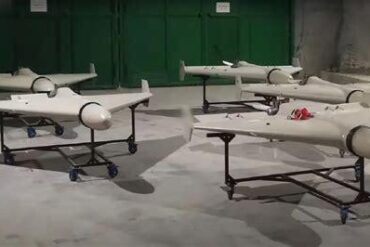
The Shahed-136, known as Geran-2 in Russian service, has evolved from a one-way attack drone into a multi-mission platform. Its upgrades include:
- Electro-optical sensors for reconnaissance.
- Radio modem control enabling real-time maneuvering.
- Infrared flashlights for countering interceptors.
- Integration with missiles, from Verba to R-60.
These modifications are not just cosmetic or experimental—they are battlefield-tested tools aimed at stretching Ukraine’s air defenses to the limit. The Geran-2 is now part of a larger drone ecosystem, working in swarms with others configured for electronic warfare, ELINT, and decoy operations.
Russian Innovations in Drone Warfare
Russia has showcased a persistent focus on low-cost, high-impact warfare technologies, particularly through drone adaptations. Recent variants include:
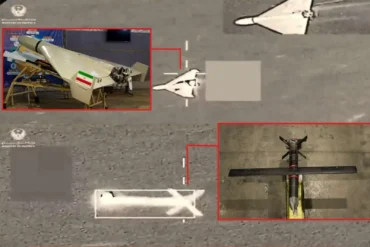
- Shahed-236: A jet-powered version offering faster strike capabilities.
- Shahed-107: A reconnaissance and strike drone tailored for high-value target elimination.
The mass production of Shahed-136 drones under Russian license, with substantial modifications, underscores Moscow’s intention to reduce reliance on expensive cruise or ballistic missiles. Their use in overwhelming Ukraine’s air defenses through volume saturation and variant unpredictability is an effective, asymmetric approach.
Countermeasures and Future Implications
Ukrainian forces must adapt quickly. Ukrainian helicopters reportedly shoot down up to 40% of drones in some regions. But the addition of Verba missiles and counter-optic flashlights may erode this advantage.
To counter these emerging threats, Ukraine may need to:
- Upgrade interceptor drones with thermal imagers immune to basic IR interference.
- Shift from manned aircraft to standoff drone-based interception.
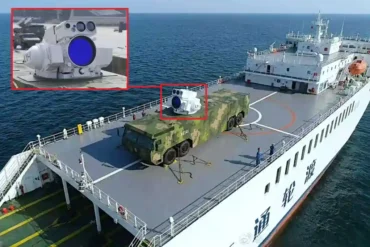
- Increase usage of ground-based STING interceptors or laser-guided anti-drone systems.
But these responses come at a cost. For every high-end sensor added to interceptors, the cost-benefit ratio shifts—a key strategic goal for Russia. By forcing Ukraine into higher expenditure for every dollar it spends, Russia leverages economic warfare through tactical innovation.
Conclusion: A New Era of Drone-Delivered Air Defense
The appearance of a flying MANPADS platform in the form of a Shahed-136 armed with Verba missiles is more than a battlefield curiosity—it is a harbinger of low-cost air dominance tactics. Russia is effectively turning disposable drones into multi-role aerial threats, capable of recon, disruption, and now, interception.
By integrating infrared countermeasures, radio control, and precision MANPADS, Moscow has blurred the line between suicide drone and combat drone. As the Ukraine war progresses, we are likely to see even more hybrid aerial weapons, tailored not for technological elegance but for maximum battlefield utility at minimum cost.
These developments not only challenge Ukrainian defenses but also set a precedent for future drone warfare globally. If the Shahed-136 can carry Verba today, what will the next battlefield drone carry tomorrow?