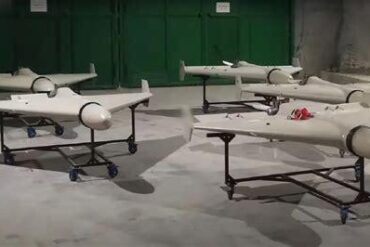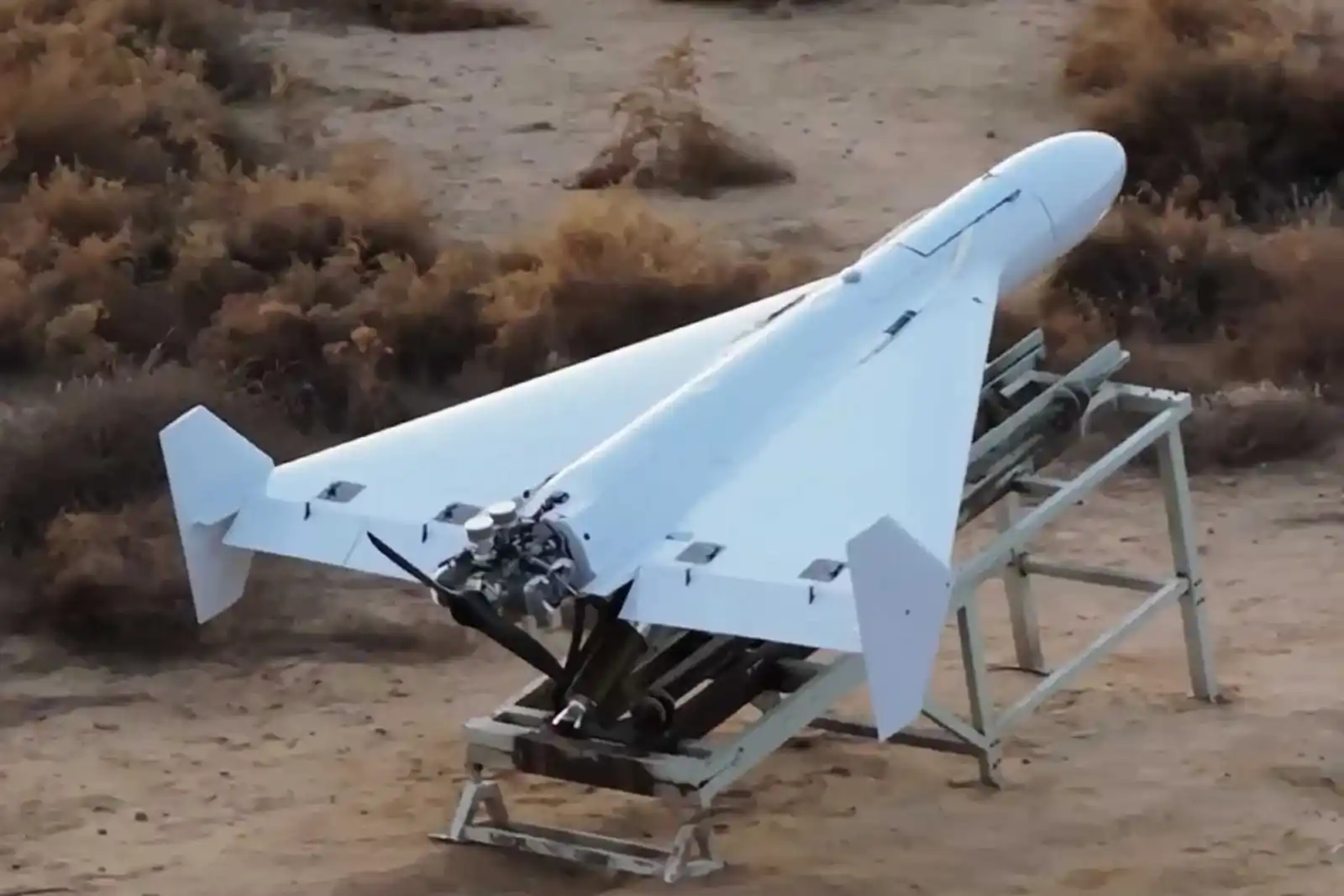
China has entered a new phase of long-range drone development with the Loong M9, a heavy loitering munition that mirrors the aerodynamic philosophy and mission logic of Iran’s Shahed-136, the platform that reshaped modern low-cost precision warfare. Recent testing activity, reported on December 2, 2025, highlights how China is expanding its portfolio of strike-optimized UAVs designed for deep penetration, extended surveillance, and mass-production scalability.
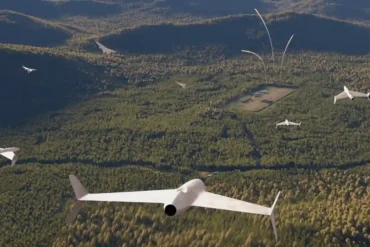
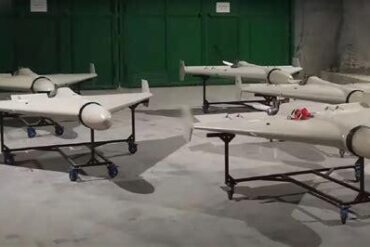
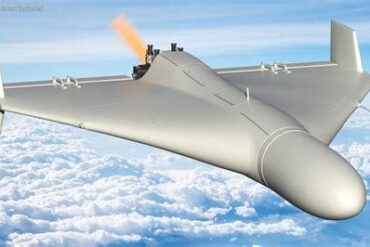
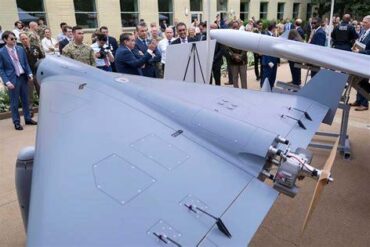
The M9 carries the familiar silhouette that has become globally recognizable since the Shahed series appeared in conflicts from Yemen to Ukraine: a delta wing, a rear pusher propeller, and an airframe engineered for long endurance rather than maneuverability. With a 2.5-meter wingspan, 3.5-meter fuselage, 200-kg maximum takeoff weight, and 8–9 hours of endurance, the drone positions itself squarely within the heavy loitering munition category, meant to fly deep, strike hard, and do so at a fraction of the cost of traditional cruise missiles.
Its structure is built through carbon-fiber integrated molding, keeping the airframe light yet stiff, while mild rain resistance and an operating range between –25°C and 60°C allow deployments across diverse climates. A 108-liter fuel tank pushes the M9 to a maximum range of 1,620 km, making it suitable for the same category of long-range harassment, attritional strike campaigns, and infrastructure attacks for which the Shahed-136 has become infamous.
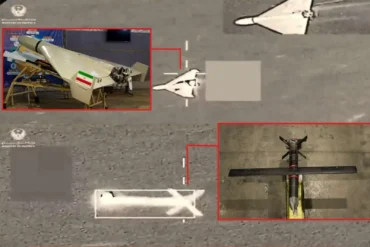
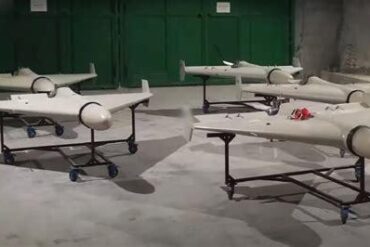
The Shahed-136 succeeded not through sophistication but through elegant minimalism: a simple gasoline engine, basic navigation, and a warhead of roughly 40–50 kg in a 200-kg body. China’s Loong M9 embraces this proven formula but adds enhancements that reflect China’s growing drone-industrial base.
A 550 cc EFI engine, 33-inch propeller, and fuel use of 10–12 liters per hour keep the M9 inexpensive to operate, while a climb rate of 5 m/s, cruise at 53 m/s, and tolerance for Level 7 winds broaden its operational reliability. The drone’s minimum turning radius of 450 meters and fixed-coordinate strike mode support predictable flight profiles—ideal for massed swarm tactics.
The platform supports a 50-kg internal payload bay, allowing flexible warhead options or reconnaissance hardware. Its dual visible-light seeker and sensor-guided attack module enable approach angles ranging from 15° to 70°, giving planners multiple strike geometries depending on target type.
Advanced Guidance for Electronic Warfare Environments
Where the Shahed-136 relies heavily on GPS and inertial navigation, the M9 adds a suite of anti-interference capabilities. These include no-GPS return, GPS-free hovering, and a hardened datalink using broadband frequency hopping. China has prioritized resilience against electronic warfare, clearly informed by the high interception and jamming environment seen in Ukraine.
Reconnaissance variants carry a wide-angle telephoto infrared camera enhanced by an AI Super Night Scene mode—an AI-supported night-operation toolkit. Loong also advertises unusual functions such as “shouting and throwing,” likely referencing onboard audio broadcast systems or lightweight payload release, suggesting non-traditional mission applications ranging from psychological operations to leaflet drops.
The Broader Context: China’s Expanding Shahed-Derived Ecosystem
The Loong M9 is one among a rapidly expanding fleet of Chinese drones modeled on or inspired by the Shahed-136. China has already fielded systems such as the ASN-301, DFX-50, DFX-100, PD2900, Feilong-300D, and Sunflower-200, all fitting into similar mission categories.
Loong UAV itself produces an extensive catalog: the Loong 8T for gun-sight reconnaissance, Loong 5H and Loong 15 for combat attack roles, and the M-series suicide drones including the M2, M5 5000, and M10. The strategy mirrors that of major drone manufacturers worldwide—modular families of UAVs that can be produced at scale for both domestic and export markets.
Why Countries Keep Imitating the Shahed-136
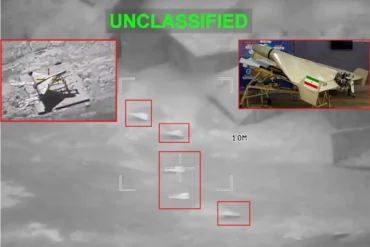
The Shahed-136 forced a global rethink not because it introduced a new technology, but because it rebalanced the cost equation of warfare. With a modest engine, basic materials, and simple guidance, the system provides long-range precision at a cost dramatically lower than traditional standoff weapons.
Its success in Ukraine highlighted its grim efficiency: inexpensive drones compelling defenders to waste expensive interceptors, creating unsustainable economic asymmetry. Even when intercepted, the cumulative effect of mass swarms erodes air-defense readiness and inflicts psychological pressure.
This practicality ignited global replication. Russia mass-produces the Geran-2; the United States developed the MQM-172 Arrowhead and LUCAS; Poland built the PLargonia; Saudi Arabia introduced the X-1500; Turkey developed the Azab series; and North Korea, Egypt, India, and Belarus all showcased similar systems.
Strategic Implications: The Loong M9 as a Tool of Modern Attritional Warfare
The introduction of the Loong M9 reinforces a military reality accelerated by the Shahed’s global proliferation: the democratization of long-range precision attack. Countries without advanced air forces or missile industries can now field meaningful strike capabilities using inexpensive, expendable platforms.
China’s M9, with its emphasis on endurance, hardened guidance, and payload versatility, is poised to serve not only as a strike system but as a training target for air-defense forces preparing to counter Shahed-style attacks. This dual-use role mirrors trends in the United States and Europe, where militaries urgently require both the ability to launch loitering munitions and the ability to practice defending against them.
As mass-production loitering munitions become central to long-range attrition strategies, the Loong M9 marks another step in a global shift toward quantity-driven, economically asymmetric warfare. The platform’s emergence strengthens China’s position in a rising international drone arms race—one defined less by cutting-edge sophistication and more by scalable lethality and industrial momentum.