The devastating impact of Iran’s Shahed-136 drones in Ukraine has catalyzed a strategic shift in European military thinking. In a significant development unveiled at the Paris Air Show, missile manufacturer MBDA introduced a new class of low-cost, jet-powered, expendable drones dubbed the One-Way Effector, designed to replicate and advance the asymmetric saturation tactics seen on the Eastern Front. As the need for scalable, mass-deployable munitions becomes more urgent, Europe is preparing to meet this challenge head-on.
Inspired by Ukraine’s Reality: The Rise of Shahed-Style Warfare
Since September 2022, Russian forces have relentlessly deployed Shahed drones—Iranian-designed, long-range, one-way attack platforms—against Ukrainian infrastructure, cities, and military assets. Operating in swarms, these drones are not only destructive in themselves but are used to overwhelm air defense systems, clearing a path for more precise cruise and ballistic missiles.
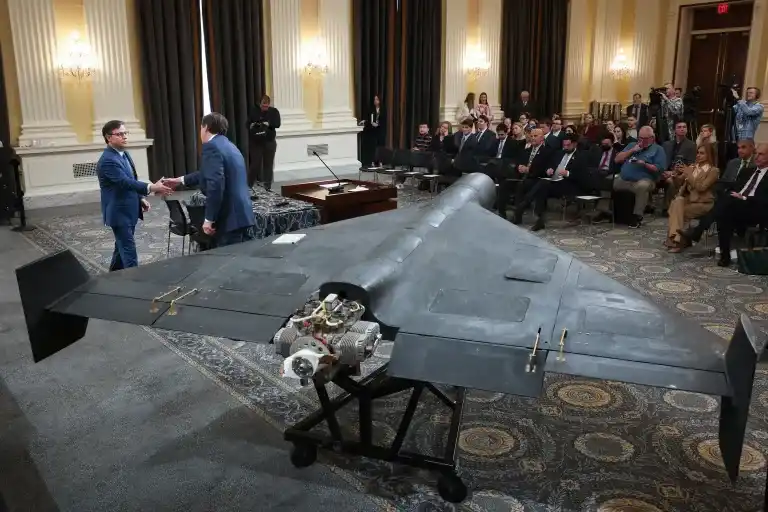
The effectiveness of this saturation tactic has resonated deeply within Western military planning circles. MBDA’s One-Way Effector is a direct response, aimed at enabling European forces to mirror such high-volume, cost-effective aerial tactics with greater sophistication and speed.
MBDA’s One-Way Effector: Engineering Saturation at Scale
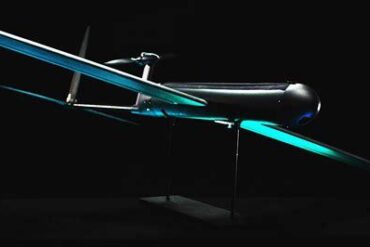
Revealed at the Paris Air Show, the One-Way Effector is an expendable drone roughly 10 feet long, developed with the intention to saturate enemy air defenses and increase the penetration success of more advanced and costly weapon systems. While its final name is yet to be decided, its mission profile and conceptual design are clear—create a weapon that is cheap, fast, and scalable.
“It’s relatively fast and carries a significant payload,” said Hugo Coqueret, business development manager for battlefield systems at MBDA. “Everything is designed to generate saturation.”
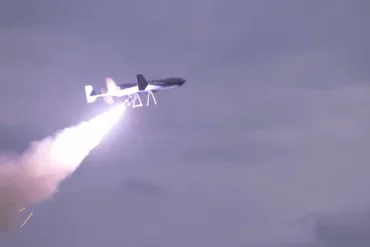
Unlike the propeller-driven Shahed, MBDA’s drone uses a jet engine, granting it speeds of up to 250 miles per hour, more than double that of its Iranian predecessor. Although its operational range—310 miles with an 80-pound warhead—is notably less than the Shahed-136’s estimated 1,000-mile reach, the One-Way Effector’s speed and launch flexibility significantly complicate enemy interception efforts.

Precision Without Stealth: Strategic Design Choices
MBDA has deliberately eschewed stealth in favor of simpler, mass-manufacturable architecture. Its composite body uses off-the-shelf components, including a warhead adapted from a 155mm artillery shell, keeping production costs low and build time short. This allows MBDA to pivot away from complex, high-cost systems in favor of volume-based tactical advantage.
Unlike modern autonomous drones with AI-driven swarm capabilities, the One-Way Effector operates in coordinated salvos. While lacking inter-drone communication, they will be launched in groups or ‘packs’, moving collectively toward their target and diluting the enemy’s defensive capacity through sheer numbers.
A New Era of Mass Warfare: Output Goals and Industrial Collaboration
MBDA’s push toward scalable drone warfare is not theoretical. With design work initiated as recently as December 2024, the manufacturer is already preparing for a first test flight by September or October 2025, with initial production planned for 2027, pending approval from France’s Direction Générale de l’Armement (DGA).
To meet ambitious output goals, MBDA is teaming up with an unnamed French automotive firm, aiming to produce up to 1,000 One-Way Effectors per month—a staggering leap from the 40 Mistral surface-to-air missiles it currently manufactures monthly.

This collaboration underscores a broader industrial pivot in European defense circles: leveraging civilian manufacturing capabilities to achieve military mass production, a tactic historically reserved for wartime mobilization. The use of automotive partners allows for streamlined logistics, modular part usage, and economies of scale previously unseen in missile and drone production.
Tactical Objectives: Overwhelming Modern Air Defense
The One-Way Effector’s development ties into a broader operational philosophy echoed across NATO and allied forces—combining expendable drones with high-value munitions to exhaust and penetrate layered air defense systems. In Ukraine, the Shahed-136 often precedes missile barrages, acting as a decoy and softener. Europe’s One-Way Effector is designed to serve a similar role but with greater speed and targeting precision.
Once launched from a ground ramp or vehicle, the drone uses GPS navigation to seek its designated target. MBDA’s vision is to field it as a complement to more advanced cruise missiles, ensuring that expensive, low-volume assets like SCALP-EG or Storm Shadow missiles have a clearer path to their objectives.
Strategic Implications: Shifting European Defense Posture
This development reflects growing European anxiety about future conflict scenarios. According to MBDA CEO Éric Béranger, the One-Way Effector is not just a response to Russian aggression—it is also a hedge against a possible future where U.S. military backing for NATO is diminished or more conditional. He described it as a “moment of truth” for the continent’s defense autonomy.
While MBDA is also working on air-launched swarming systems like Orchestrike, designed for AI-enhanced SPEAR missile coordination, the One-Way Effector represents a ground-launched complement with a simpler but vital role: restoring the principle of mass to modern European arsenals.
Beyond Explosives: The Future of Payload Flexibility
Although the current configuration uses an 80-pound kinetic warhead, MBDA is keeping its options open. Future iterations could include non-kinetic payloads such as electronic warfare modules or decoys, offering tactical flexibility on the battlefield and further blurring the lines between drones, cruise missiles, and stand-off munitions.
There are also indications that low-observable features, such as infrared signature reduction or radar-absorbent coatings, may be added in future variants. However, the central focus remains on mass affordability and operational reliability, not stealth.
Conclusion: A Tactical Revolution in European Defense
The unveiling of the One-Way Effector marks a profound inflection point for European military doctrine. With the hard-learned lessons from Ukraine shaping battlefield realities, MBDA’s jet-powered drone initiative is a clear declaration that Europe will no longer rely solely on precision and technological superiority—it will embrace mass, speed, and attrition as viable tools for 21st-century deterrence and warfare.
As global threats evolve and the cost of advanced munitions continues to soar, platforms like the One-Way Effector may not only balance the scales against peer adversaries but also redefine how future wars are fought: not just with fewer, better weapons—but with many, good enough ones.