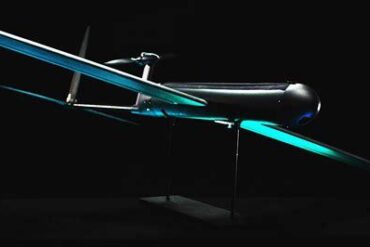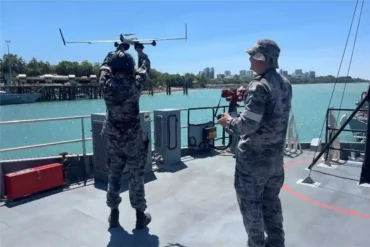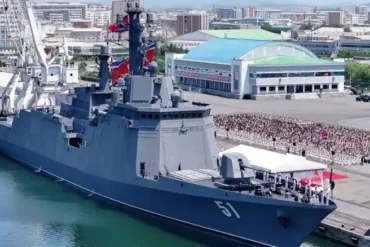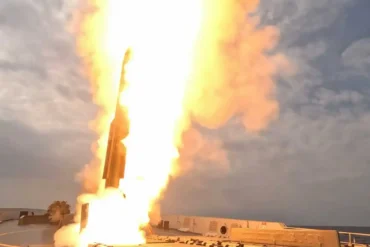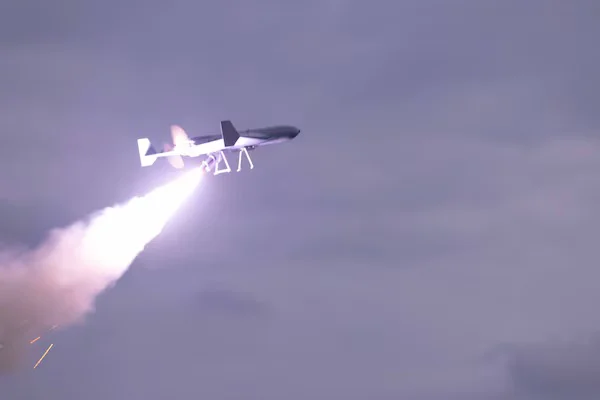
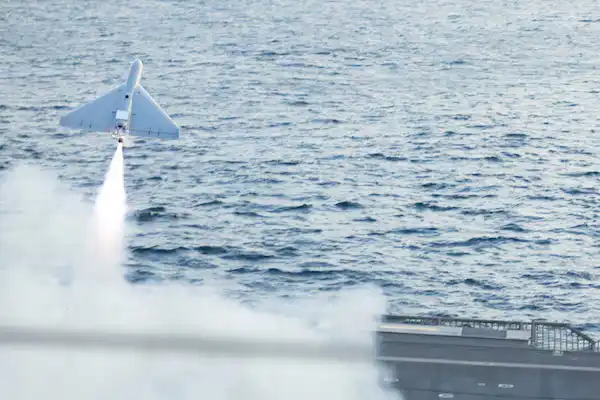
On December 16, 2025, the United States Navy entered a new era of naval warfare as the USS Santa Barbara successfully executed the first-ever launch of a one-way attack drone from a warship in open waters. This milestone took place in the strategically significant Persian Gulf, signaling not only technological advancement but a shift in maritime combat strategy. The drone, known as LUCAS (Low-cost Unmanned Combat Attack System), is modeled after Iran’s Shahed-136—a design that has gained international notoriety for its affordability and effectiveness.
The deployment of the LUCAS drone at sea marks a crucial progression in the U.S. Navy’s ongoing effort to adapt to the growing influence of unmanned aerial systems (UAS) on modern battlefields. This new capability introduces a tactical edge to maritime operations, offering disposable aerial firepower without risking human lives or high-value aircraft.
Strategic Significance and Command Endorsement
Vice Admiral Curt Renshaw addressed the launch in an official Navy press release, stating, “This platform will undoubtedly enhance regional maritime security and deterrence.” His remarks underscore the growing recognition among military leadership that drone warfare is now central to modern defense postures—especially in contested regions like the Middle East.
This development aligns with a broader White House initiative to bolster American drone capabilities. In June 2025, an executive order laid out a $1 billion commitment to drone technology across military branches. The December launch of LUCAS was not just a demonstration but a tangible step toward realizing that vision, solidifying America’s resolve to stay ahead in autonomous combat systems.
LUCAS Drone: Design and Tactical Purpose
The LUCAS drone was engineered to replicate the functional efficiency of one-way drones like the Shahed-136, which have been widely used in conflict zones for their low-cost lethality. LUCAS is designed for a singular mission: reach the target and self-destruct through onboard munitions. This means the drone requires no return route, simplifying the logistics of deployment and enabling commanders to act more decisively in time-sensitive scenarios.
While the Navy has not disclosed whether this particular launch involved a live payload or target, the successful flight test alone is a strong indicator of combat-readiness. The fact that the Marine Corps is also trialing the LUCAS system suggests that adoption could span multiple branches, further integrating unmanned attack drones into U.S. force doctrine.
The Evolution of One-Way Drone Warfare
The idea of kamikaze-style drones is far from new. As early as the 1940s, engineers experimented with converting aging bombers into remote-controlled explosive platforms. In these early iterations, a pilot would take off, eject mid-air, and let remote operators steer the aircraft toward its target using rudimentary TV cameras and radio signals.
The New York Times in 1946 reported on this phenomenon as part of the growing trend toward “push-button war,” reflecting the earliest glimmers of today’s drone combat philosophy. Over the decades, the technology has evolved dramatically—from analog circuits and propeller planes to AI-enhanced, GPS-guided unmanned systems that can autonomously identify and strike.
Global Trends and the U.S. Response
A significant motivation behind the LUCAS program is the rapid international proliferation of combat drones. According to the Institute for Economics and Peace, drone strike fatalities surged to over 3,000 globally in 2023—a 168% increase over five years. Meanwhile, annual drone strikes jumped from 421 to nearly 5,000, underlining the role of drones in redefining global military engagements.
Defense Secretary Pete Hegseth has publicly emphasized the U.S. strategy of working with domestic manufacturers to produce competitive, cost-effective drones that match the capabilities of those used by countries like Russia and Israel. The overarching goal is clear: to maintain strategic parity—or superiority—in the increasingly drone-dominated theaters of war.
Future Implications for Naval Warfare
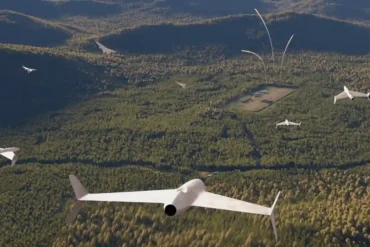
The USS Santa Barbara’s successful test of LUCAS signals a future where naval vessels may routinely deploy swarms of autonomous drones, extending their offensive and surveillance reach far beyond the horizon. Unlike traditional aircraft launches, these systems can be operated with minimal crew and logistical support, making them ideal for both high-risk missions and distributed lethality operations.
As drone warfare continues to evolve, the U.S. Navy’s ability to launch, coordinate, and weaponize unmanned aerial platforms from sea will serve as a key differentiator in global military readiness. The LUCAS launch may be just the beginning, but it represents a decisive leap into a new chapter of tactical autonomy and maritime supremacy.