On July 29, 2025, India marked a critical milestone in its defense modernization strategy with the successful completion of user evaluation trials for the Pralay ballistic missile, officially clearing the final hurdle toward mass production. The Defence Research and Development Organisation (DRDO) conducted two consecutive launches on July 28 and 29 from Dr APJ Abdul Kalam Island, located off India’s eastern coast in Odisha. Both tests were executed under User Evaluation Trials (UETs) and validated the missile’s full operational spectrum, from minimum to maximum range.
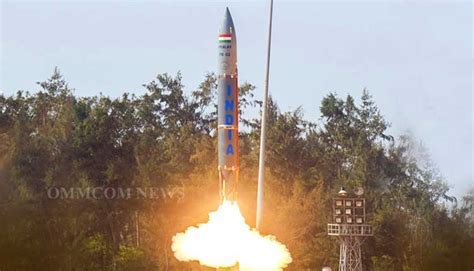
The missiles followed their quasi-ballistic trajectories precisely, impacting their intended targets with high accuracy. The DRDO confirmed that all onboard subsystems performed optimally, with data collected through advanced tracking sensors both on land and on naval platforms positioned near the Bay of Bengal’s impact points. These tests concluded Phase-1 of the missile’s trial program, signifying its readiness for induction into India’s operational arsenal.
Strategic Context: India’s Push for Conventional Deterrence
The development of the Pralay missile stems from a strategic need to enhance India’s conventional missile deterrence capabilities, independent of its nuclear doctrine. Initiated in March 2015, the project was sanctioned with a budget of ₹332.88 crore, later revised to approximately ₹502 crore or $59 million USD in 2023 valuations. Unlike India’s no-first-use nuclear posture, the Pralay missile is intended for battlefield use, filling a critical tactical void in the country’s missile matrix.
The missile program brings together a host of indigenous technological breakthroughs. Built by DRDO’s Research Centre Imarat (RCI), it integrates design elements from both the Prithvi Defence Vehicle and Prahaar tactical missile systems. The missile’s solid propellant, developed by the High Energy Materials Research Laboratory (HEMRL), is the same high-energy formulation used in the Sagarika submarine-launched missile, marking an upgrade over the Agni-series propellant.
Technical Specifications: Hypersonic Reach and Precision
The Pralay missile is a solid-fueled, road-mobile, canisterized quasi-ballistic missile featuring two-stage propulsion. It weighs approximately five tonnes, measures between 7.5 and 11 meters in length, and has a diameter of up to 750 millimeters. Its operational range varies from 150 kilometers with a full payload to 500 kilometers with a lighter warhead, placing it firmly within the short-range battlefield missile category.
Key technical highlights include:
- Terminal velocity: Up to Mach 6.1
- Guidance systems: Inertial Navigation System (INS), radar imaging, and Digital Scene-Matching Area Correlation (DSMAC)
- Circular Error Probable (CEP): Less than 10 meters, with plans to reduce below 4 meters
- Warhead types: High-Explosive Preformed Fragmentation, Penetration-cum-Blast (PCB), Runway Denial Penetration Submunition (RDPS)
- Payload capacity: Between 350–1,000 kg, depending on mission profile
- Flight profile: Mid-course and terminal maneuvers, altitude oscillations, radar cross-section minimization
These capabilities make the Pralay missile exceptionally hard to detect, intercept, or neutralize mid-flight, thereby enhancing its survivability in contested environments.
User Trials and Development Timeline
The journey toward operational readiness has involved a rigorous test program that dates back to 2021. The maiden test was conducted on December 22, 2021, targeting a 400-kilometer range with precision. A follow-up trial the next day validated the missile’s maximum range of 500 kilometers while carrying a heavier payload. A third major trial on November 7, 2023, tested and confirmed the missile’s terminal guidance and control systems.
The recent July 2025 trials were aimed specifically at demonstrating the missile’s full range envelope under user-defined battlefield conditions. Data was captured using land-based radar and shipborne instrumentation from the Integrated Test Range (ITR) and analyzed to validate the missile’s subsystem integrity, trajectory control, and target impact accuracy.
These successful trials not only confirmed the system’s combat readiness but also marked the formal conclusion of its user evaluation phase, clearing the path for mass production and deployment.
Operational Deployment and Launch Platforms
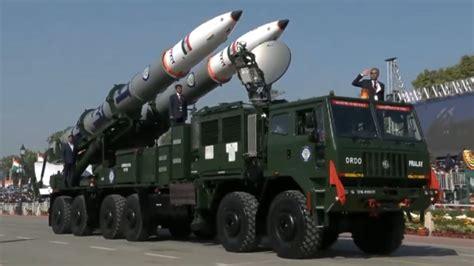
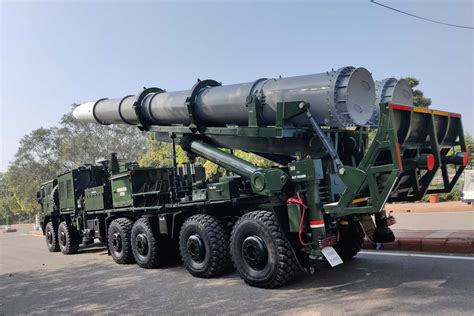
The Pralay missile is designed to be deployed via a twin-canister Transporter Erector Launcher (TEL) mounted on an Ashok Leyland 12×12 high-mobility vehicle. This platform supersedes older Czech-made Tatra systems and incorporates:
- Launcher arm articulation system
- Jet deflector and heat shielding
- Integrated command and communication suite
- Extendable radar mast
Its road-mobile nature allows rapid repositioning and high flexibility in launch operations. The missile system is engineered for quick reaction timelines — less than 10 minutes from deployment to launch, and under 60 seconds from command to fire.
Procurement has already been approved for both primary military branches. In December 2022, the Indian Air Force received clearance for 120 missiles, while the Indian Army was granted a regiment-sized order of 250 missiles in September 2023. These acquisitions are expected to reinforce India’s tactical response capabilities along sensitive fronts — especially the Line of Actual Control (LAC) with China and the Line of Control (LoC) with Pakistan.
Export Potential and Strategic Partnerships
India has also cleared the export version of Pralay, capped at a 300 km range and 500 kg payload to comply with Missile Technology Control Regime (MTCR) norms. Among potential buyers, Armenia has shown keen interest and is reportedly in advanced procurement talks. This follows earlier defense transactions including Swathi weapon-locating radars and M982 Excalibur precision shells.
By opening Pralay to global markets, India is positioning itself as a credible exporter of high-end conventional weapons, while deepening defense ties with partner nations beyond its immediate neighborhood.
Guidance and Survivability Enhancements
One of Pralay’s most compelling features is its advanced guidance and control suite. The missile utilizes:
- Inertial Navigation System (INS) for mid-course corrections
- Radar imaging and DSMAC seeker for terminal phase accuracy
- Jet vane thrust vectoring for directional adjustments
- Fused silica radome to house the seeker system
Additionally, aerodynamic fins help minimize radar signature and enhance trajectory stability. These features collectively ensure low radar detectability, high maneuverability, and minimal deviation from intended targets, even in hostile electronic warfare environments.
Integration with India’s Tactical Missile Doctrine
The Pralay missile is a centerpiece in India’s effort to build a dedicated Integrated Rocket Force (IRF) — a proposed conventional missile command separate from the Strategic Forces Command responsible for nuclear assets. This aligns with India’s broader vision of establishing a multi-layered deterrence structure.
Within the IRF, Pralay will serve alongside systems like:
- BrahMos supersonic cruise missile
- Nirbhay subsonic cruise missile
- Pinaka multi-barrel rocket launcher
Its role is envisioned as providing rapid, high-precision retaliatory capabilities in response to conventional provocations, especially across contested borders where limited engagements could escalate if not addressed proportionally. The missile’s quick-launch capability, low collateral damage, and deep penetration ability make it ideal for targeting enemy infrastructure, airbases, and command hubs.
Wider Missile Ecosystem and Future Roadmap
India’s missile ecosystem is expanding rapidly. In parallel with Pralay, DRDO has achieved several breakthroughs in 2025 alone:
- ULPGM-V3, a UAV-launched precision missile for varied terrain and weather conditions
- Mobile SHORAD (Short-Range Air Defence) systems in Karnataka
- Extended Range Pinaka launcher procurements
- Agni-I and Prithvi-II operational trials validating nuclear readiness
- ET-LDHCM (Extended Trajectory Long Duration Hypersonic Cruise Missile) under Project Vishnu, achieving speeds above Mach 8
- Continued work on the K-5 and K-6 SLBMs (Submarine-Launched Ballistic Missiles) with MIRV and hypersonic capabilities
- Ongoing tests for Rudram-2 and Rudram-4, expanding India’s air-to-surface missile portfolio
These developments collectively indicate a strategic emphasis on speed, precision, and survivability in both offensive and defensive missile systems.
Conclusion: A Turning Point in India’s Tactical Readiness
The successful conclusion of the Pralay missile trials represents more than just a technological achievement. It symbolizes a pivotal transformation in India’s conventional warfare posture, equipping its military with the tools to execute fast, precise, and scalable conventional strikes without crossing the nuclear threshold.
As India finalizes mass production and integrates Pralay into its armed forces, the country inches closer to realizing a robust, multi-domain deterrence architecture capable of addressing the security challenges of the 21st century. With its mix of advanced propulsion, guidance, maneuverability, and exportability, the Pralay missile stands as a cornerstone of India’s tactical missile modernization drive and a testament to its growing strategic autonomy.