The geopolitical stakes in Eastern Europe may soon escalate as President Donald Trump reportedly considers authorizing the transfer of AGM-158 Joint Air-to-Surface Standoff Missiles (JASSM) to Ukraine. This move, if finalized, would mark a significant leap in Kyiv’s long-range precision strike capabilities, particularly when integrated with the much-anticipated F-16 multirole fighters set to be deployed across the Ukrainian Air Force.
The decision, revealed by sources familiar with U.S. weapons transfer deliberations and reported by Military Watch Magazine, could open a new chapter in the West’s military support for Ukraine. It follows Trump’s recent reaffirmation of U.S. commitment to Ukraine’s defense, including the provision of another Patriot missile defense battery, and comes amid concerns about depleting European cruise missile stockpiles.
Strategic Significance of the JASSM for Ukraine’s F-16 Fleet
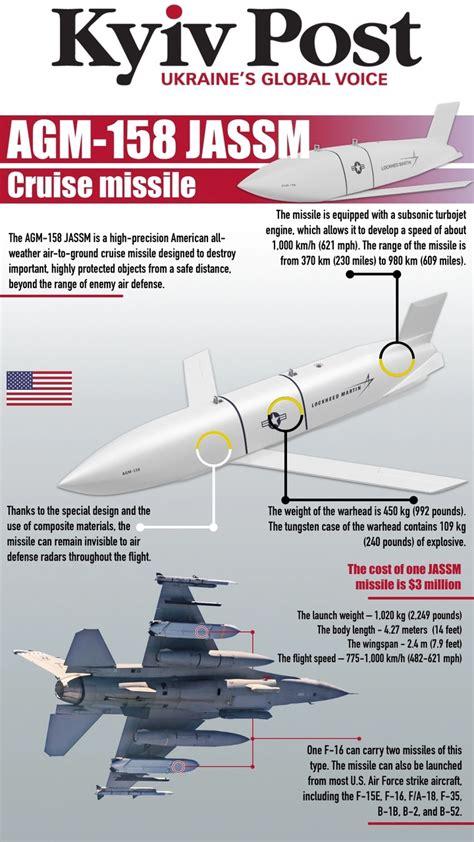
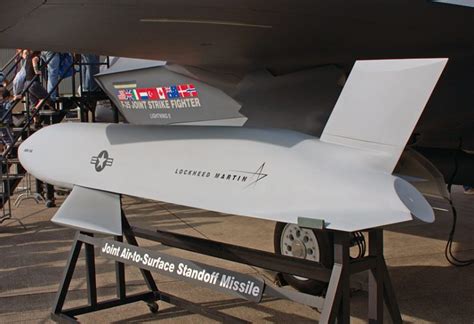
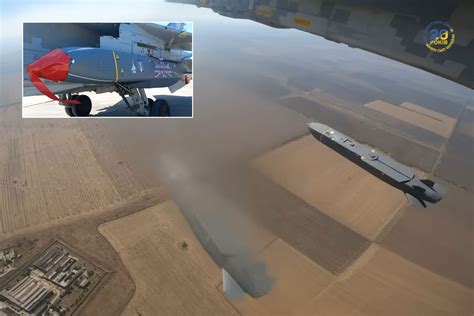
The AGM-158 JASSM is a long-range, low-observable cruise missile developed by Lockheed Martin. Operational since 2003, the missile is engineered for deep strike missions, evading sophisticated air defense systems while delivering a devastating payload. Featuring a 450-kilogram penetrator/blast fragmentation warhead and a range of up to 370 kilometers in its baseline variant—and well over 900 kilometers for the extended-range (JASSM-ER) model—the missile is guided by GPS/INS systems with terminal infrared homing, ensuring precision even in contested environments.
For Ukraine, the arrival of the JASSM would transform the combat utility of its Cold War-era F-16s, which are being transferred from NATO member states. Despite being older airframes, these aircraft—once equipped with standoff weapons like the JASSM—could deliver crippling strikes on high-value Russian targets without entering heavily defended airspace.
This dynamic creates a strategic paradox: aging aircraft platforms repurposed as 21st-century precision strike vehicles, enabled by Western missile technology.
From Storm Shadow to JASSM: Evolution of Ukraine’s Cruise Missile Arsenal
Ukraine has already demonstrated ingenuity and adaptability in arming its Soviet-era aircraft with modern Western munitions. The successful integration of British Storm Shadow and French SCALP EG cruise missiles onto Su-24M bombers proved a game-changer in Ukraine’s operational repertoire. These missiles have struck logistics hubs, bridges, and airbases in occupied territories and even inside Russia itself.
However, European missile stockpiles are under strain. Reports from defense analysts indicate that the UK and France are reluctant to exhaust their limited stocks of high-value standoff munitions. This logistical shortfall has amplified appeals for the U.S. to step in and fill the void with the JASSM, which has seen mass production and continuous upgrades over two decades.
A Technological Edge: The AGM-158’s Stealth and Lethality
What sets the JASSM apart is not just its range, but its survivability. Designed with low radar cross-section (RCS) shaping and jam-resistant guidance, the missile is intended to punch through layered air defense networks like Russia’s S-300 and S-400 systems. Its subsonic speed, in combination with terrain-following flight and autonomous targeting capability, gives it a high probability of successful mission completion.
Critically, the missile’s warhead—capable of penetrating reinforced bunkers or hardened facilities—makes it ideal for decapitating command nodes, ammunition depots, and radar installations. These strategic targets lie deep inside Russian-controlled territory, far beyond the reach of conventional artillery or drone systems currently employed by Ukrainian forces.
Export Sensitivities and the Political Gamble
Historically, the United States has enforced strict export controls on the JASSM. Only a handful of nations have acquired it: Poland, Finland, Australia, and South Korea, with the latter’s original request in the early 2010s initially rejected. Poland’s acquisition of 110 missiles for its F-16s was seen as a major strategic deterrent.
That Washington is even considering exporting such a high-value asset to Ukraine marks a significant departure from past norms. It signals both heightened confidence in Ukrainian capabilities and a growing willingness to escalate support amid a protracted and increasingly high-tech conflict with Russia.
Trump’s Strategic Calculus and the 2025 Re-election Optics
President Trump’s reconsideration of the JASSM transfer comes at a time of heightened domestic and international scrutiny. With the 2025 U.S. presidential election looming, Trump has positioned himself as a champion of American strength abroad, but also as a pragmatist regarding long-term military entanglements.
The announcement of a new Patriot battery earlier this month and hints at additional systems—including the JASSM—are likely part of a broader narrative to project U.S. technological dominance while delivering results that can be showcased on the campaign trail. Notably, Senator Lindsey Graham, a vocal advocate for Ukraine, recently predicted that U.S. military aid will reach record levels, suggesting a coordinated effort within Trump’s circle to drive major security assistance milestones.
F-16 Operational Considerations and Launch Doctrine
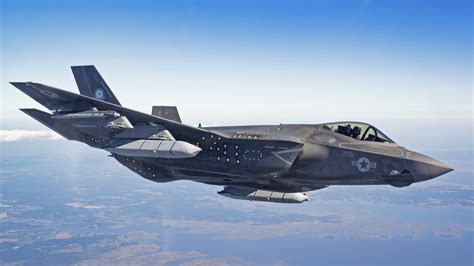
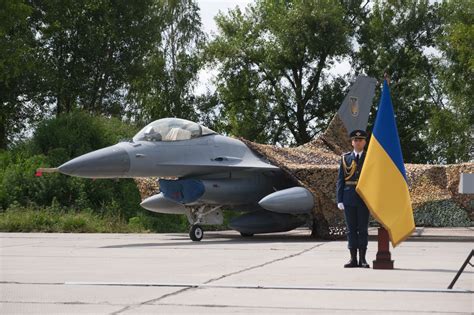
Ukraine’s upcoming F-16 squadrons, expected to enter service by late 2025, are being sourced primarily from Denmark, Norway, and the Netherlands. These aircraft, while not the latest variants, are capable of launching the AGM-158 with necessary upgrades to avionics and weapons control systems.
Ukrainian pilots are undergoing intensive training in Europe and the U.S., not only for air combat but also precision strike tactics using Western munitions. Sources close to NATO planning suggest that F-16s armed with JASSMs would operate from fortified airbases in western Ukraine, far from the front lines, leveraging the missile’s long range to strike at strategic targets deep within enemy-held territory.
Escalation Risks and Kremlin Reactions
While Ukraine stands to benefit immensely, the potential transfer of JASSMs raises serious escalation risks. Russian officials have repeatedly warned that the introduction of long-range strike weapons capable of reaching beyond Crimea or into Russia’s interior would constitute a “red line.”
Moscow’s past responses to Western arms transfers have included retaliatory missile strikes, cyber operations, and diplomatic pressure campaigns. A senior Russian defense analyst quoted in Izvestia stated that the deployment of JASSMs “will necessitate a proportional military response, possibly including the forward deployment of hypersonic weapons.”
The stakes are high, but so are the strategic gains. As Ukraine seeks to break the stalemate on the front lines and target the logistical arteries of Russian forces, JASSM-equipped F-16s could alter the operational balance in ways not seen since the introduction of HIMARS in 2022.
Future Outlook: Toward a New Doctrine of Deterrence
If President Trump moves forward with the JASSM transfer, it will not merely represent a new capability for Ukraine—it would redefine the future of coalition-enabled warfare. A war that began with rifles and Soviet tanks is evolving into a contest of AI-enabled drones, stealth cruise missiles, and precision airpower. In that context, the F-16/JASSM pairing becomes more than a tactical upgrade—it is a symbol of a modernized Ukrainian military entering a new strategic era.
The decision could set a precedent, prompting other U.S. allies to reconsider their own restrictions on advanced weapons transfers. It also raises the question of what further technological thresholds Washington may be willing to cross as the war grinds into its third year.
In the fog of a grinding attritional war, range, stealth, and precision are becoming decisive factors. If approved, the JASSM missiles could deliver exactly that—reshaping Ukraine’s battlefield options and sending a powerful signal about America’s enduring influence in the European security architecture.