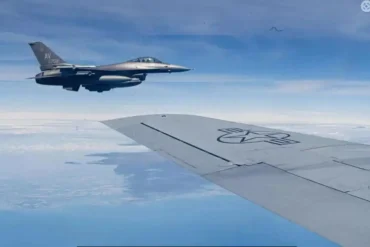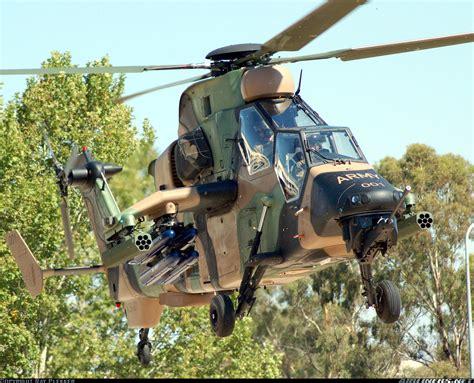
Australia is weighing a landmark decision that could see Tiger ARH attack helicopters delivered to Ukraine, marking the first transfer of Western-built attack helicopters to Kyiv since the beginning of the war. The move forms part of a broader, $95 million Australian assistance package that blends new military aid with fresh sanctions targeting Russia’s shadow tanker fleet. Canberra’s deliberations signal a pivotal moment in its own aviation transition while offering Ukraine a potential new asset in its evolving air-defense and reconnaissance architecture.
The Albanese government is assessing whether its retiring fleet of Tiger Armed Reconnaissance Helicopters should be shipped to Ukraine as part of a growing military support strategy. According to national reporting, the helicopters are being considered alongside Australia’s expanded contributions to NATO-managed acquisition programs, new tactical air-defense radars, combat engineering systems, and drone capability initiatives.
Australia has committed more than $1.7 billion in total support to Ukraine since 2022, including $1.5 billion in military assistance—armored vehicles, loitering munitions, E-7A Wedgetail surveillance deployments, and RBS 70 air-defense systems among them. Parallel to this, the government has sanctioned 45 vessels connected to Russia’s shadow oil network in an effort to strain Moscow’s revenue streams. Viewed together, the aid and sanctions form a cumulative strategy, and the Tiger transfer is being treated as a significant standalone component rather than a symbolic gesture.
The Tiger ARH: Australia’s Retiring Attack Helicopter Fleet
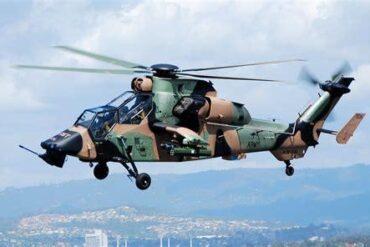
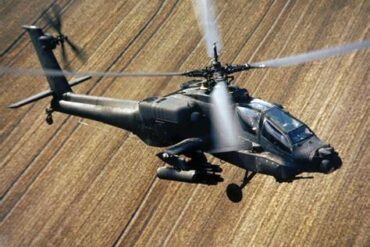
Fielded in 2004, the Tiger ARH fleet of 22 helicopters is scheduled for full retirement by 2028. Canberra’s aviation roadmap involves transitioning to 29 AH-64E Apaches, with the first aircraft delivered in late 2025 and full operational entry expected by 2029. If Ukraine receives the Tigers, Australia may accelerate the drawdown to free airframes earlier than planned.
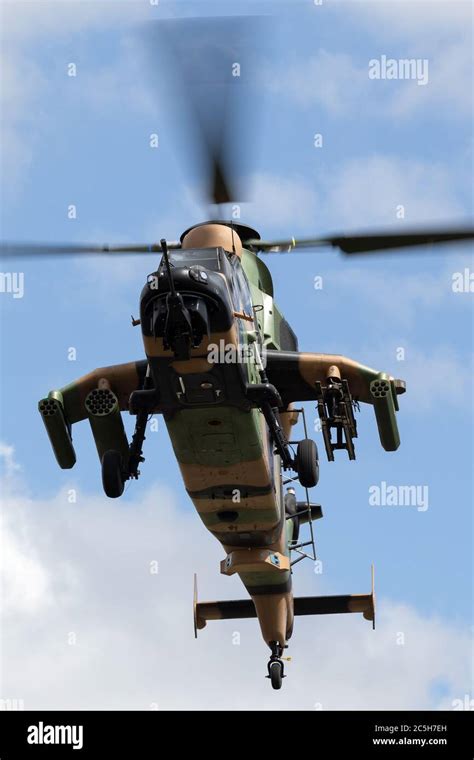
The ARH variant, derived from the French Tiger HAP, includes upgraded MTR390 engines, Thales Strix targeting sights, and compatibility with AGM-114 Hellfire II, Thales FZ 70 mm rockets, and Mistral air-to-air missiles. Its nose-mounted 30 mm cannon provides flexible ground and aerial engagement, while its digital avionics suite integrates navigation, communication, and targeting through a mission-dedicated multiplex bus.
Despite strong performance in agility and weapons integration, the fleet has been dogged by sustained maintenance challenges. These have included cockpit fume incidents, long-distance supply chain bottlenecks tied to European support hubs, and higher-than-expected sustainment costs. These issues contributed to Australia’s long-term decision to phase in the Apache rather than modernize the Tiger.
Technical Characteristics and Operational Capabilities
The Tiger ARH measures 15.3 meters in length, with a 13-meter rotor diameter and a maximum takeoff weight near 6,000 kilograms. Propelled by twin MTR390 turboshaft engines delivering a combined ~2,570 shp, the helicopter achieves a cruise speed of approximately 230 km/h and maintains a hover ceiling beyond 3,000 meters.
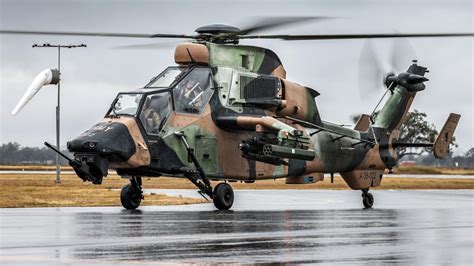
Its composite airframe reduces structural weight and improves corrosion resistance—features valuable in Ukraine’s diverse climate zones. The defensive aids suite, including missile approach warning sensors and an automated countermeasures dispenser, enhances survivability during low-altitude missions. Helmet-mounted sights and night-vision-compatible displays allow rapid cueing of weapons and situational awareness in contested airspace.
How the Tiger Could Fit Into Ukraine’s Evolving Battlefield Needs
Ukraine’s helicopter force is under sustained pressure, especially as it conducts nighttime counter-drone patrols to intercept Shahed-type loitering munitions. The Tiger’s weapons compatibility, stabilized cannon, and air-to-air capability could reinforce Ukraine’s mobile air-defense network, relieving stress on its overstretched Soviet-derived platforms.
Potential mission roles include:
- Counter-drone interception at low altitude and night conditions.
- Armed reconnaissance along contested front-line sectors.
- Convoy escort and route security in regions with limited ground-based air defenses.
- Fire support in areas where the helicopter’s survivability constraints can be managed.
However, the Tiger’s maintenance-intensive nature means Kyiv would need to invest in a dedicated training pipeline, simulator infrastructure, and integration with European sustainment centers. With only 22 potential airframes, operational value must be measured against the logistical burden.
Domestic Debate Shaped by the MRH-90 Taipan Controversy
Australia’s decision comes in the shadow of public criticism surrounding the MRH-90 Taipan disposal in 2023–24. After a fatal crash, the fleet was retired early, stripped for parts, and buried—despite Ukraine’s interest in acquiring and restoring them. The episode provoked outrage within Australia’s Ukrainian community and led to a Senate recommendation requiring Canberra to adopt a more systematic process for managing retiring defense platforms.
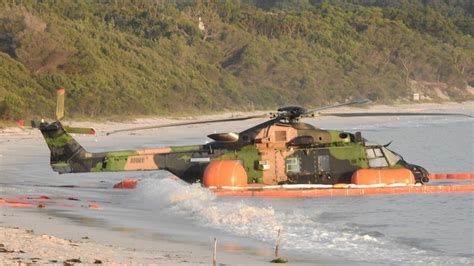
The Tiger ARH is viewed as the first major test case of this new principle. Kyiv has signaled clear interest, and Canberra has acknowledged that gifting the helicopters is the leading option under consideration.
Strategic Implications for Australia and Ukraine
Canberra’s evaluation also intersects with earlier debates about transferring F/A-18 Classic Hornets to Ukraine. Although those aircraft ultimately went to RAVN Aerospace, the episode demonstrated the multilayered approval and sustainment requirements for transferring Western aircraft to Kyiv. The Tiger transfer similarly hinges on balancing Australia’s Indo-Pacific priorities with Ukraine’s urgent battlefield needs.
A decision is expected within the timeframe of the $95 million aid package, with Defence Industry Minister Pat Conroy confirming direct communication with Kyiv and Defence Minister Richard Marles signaling an imminent conclusion. If approved, the Tigers would bolster Ukraine’s air-defense and reconnaissance capacity over the medium term. If rejected, continued storage or disposal could reignite domestic debate about transparent and responsible management of retired military assets.
Whichever path Canberra chooses, the Tiger ARH has become more than a retiring helicopter—it is now a barometer of Australian policy, Ukrainian capability growth, and the evolving strategic landscape shaped by the war’s next phase.