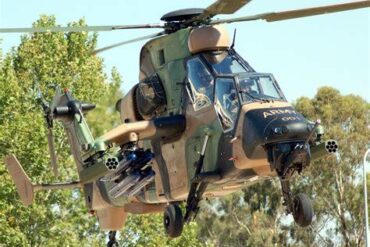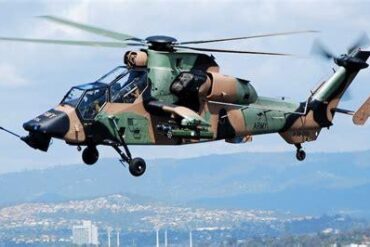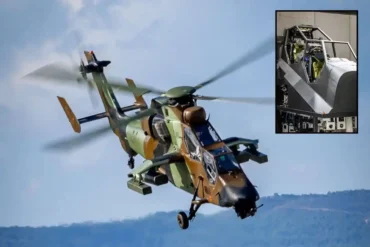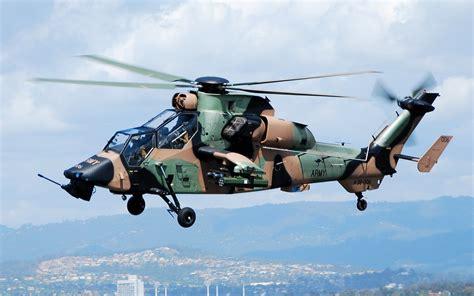
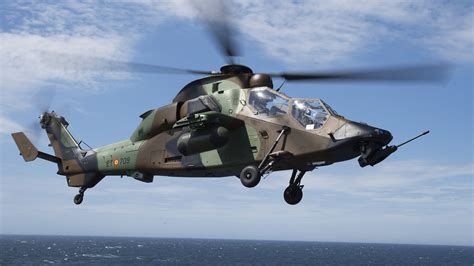
The Eurocopter Tiger, also known as the EC665, stands as a testament to the enduring ambition of European defense collaboration. Designed as a four-blade, twin-engine attack helicopter, it was developed to meet the 21st-century demands of multirole battlefield operations. Since its introduction into active service in 2003, it has proven its value through combat deployments, technological upgrades, and continuous evolution.
Origins of a European War Machine
The story of the Eurocopter Tiger began in 1984, when France and Germany initiated a joint program to create a highly mobile, survivable anti-tank helicopter capable of excelling in the Central European theater. Originally split into the French HAP (Hélicoptère d’Appui Protection) and HAC variants and the German PAH-2 anti-tank model, the initial blueprint envisioned 427 aircraft.
Despite initial enthusiasm, the program was temporarily canceled in 1986 due to its rising costs and in light of more mature platforms like the AH-64 Apache. However, political commitment prevailed, and in 1987, a revised framework emerged with fixed-term contracts and a more efficient development path. The French company Thomson-CSF (later part of Thales) was brought onboard to lead electronics development.
The Tiger’s prototype took to the skies for the first time on 27 April 1991, and although the Cold War had ended by then, the project pivoted towards a multirole capability to address a broader range of missions. Full-scale production was gradually locked in between 1989 and 1996. The first production Tiger rolled out on 22 March 2002, with initial deliveries to France and Germany in 2005.
Design Philosophy: Agile, Survivable, and Lethal
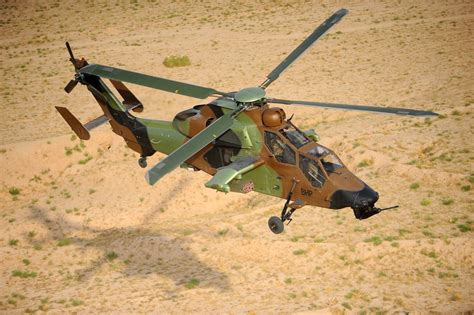
Built primarily from carbon-fiber-reinforced polymer and Kevlar, the Tiger is optimized for low detectability and resilience in high-threat environments. Approximately 80% of the airframe consists of composite materials, contributing to reduced radar, infrared, and acoustic signatures. This stealth-conscious design includes:
- Ballistic-tolerant main rotors and gearbox capable of 60 minutes of operation without oil.
- Self-sealing fuel tanks for battlefield survivability.
- Armored crew compartments that can resist up to 23 mm cannon fire.
- An AN/AAR-60 MILDS missile approach warning system, flares, and chaff dispensers.
The tandem glass cockpit accommodates a two-person crew (pilot and gunner), both equipped with interchangeable mission controls and helmet-mounted displays. The 13-meter hingeless main rotor, powered by two FADEC-controlled MTR390 engines, allows for extreme maneuverability, including negative-G flight and aerobatic loops.
The Tiger’s avionics suite integrates dual mission computers, satellite and VHF/UHF communications, GPS with inertial and Doppler navigation, and a mast-mounted Osiris sight—a high-performance optoelectronic suite featuring FLIR, TV imaging, and a laser rangefinder/designator.
Weapons Systems and Mission Versatility
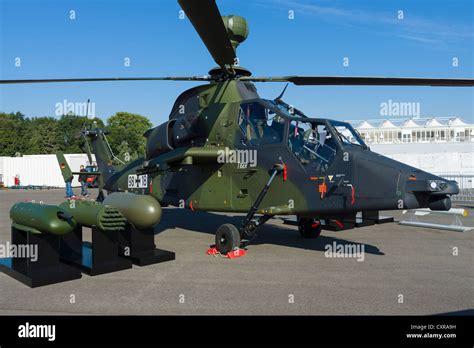
The Tiger is not just survivable—it is deadly. Its arsenal includes:
- A 30 mm Nexter turret cannon (GIAT 30) with 750 rounds.
- Air-to-ground missiles: TRIGAT, PARS 3 LR, Spike ER, Hellfire II.
- Air-to-air missiles: Mistral, AIM-92 Stinger.
- Unguided and guided rocket pods: 70 mm rockets with future guided variants.
These can be fitted depending on mission requirements, whether it’s close air support (CAS), anti-tank warfare, or naval interdiction. Integration with the EUROGRID battlefield management system ensures interoperability and data sharing on the modern network-centric battlefield.
Operational Deployments and Combat Proven Performance
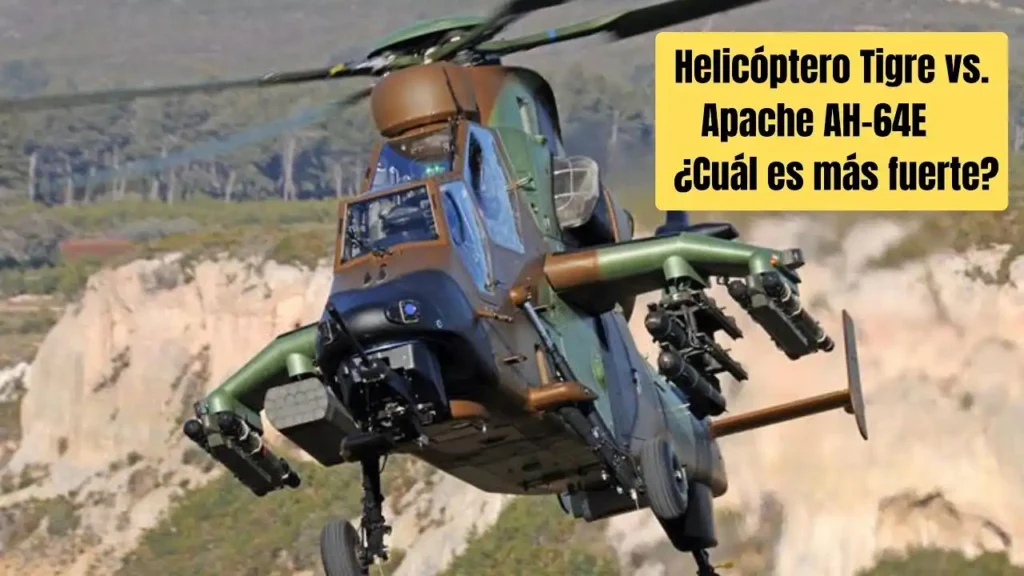
The Eurocopter Tiger has seen combat action in Afghanistan, Libya, and Mali, gaining real-world validation under extreme conditions.
- France deployed the Tiger to Afghanistan in July 2009, achieving over 1,000 flight hours by mid-2010. The deployment, however, was not without losses, including a crash on 4 February 2011.
- Germany followed with upgraded ASGARD Tigers, modified for hot and high conditions. Their first combat use came on 4 May 2013 in Afghanistan.
- Spain and Germany both sent Tigers to Mali under Operation Barkhane. The operation encountered its own tragedy when a German Tiger crashed on 26 July 2017, claiming two lives.
- Libya (2011) saw French Tigers supporting NATO operations, emphasizing the platform’s expeditionary capability and naval interoperability, proven during shipborne trials in May 2009.
Variants Tailored to National Doctrine
Four distinct national variants reflect each military’s doctrinal preferences and threat perceptions:
- Tiger UHT (Germany): Anti-tank optimized with PARS 3 LR and HOT3 missiles, Hydra rockets, and AIM-92 Stinger. It features a mast-mounted Osiris sight but lacks a turreted gun.
- Tiger HAP (France): Versatile model armed with 30 mm turret, SNEB rockets, and Mistral missiles for air defense.
- Tiger HAD (Spain): Features enhanced MTR390-E engines with 14% more power, enabling integration with Hellfire II and Spike ER missiles.
- Tiger ARH (Australia): Equipped with Strix electro-optical sight, FZ 70 mm rockets, and Hellfire II; optimized for Oceania and Southeast Asian theaters.
Australia’s fleet, although operational by 2011, faced persistent issues including toxic cockpit fumes and logistical inefficiencies, ultimately leading to its planned replacement by the AH-64E Apache by 2028.
Export Ambitions and Market Challenges
Despite its engineering pedigree, the Tiger’s export record has been modest. It failed to secure contracts in the UK, Netherlands, India, South Korea, and Saudi Arabia. In 2006, a Saudi order for 12 aircraft was canceled.
Australia ordered 22 ARH Tigers in 2001 (18 assembled in Brisbane), with the first delivered in December 2004 and final units in 2011. Spain followed with 24 HAD Tigers in 2003, with deliveries starting in 2007.
Currently, Brazil, Malaysia, Qatar, and Poland have shown interest, and most recently Ukraine expressed interest in June 2024, marking a potential entry into an active European conflict zone.
Modernization: The Path to Tiger Mk III
Faced with evolving battlefield requirements, the Tiger is undergoing a comprehensive modernization program. The Tiger Mk III, set for operational readiness in the 2029–2030 timeframe, introduces:
- The MAST-F common anti-tank missile.
- Upgraded mast electro-optics, enhanced HMDs, and electro-optical vision systems.
- Next-generation datalinks, secure communications, and Galileo-based navigation.
- A new integrated avionics suite with open-architecture standards.
France and Spain are committed to this upgrade path, while Germany will phase out its Tigers by 2032, and Australia has opted out entirely.
Technical Specifications: Tiger HAP Variant
- Crew: 2 (pilot, gunner)
- Length: 14.08 m
- Max Takeoff Weight: 6,000 kg
- Max Speed: 315 km/h
- Range: 800 km
- Service Ceiling: 4,000 m
- Armament: 30 mm GIAT turret, SNEB rockets, air-to-air and anti-tank missiles
The Eurocopter Tiger in Context
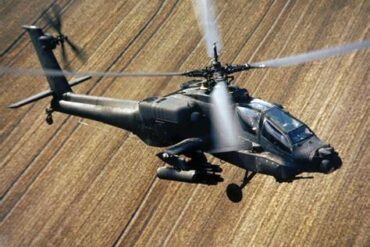
The Tiger belongs to a small elite group of modern attack helicopters. Its closest peers include the Boeing AH-64 Apache, Bell AH-1Z Viper, Agusta A129 Mangusta, China’s Z-10, and Russia’s Ka-50 and Mi-28.
While the Apache remains the most prolific and combat-hardened, the Tiger stands out for its stealth attributes, modular weapon integration, and unique European systems architecture. It is both a symbol of transnational defense cooperation and a platform continuously adapting to the digital battlefield.
Conclusion: A High-Technology Instrument of Force Projection
From its turbulent inception to combat deployment across three continents, the Eurocopter Tiger embodies both the challenges and triumphs of multinational aerospace development. It is a helicopter built for precision, survivability, and flexibility in an era where threats evolve rapidly and interoperability is paramount. As the Tiger Mk III prepares for its next-generation debut, its continued relevance rests on Europe’s commitment to indigenous defense innovation and operational readiness.