The name Cessna resonates through the annals of aviation history, synonymous with innovation, accessibility, and an unparalleled production volume that has shaped general aviation for nearly a century. Now a prominent brand under the Textron Aviation umbrella, Cessna’s journey from a Kansas farmer’s dream to a global aerospace leader is a compelling narrative of ambition, resilience, and engineering prowess. The company, originally the Cessna Aircraft Company, carved its niche by producing a diverse range of aircraft, from small, piston-powered trainers and personal aircraft to sophisticated business jets. For a significant portion of the 20th century, Cessna stood as one of the most prolific and varied manufacturers in general aviation, its aircraft becoming ubiquitous sights at airfields worldwide. The story of Cessna is not just about manufacturing airplanes; it’s about making flight more attainable and fostering a global community of aviators.
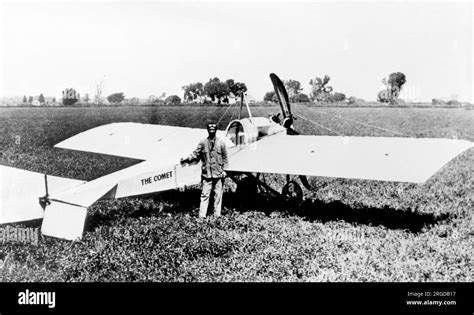
The genesis of this iconic brand lies with Clyde Cessna, a pioneering farmer from Rago, Kansas, who, with remarkable ingenuity and determination, constructed his own aircraft and successfully flew it in June 1911. This feat marked him as the first individual to achieve powered flight between the Mississippi River and the Rocky Mountains. Cessna initially embarked on his wood-and-fabric aircraft ventures in Enid, Oklahoma, utilizing the expansive salt flats for testing his early designs. However, when local bankers in Enid hesitated to provide further funding for his aeronautical ambitions, Cessna made a pivotal move to Wichita, Kansas, a city that would soon become the heart of American aircraft manufacturing, partly due to his influence. This relocation set the stage for the formal establishment of his aircraft enterprise.
The Cessna Aircraft Company was officially formed in September 1927, when Clyde Cessna partnered with Victor Roos to create the Cessna-Roos Aircraft Company. This partnership, however, was short-lived. Roos resigned merely a month into the venture, selling his stake back to Cessna. Consequently, Roos’s name was promptly removed from the company title, and it became the Cessna Aircraft Company.
Pioneering Designs and Wartime Contributions
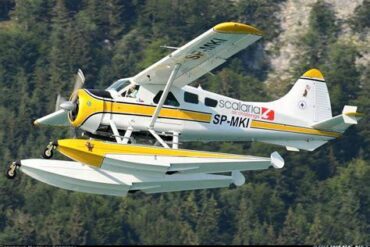
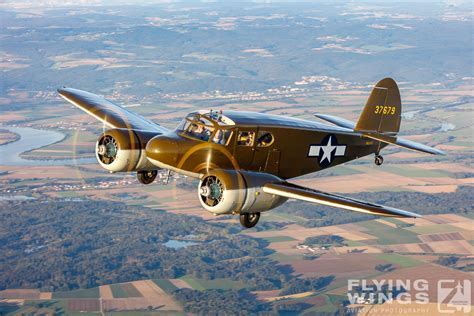
Under the stewardship of the Wallace brothers, Cessna began to introduce innovative designs and expand its market reach. The Cessna C-37, introduced in 1937, marked the company’s entry into the seaplane market when equipped with Edo floats, showcasing versatility in design. A significant turning point arrived in 1940 when Cessna secured its largest order to date: a contract from the U.S. Army for 33 specially equipped Cessna T-50s.
The Postwar Boom: Dominating General Aviation
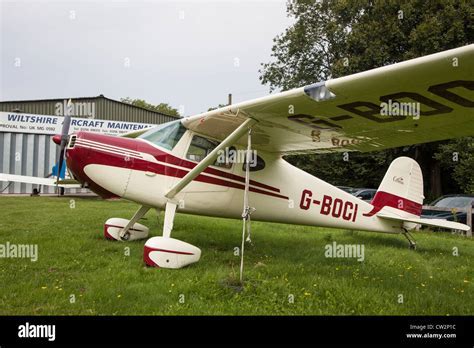
With the conclusion of World War II and the revocation of wartime production restrictions (L-48) in 1946, Cessna eagerly returned to commercial aircraft production. The company launched the Model 120 and Model 140, initiating a new era for personal aviation.
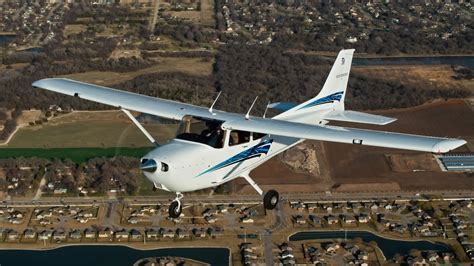
In 1955, Cessna ventured into rotary-wing aircraft with the Cessna CH-1, which received FAA type certification, although it did not achieve the same commercial success as its fixed-wing counterparts. The truly transformative moment came in 1956 with the introduction of the Cessna 172 Skyhawk.
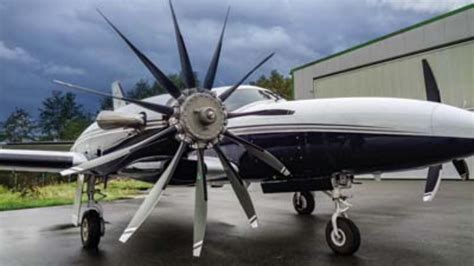
Cessna’s growth during this period was also fueled by strategic acquisitions. In 1959, the company acquired the Aircraft Radio Corporation (ARC) of Boonton, New Jersey, a leading manufacturer of aircraft radios. Cessna aimed to integrate avionics into its aircraft as factory options, rebranding ARC radios as “Cessna” radios. However, this venture saw a decline in the quality and popularity of ARC products under Cessna’s ownership, leading to the subsidiary’s sale to Sperry in 1983. A more successful acquisition occurred in 1960 when Cessna purchased McCauley Industrial Corporation of Ohio, a prominent manufacturer of propellers for light aircraft. McCauley thrived under Cessna, becoming the world’s leading producer of general aviation aircraft propellers, largely due to their standard fitment on the vast numbers of Cessna airplanes rolling off the production lines.
Entering the Jet Age and Navigating Corporate Transitions
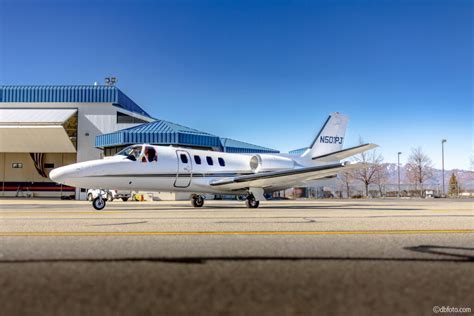
The late 1960s marked Cessna’s ambitious entry into the burgeoning business jet market. The Cessna Citation I, the company’s first business jet, performed its maiden flight on September 15, 1969. This event heralded the beginning of the highly successful Citation family of jets, which would grow to encompass a wide range of models catering to various business aviation needs.
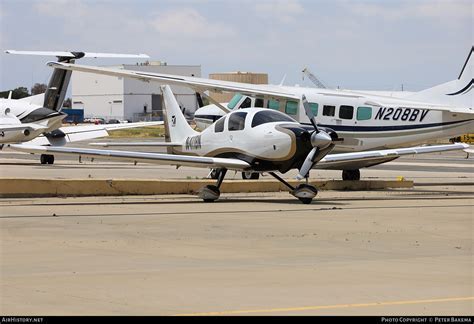
Late in 2007, Cessna expanded its single-engine piston aircraft offerings by purchasing the assets of the bankrupt Columbia Aircraft Manufacturing Corporation for US$26.4 million. This acquisition allowed Cessna to add the high-performance Columbia 350 and 400, known for their composite construction and speed, to its product line. These aircraft were rebranded as the Cessna 350 (Corvalis) and Cessna 400 (Corvalis TT), respectively, and production continued at the former Columbia factory in Bend, Oregon.
Controversies and Economic Headwinds
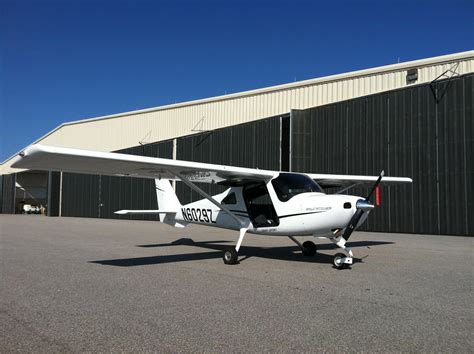
A notable controversy arose on November 27, 2007, when Cessna announced that its new light-sport aircraft, the Cessna 162 Skycatcher, would be manufactured in China by the Shenyang Aircraft Corporation, a subsidiary of the state-owned China Aviation Industry Corporation I (AVIC I).
The global economic crisis of 2008-2010 dealt a severe blow to Cessna and the entire general aviation industry. The downturn led to a dramatic drop in demand for new aircraft, particularly business jets. Consequently, Cessna was forced to make substantial workforce reductions, laying off more than half of its employees between January 2009 and September 2010. On November 4, 2008, Textron, Cessna’s parent company, announced that Citation production targets for 2009 would be significantly reduced from the initially planned 535 units due to the “continued softening in the global economic environment,” signaling impending layoffs. CEO Jack Pelton, speaking at the AOPA Expo on November 8, 2008, acknowledged a decline in sales to individual buyers but noted that piston and turboprop sales to businesses remained relatively stable at that point.
However, the situation rapidly deteriorated. In January 2009, Cessna cut 665 jobs at its Wichita, Kansas, and Bend, Oregon, facilities. The Independence, Kansas, plant, responsible for piston-engine aircraft and the Cessna Mustang entry-level jet, was initially spared layoffs, but the Bend facility saw a third of its workforce, 165 employees, dismissed. Later that same month, an additional 2,000 employees were laid off, bringing the total to 4,600. These cuts heavily impacted the Bend plant, reducing its workforce to less than half of what it was at the time of Cessna’s acquisition, and also affected the Independence plant. A major strategic casualty of the crisis was the Citation Columbus program, a planned large, long-range business jet. On April 29, 2009, Cessna suspended the Columbus program and announced the closure of the Bend, Oregon, facility, with production of the Cessna 350 and 400 slated to move to Kansas. The Columbus program was officially cancelled in early July 2009, with the company citing unfavorable market analysis for the product. This cancellation, along with the Bend plant closure, resulted in an additional 1,600 layoffs, including the remaining 150 employees in Bend and up to 700 workers associated with the Columbus project. By early June 2009, another 700 salaried employees were laid off, pushing the total number of job losses to 7,600, more than half the company’s workforce at the time. The company also closed its three Columbus, Georgia, manufacturing facilities, including the McCauley Propeller Systems plant, between June 2010 and December 2011, resulting in 600 job losses in Georgia. Textron reported a loss of US$8 million in the first quarter of 2010, largely attributed to persistently low sales at Cessna, which were down 44%. CEO Jack Pelton described the expected recovery as long and slow. A further 700 employees were laid off in September 2010, bringing the total job losses to 8,000, as Pelton cited a “stalled [and] lackluster economy” and insufficient new orders to offset cancellations.
Restructuring in the 2010s and the Birth of Textron Aviation
The challenging economic climate necessitated significant restructuring. On May 2, 2011, CEO Jack J. Pelton retired. He was succeeded by Scott A. Ernest, who assumed the role of CEO on May 31, 2011. Ernest came to Textron with extensive experience from General Electric, where he had served as vice president and general manager of global supply chain for GE Aviation. His leadership was tasked with navigating Cessna through the protracted recovery. In September 2011, Cessna faced scrutiny from the Federal Aviation Administration (FAA), which proposed a US$2.4 million fine against the company for failing to adhere to quality assurance requirements in the production of fiberglass components at its plant in Chihuahua, Mexico. Issues with excess humidity led to improper curing of parts, and these defects were not caught by quality assurance. This lapse resulted in the in-flight delamination of a 7-foot section of a Cessna 400’s wing skin from the spar during an FAA test flight. Fortunately, the aircraft landed safely. The FAA investigation uncovered 82 other improperly manufactured aircraft parts, leading to an emergency Airworthiness Directive affecting 13 Cessna 400s.
Beginning in March 2012, Cessna pursued opportunities to build business jets in China through a joint venture with the Aviation Industry Corporation of China (AVIC). The company expressed intentions to eventually manufacture all its aircraft models in China, stating that the agreements would “pave the way for a range of business jets, utility single-engine turboprops and single-engine piston aircraft to be manufactured and certified in China.” This move reflected a broader industry trend towards globalized manufacturing and accessing new markets. Despite the earlier massive layoffs, by late April 2012, Cessna began to cautiously add workers in Wichita, hiring 150 employees in anticipation of increased demand, though this was a small fraction of the more than 6,000 jobs lost in Wichita since 2009. A pivotal moment in Cessna’s corporate history occurred in March 2014. Following Textron’s acquisition of Beechcraft and Hawker Aircraft corporations, Cessna ceased to operate as a subsidiary company. Instead, it became one of three distinct aircraft brands—Cessna, Beechcraft, and Hawker—produced under the newly formed Textron Aviation division. This consolidation aimed to leverage the strengths and heritage of each brand while streamlining operations and enhancing market competitiveness.
Marketing Ingenuity: Crafting the Cessna Image
During the general aviation boom of the 1950s and 1960s, Cessna’s marketing department displayed remarkable creativity, drawing inspiration from the automotive industry in Detroit to develop unique marketing terms. These terms aimed to differentiate Cessna’s product line and create an aura of advanced technology and ease of use. While some of these buzzwords were occasionally ridiculed by competitors and the aviation press, they undeniably contributed to Cessna’s immense sales success, as the company built and sold more aircraft than any other manufacturer during these decades. Cessna model names generally don’t follow a strict thematic pattern, but a logical numbering system often applies: the 100 series typically denotes light single-engine aircraft, the 200 series larger singles, the 300 series light to medium twins, the 400 series cabin-class twins with a “wide oval” fuselage, and the 500 series designates the Citation jets. Many Cessna models also feature names starting with the letter ‘C’ for alliterative appeal, such as Citation, Crusader, Chancellor, and Caravan.
Some of Cessna’s memorable marketing terminology included:
- Para-Lift Flaps: Introduced on the Cessna 170B in 1952, these were large Fowler flaps that significantly improved low-speed lift and short-field performance compared to the narrow chord plain flaps previously used.
-
Land-O-Matic: Coined in 1956 with the introduction of the Cessna 172’s sprung-steel tricycle landing gear. This term was designed to imply that aircraft equipped with this gear were exceptionally easy to land and take off, almost as simple as driving a car, with marketing even suggesting pilots could perform “drive-up take-offs and drive-in landings.” While an effective marketing ploy, the tricycle gear did genuinely simplify ground handling compared to conventional (tailwheel) gear.
-
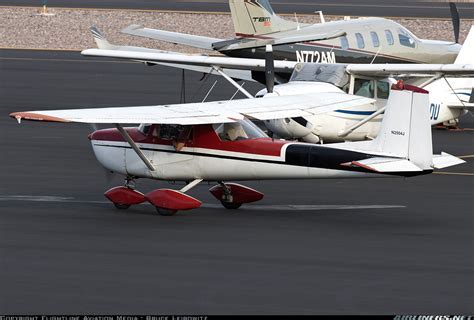
Omni-Vision: This referred to the wrap-around rear windows added to several Cessna single-engine models, starting with the 182 and 210 in 1962, followed by the 172 in 1963 and the 150 in 1964. The term aimed to convey a sense of enhanced all-around visibility, although in practice, the aerodynamic impact sometimes resulted in a slight loss of cruise speed due to increased drag, without a universally acclaimed improvement in actual pilot visibility.
- Cushioned Power: This highlighted the rubber mounts used on the cowling of the 1967 Model 150, in addition to the engine mounts designed to isolate engine vibration from the cabin, promising a smoother and quieter ride.
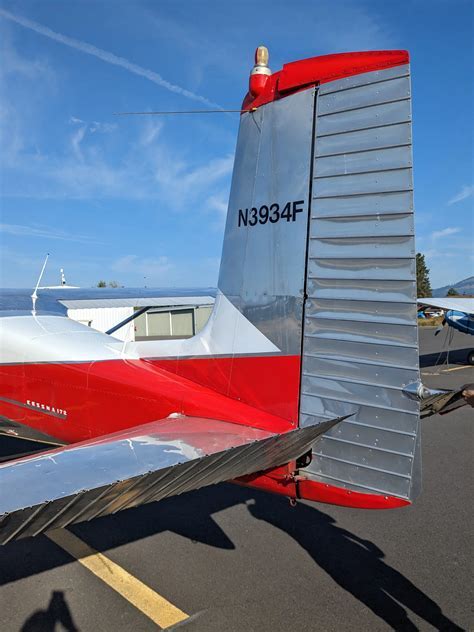
- Omni-Flash: The flashing beacon typically located on the tip of the vertical stabilizer, designed to be visible from all directions for enhanced aircraft conspicuity.
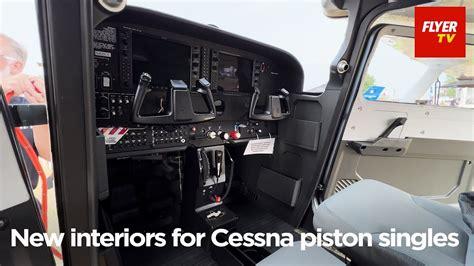
- Open-View: This term described the redesigned control wheels introduced in 1967 models. The previous rectangular yokes were replaced with a “ram’s horn” shape, which provided a less obstructed view of the instrument panel.
- Quick-Scan: A buzzword used in the 1960s to promote Cessna’s new instrument panel layouts, suggesting they were ergonomically superior and allowed for quicker and easier instrument monitoring.
- Nav-O-Matic: The brand name for Cessna’s autopilot systems, implying simplicity and ease of operation for navigation.
- Camber-Lift: A marketing term used from 1972 onwards to describe Cessna aircraft wings, which featured a slightly drooped leading edge added to the standard NACA 2412 airfoil. Aviation writer Joe Christy famously critiqued the term as “stupid,” questioning if there was “any other kind [of lift]?”.
- Stabila-Tip: This referred to the wingtip fuel tanks commonly used on many Cessna models. These tanks were aerodynamically shaped and offered the benefit of reducing the free surface effect of fuel, which could otherwise adversely affect the aircraft’s balance during rolling maneuvers, while also increasing fuel capacity and range.
A Diverse Fleet: Cessna Aircraft Through the Years
Cessna’s enduring legacy is built upon a vast and varied portfolio of aircraft. While the Cessna 172 Skyhawk remains its most famous product, the company has consistently delivered a wide array of models catering to diverse aviation needs. As of late 2020, Textron Aviation continued to produce several key Cessna-branded aircraft, demonstrating the brand’s ongoing relevance.
The current production lineup includes:
- Cessna 172 Skyhawk: The quintessential high-wing, single piston-engine, four-seat aircraft, in continuous production (with a brief hiatus) since 1956, renowned for its reliability and as a primary trainer worldwide.
- Cessna 182 Skylane: A more powerful, high-wing, single piston-engine, four-seat aircraft, also in production since 1956, valued for its performance and load-carrying capability.
- Cessna 206 Stationair: A rugged, high-wing, single piston-engine, six-seat utility aircraft, produced since 1962, known for its versatility in various roles, including bush flying and cargo transport.
-
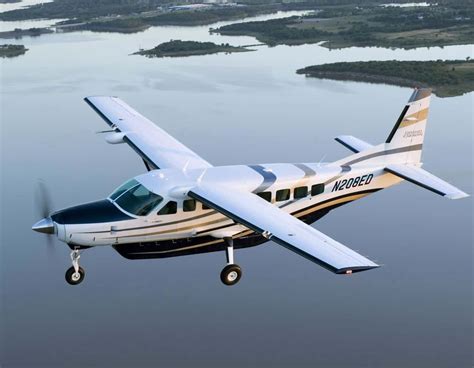
Cessna 208 Caravan: A highly successful high-wing, single-turboprop utility aircraft, in production since 1984. The Caravan is prized for its reliability, payload, and ability to operate from unimproved airstrips, serving in passenger, cargo, and special mission capacities globally.
- Cessna 408 SkyCourier: A newer addition, this high-wing, twin-turboprop utility aircraft entered production in 2022, designed for high-payload freight and passenger operations.
-
The Cessna Citation family of business jets continues to be a cornerstone of the brand. This includes:
- Cessna Citation 525 M2/CJ series: In production since 1991, these light jets offer a blend of performance and efficiency.
-
Cessna Citation 560XL Excel/XLS/XLS+: A popular midsize jet series, in production since 1996, known for its cabin comfort and versatility.
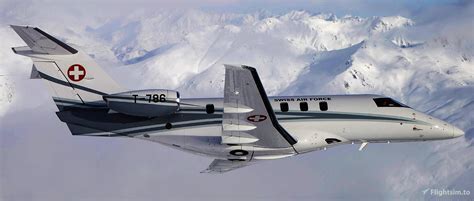
- Cessna Citation 680A Latitude: A super-midsize jet in production since 2014, offering a spacious cabin and transcontinental range.
- Cessna Citation 700 Longitude: A larger super-midsize jet, in production since 2019, providing extended range and advanced avionics.
While the Cessna 680 Sovereign ceased production in 2021, its legacy, like that of many other discontinued Cessna models, continues through the active fleet still flying worldwide. From the humble beginnings of Clyde Cessna’s vision to its current status as a flagship brand within Textron Aviation, Cessna has indelibly shaped the world of flight, providing wings for training, personal travel, business, and utilitarian transport for nearly a century. Its aircraft are a testament to enduring design, continuous innovation, and a profound understanding of the diverse needs of the aviation community.