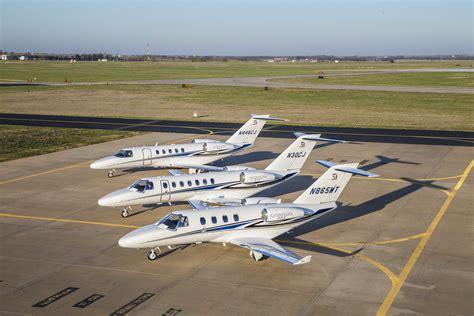
The Cessna Citation family stands as a cornerstone in the realm of business aviation. Since its introduction in the early 1970s, the Citation brand has evolved into a robust fleet of high-performance jets, known for their reliability, versatility, and pioneering engineering. With over 8,000 aircraft delivered and more than 41 million flight hours accumulated, the Citation line is not only the most prolific family of business jets ever built—it also epitomizes the innovation and ambition of modern aerospace manufacturing.
The Origins: Citation I and Its Foundational Legacy
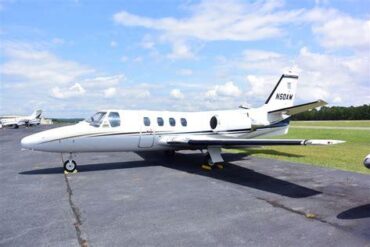
The Cessna Citation lineage began with the Citation I, introduced in 1969 as the Model 500 prototype. Its mission was clear: to deliver the benefits of jet speed and altitude to owners and pilots previously reliant on piston and turboprop aircraft. The straight-winged, twin JT15D-powered Citation I entered service in 1972 and redefined expectations in the light business jet segment.
By 1977, the introduction of the Citation I/SP—a single-pilot certified variant—reaffirmed Cessna’s focus on user-friendly jet operation. With 689 units produced by 1985, the Citation I laid the groundwork for what would become a multi-generational platform.
Scaling Up: Citation II, Bravo, and the Expansion of Range and Capability
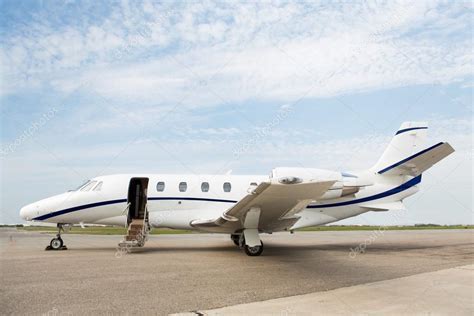
The Citation II (Model 550), announced in 1976, capitalized on customer demand for more cabin space and range. Certified in 1978, this longer and faster version found widespread success, including military variants such as the T-47A for the U.S. Navy. The Citation S/II and later the Bravo introduced modernized wings and Pratt & Whitney PW530A engines, marking a shift toward more efficient and capable airframes.
With 1,184 units delivered before production ended in 2006, the Citation II/Bravo family brought serious endurance and professionalism to the small jet category.
Stepping into the Midsize Market: Citation III to VII
A quantum leap in design came with the Citation III series (Model 650). First flown in 1979 and entering service by 1983, it featured a new 312 sq ft swept wing, T-tail, and Honeywell TFE731 engines with thrust ratings from 3,650 to 4,080 lbf. The stand-up cabin was a significant advancement, offering unmatched comfort for its class.
The family expanded with the Citation VI, designed as a more economical version, and the Citation VII, which included upgraded engines and luxury interiors. Though the Citation IV was ultimately shelved, the airframe innovations directly influenced the Citation X, Excel, and Sovereign.
Refinement Through Versatility: Citation V, Ultra, and Encore
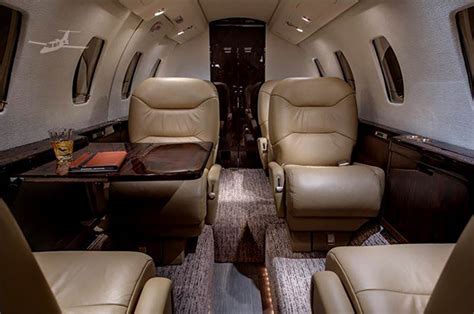
The Model 560 series was an evolutionary step from the S/II. Introduced in 1989, the Citation V gained instant traction due to its increased range and payload. The Ultra, unveiled in 1993, incorporated a glass cockpit and performance improvements, while the Encore featured PW535 engines, enhanced systems, and a better high-altitude performance profile.
Used by the U.S. military under designations such as UC-35 and OT-47B, this family emphasized the Citation line’s adaptability to government and civilian roles alike.
A New Generation: CitationJet (CJ) Series
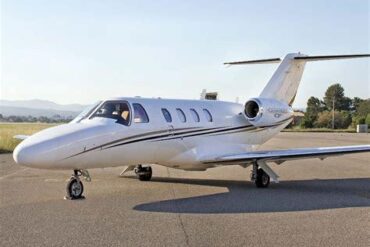
Launched in 1989, the CitationJet family redefined light jet engineering. Using the Citation II’s forward fuselage, it added a new wing and Williams FJ44 turbofan engines, improving both fuel efficiency and speed.
Spanning multiple variants—including the CJ1, CJ2, CJ3, and CJ4, as well as modernized versions like the CJ3+—this line remains a best-seller for operators prioritizing performance, simplicity, and operating economy. By 2017, over 2,000 CJ series aircraft had been delivered.
Speed and Prestige: Citation X and X+
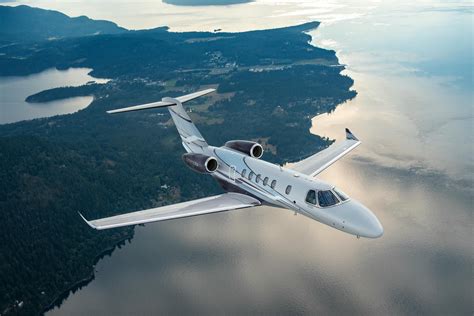
The Citation X, certified in 1996, brought Cessna into the realm of high-speed, long-range business travel. Its Mach 0.935 cruise and 3,460 nmi range made it the fastest civilian jet in production for years. With a new 37° swept wing, AE3007C engines, and an enlarged cabin in the X+, it symbolized Cessna’s ability to push technological boundaries.
Despite concluding production in 2018, the X series remains a favorite among discerning owners and corporate fleets seeking speed and style.
Bridging Gaps: Excel, XLS, and XLS+
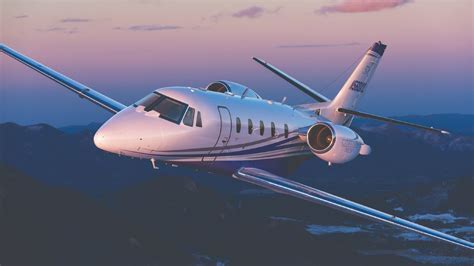
The Citation Excel emerged in the late 1990s as a hybrid solution—blending the stand-up cabin of larger jets with the cost profile of smaller ones. It reused the unswept wing from the Citation V, paired with a shortened Citation X fuselage, and introduced PW545 engines.
Evolving into the XLS and XLS+, the model received continuous upgrades, including glass cockpits and performance enhancements. Over 1,000 units have been delivered, underscoring its role as a business aviation mainstay.
Entering the VLJ Segment: Citation Mustang
Targeting the very light jet (VLJ) market, Cessna launched the Mustang (Model 510) in 2006. With a range of 1,167 nmi, seating for 4–5 passengers, and PW615F engines, it democratized jet ownership by offering private operators and flight schools a safe, low-cost platform.
Although production ceased in 2017 after 479 units, the Mustang left a lasting imprint on the VLJ sector.
Larger Aspirations: Latitude and Longitude
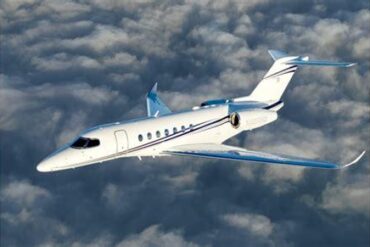
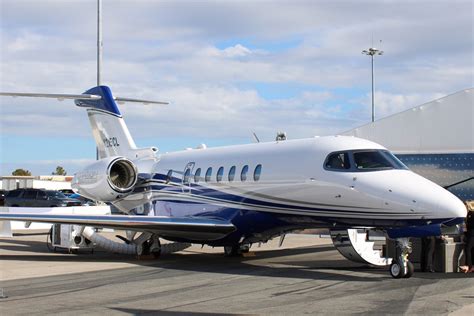
Announced in the 2010s, the Latitude (Model 680A) and Longitude (Model 700) became Cessna’s flagship offerings in the super-midsize category. The Latitude combined a flat-floor, stand-up cabin with Sovereign lineage wings and PW306D engines, yielding a range of 2,850 nmi.
The Longitude expanded on this success, offering a longer fuselage, Honeywell HTF7000 engines, and a new swept wing for high-altitude, long-distance travel. With a range of 3,500 nmi, it competes with top-tier aircraft while retaining the Citation DNA of efficiency and value.
Citation Today: Current Models and Their Capabilities
The modern Citation lineup features aircraft designed for a wide array of missions:
- Citation M2 (Model 525): A light jet with a range of 1,540 nmi and max cruise of 404 knots, perfect for regional hops.
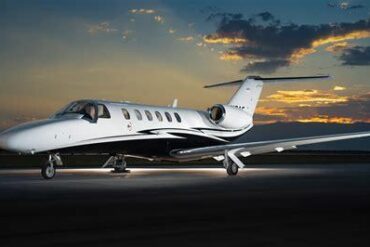
- Citation CJ3+ (Model 525B): With seating for 9 and a range of 2,040 nmi, it balances performance and affordability.
- Citation CJ4 (Model 525C): The fastest CJ, with 451 knots cruise and 2,170 nmi range, offering high utility in a compact form.
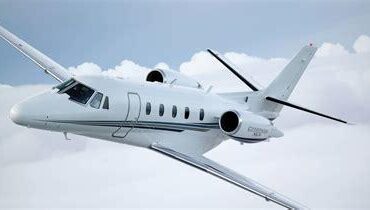
- Citation XLS+ (Model 560XL): A midsize jet with a 441-knot cruise and 2,100 nmi range, highly popular for short corporate routes.
- Citation Latitude: Offers 6 feet 5 inches of cabin height and 2,850 nmi of transcontinental range.
- Citation Longitude: A true long-range contender, capable of 476 knots cruise and spanning 3,500 nmi, rivaling larger jets at a lower operating cost.
The Unfinished Chapter: Columbus and Hemisphere
While the Citation Columbus (Model 850) and Hemisphere never reached production, they reflected Cessna’s ambition to enter the large cabin, long-range space. The Hemisphere, in particular, was designed for Mach 0.9 speed and a 4,500 nmi range, but engine supply issues led to its suspension.
Still, their development contributed valuable insights to ongoing Citation programs.
A Legacy Unrivaled in Business Aviation
Across more than five decades, the Cessna Citation family has consistently delivered on the promise of accessible, efficient, and reliable jet travel. From the pioneering Citation I to the boundary-pushing Longitude, these aircraft represent not only a technical achievement but a business aviation revolution.
Whether serving Fortune 500 companies, government fleets, or owner-pilots, Citations continue to define the category they helped create. Their enduring relevance in a competitive market is a testament to the foresight of Cessna and the evolving demands of global aviation.