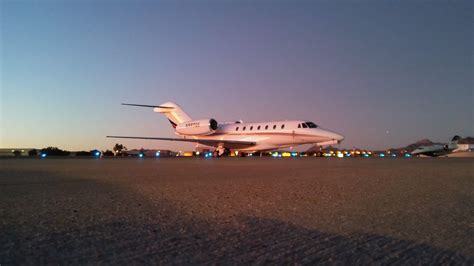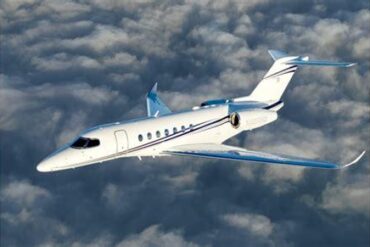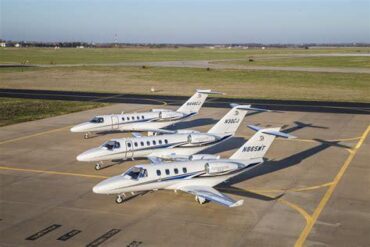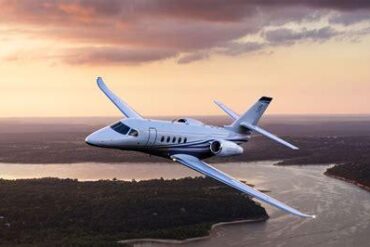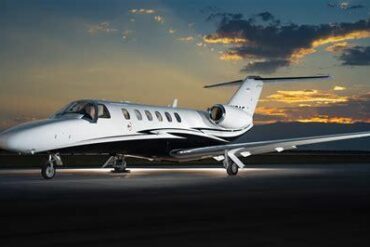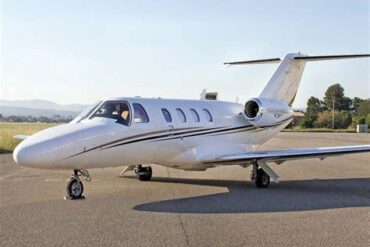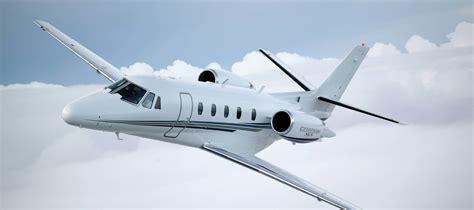
The Cessna Citation X stands as an unparalleled symbol of speed, innovation, and American aerospace excellence. Introduced in the 1990s by Cessna Aircraft Company, the Citation X elevated business aviation by setting new standards in velocity, engineering sophistication, and passenger comfort. Designed initially to answer market demands for faster, sleeker jets, this iconic aircraft remains a benchmark for executive travel even after its production ceased in 2018.
The Citation X, officially known as the Cessna Model 750, achieved an extraordinary milestone with its first flight on December 21, 1993. Following its FAA certification on June 3, 1996, the jet entered service in July 1996, swiftly capturing the imagination of business elites and aviation enthusiasts worldwide. With 339 aircraft delivered (including the enhanced Citation X+ models), the Citation X’s impact on the industry is undeniable.
Development Journey: Engineering the World’s Fastest Business Jet
Development of the Citation X was officially announced at the National Business Aviation Association (NBAA) convention in October 1990. Cessna sought to revolutionize its slower Citation 650 series by introducing a machine capable of achieving near-supersonic speeds. However, the journey to certification was not without challenges. Integration of advanced avionics and new engine systems, along with overcoming flameout incidents, stringent bird-strike resistance requirements, and stability refinements, caused delays that pushed certification to mid-1996.
Following its debut, aviation legend Arnold Palmer received the first production model, setting a 5,000 km closed-course speed record of 473 knots in September 1997. Accolades quickly followed, including the prestigious 1997 Collier Trophy, awarded for significant contributions to aeronautics.
Updates continued as part of Cessna’s commitment to innovation. In January 2002, the Citation X received a notable thrust increase of 5%, a 400-pound increase in Maximum Takeoff Weight (MTOW), and a refined Honeywell avionics suite, ensuring the aircraft remained competitive against new entrants in the market.
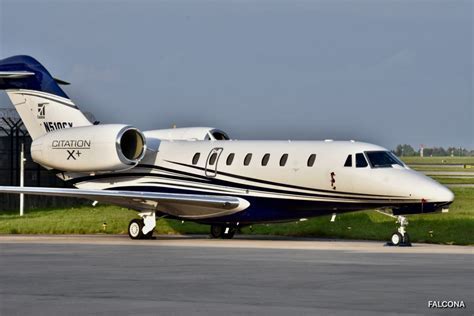
Citation X+: A Bold Evolution in Performance and Luxury
Seeking to further enhance its crown jewel, Cessna unveiled the Citation X+ (initially referred to as the “Citation Ten”) in 2010. Equipped with more powerful AE3007C2 engines, state-of-the-art Garmin G5000 avionics, and an autothrottle system, the X+ represented a significant leap forward.
Key upgrades to the Citation X+ included:
- 15-inch fuselage stretch enhancing cabin space
- Elliptical winglets standard, improving aerodynamic efficiency
- Cruising speed increases from FL460 to FL490, achieving Mach 0.935
- Range extension to 3,242 nautical miles
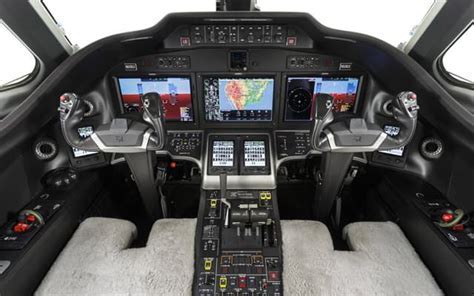
The X+’s first flight occurred on January 17, 2012, demonstrating improved fuel efficiency (1.4% SFC improvement) and payload capability. By integrating three expansive 14-inch Garmin displays, pilots enjoyed unprecedented situational awareness, elevating both safety and operational ease.
Design and Aerodynamic Excellence: Form Meets Function
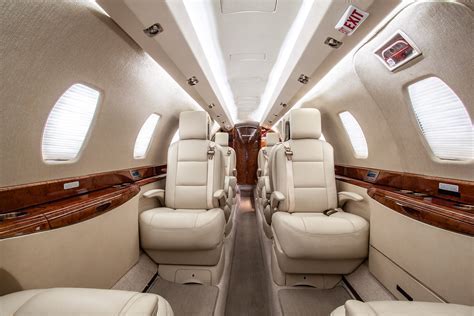
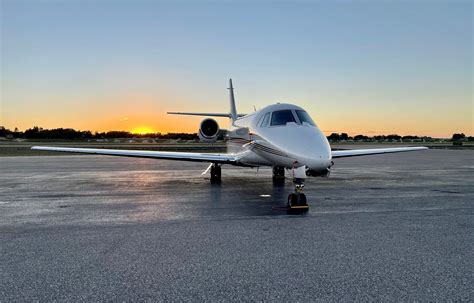
At the heart of the Citation X’s allure is its advanced aerodynamic design, created to minimize drag and optimize speed. Featuring an entirely new wing, tail assembly, landing gear, and systems, the Citation X shares only limited parts commonality with earlier Citation models. Retaining the Citation III fuselage cross-section ensured familiar comfort for passengers, while introducing radical performance enhancements.
The aircraft’s area-ruled fuselage—a concept borrowed from supersonic jet design—smooths airflow at high speeds, crucial for reaching Mach 0.92–0.935. Furthermore, its supercritical 37-degree swept wing allows efficient transonic cruise, balancing speed with stability and fuel economy.
Integral to the Citation X’s performance are its Rolls-Royce AE 3007C series engines. Designed with a high bypass ratio of 5:1 and titanium-bladed fans, these engines deliver between 6,442 to 7,034 pounds of thrust, depending on variant. The accompanying Honeywell GTCP36-150CX auxiliary power unit ensures system readiness and operational flexibility even at remote airfields.
Flight Control Systems and Avionics: Precision at Every Altitude
Pilots regard the Citation X as a joy to fly, thanks to its sophisticated dual-hydraulic flight control systems and fully movable tailplane, ensuring responsive handling across the entire flight envelope. Roll control and deceleration are enhanced by five multi-function spoilers per wing, allowing precise maneuvering and rapid descent profiles when needed.
Initially, the Citation X was outfitted with Honeywell Primus 2000 EFIS, utilizing five cathode-ray tube displays and dual flight management systems with GPS integration. The Citation X+, however, adopted the Garmin G5000 suite, a fully integrated touchscreen-controlled avionics system offering:
- Enhanced situational awareness through synthetic vision
- Automated performance optimization with autothrottles
- Streamlined pilot workload for high-speed operations
The combination of aerodynamics, thrust, and avionics allows the Citation X to climb effortlessly to Flight Level 470 within 24 minutes, achieving a ceiling of 51,000 feet, well above most commercial airliners.
Operators: Flying with the Elite
Throughout its production life, the Citation X became the preferred aircraft for corporations, charter services, and private owners seeking unparalleled speed. Notable operators include:
- NetJets: Operating 81 Citation X jets within its fractional ownership program
- XOJET: Catering to high-net-worth individuals and executive clients
- Corporate fleets: Major companies such as Target Corporation, General Motors, and Honeywell
- Private owners: Aviation icons and business moguls like Arnold Palmer, Larry Ellison, Donald Trump, Steve Fossett, and Nelson Piquet.
Technical Specifications: Citation X vs Citation X+
The Citation X and X+ share fundamental DNA but differ in dimensions, systems, and performance nuances. Below are key comparative specifications:
| Specification | Citation X | Citation X+ |
|---|---|---|
| Crew | 2 | 2 |
| Passengers | Up to 12 | Up to 12 |
| Length | 72.5 ft | 73 ft 7 in |
| Wingspan | 63.6 ft | 69 ft 2 in |
| Height | 19.2 ft | 19 ft 3 in |
| Wing Area | 527 ft² | 527 ft² |
| MTOW | 35,700 lb | 36,600 lb |
| Fuel Capacity | 13,000 lb | 13,000 lb |
| Thrust | 2×6,442 lbf | 2×7,034 lbf |
| Max Cruise Speed | Mach 0.92 | Mach 0.935 |
| Range | 3,460 nmi | 3,242 nmi |
| Ceiling | 51,000 ft | 51,000 ft |
While the Citation X boasts a slightly longer range, the X+ delivers higher cruise speeds and better operational efficiency, making it a favorite for time-sensitive missions.
End of an Era: Legacy of the Citation X
Production of the Citation X officially ceased in 2018, marking the end of a remarkable chapter in business aviation history. However, the legacy of the Citation X endures through its numerous records, its influence on subsequent business jet designs, and its continued operation by discerning clients.
The Citation X redefined what travelers could expect from private jet performance. It shattered perceptions that business jets were slow and lumbering compared to commercial airliners. With its unmatched speed, superb comfort, and breathtaking climb performance, the Citation X remains a beloved symbol of prestige and technological prowess.
For many aviation enthusiasts and corporate travelers alike, the Citation X will forever represent the perfect intersection of art, engineering, and ambition in the sky.