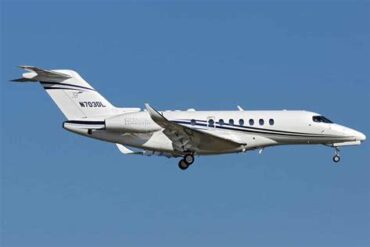
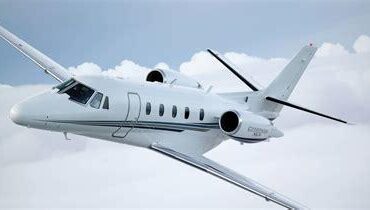
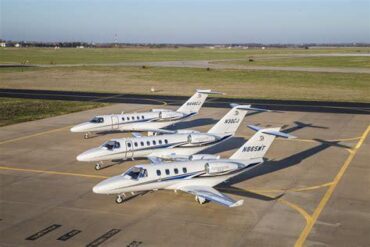
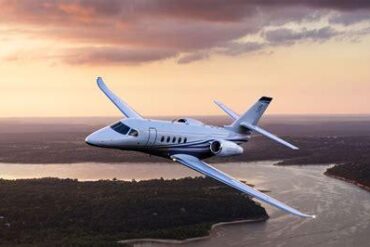
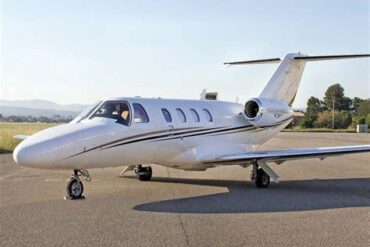
The Cessna Citation Longitude, the largest and most advanced aircraft in the Cessna Citation family, represents a powerful fusion of engineering precision, luxurious design, and intercontinental capability. Developed by Textron Aviation, this super-midsize business jet redefines expectations in private aviation, delivering the range and comfort demanded by global travelers while preserving operational efficiency and competitive cost structure.
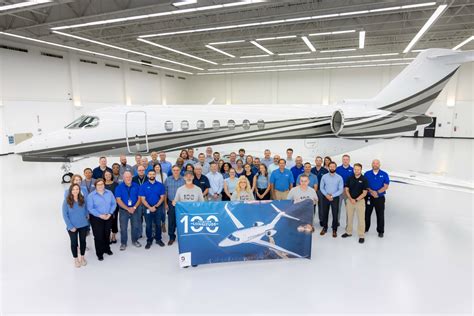
Introduced in October 2019 following a meticulous development process and a series of rigorous testing campaigns, the Longitude has steadily earned its place among the elite aircraft in its category. With more than 100 units delivered by mid-2023, it stands not only as a technical triumph but also as a commercial success in the fiercely competitive midsize jet segment.
A Legacy of Innovation and Evolution
Announced during the 2012 European Business Aviation Convention & Exhibition (EBACE), the Citation Longitude (Model 700) was conceived as a successor to the canceled Citation Columbus project and as a step beyond the successful Citation Latitude. Built on the proven Latitude fuselage, the Longitude’s design stretches the platform’s capabilities, integrating an extended cabin, new swept wings, and higher-performance engines.
The Longitude’s first flight occurred on October 8, 2016, kicking off a development campaign that would span over 6,000 flight hours and 11,000 test points, culminating in FAA type certification in September 2019. The program’s maturity and thorough validation contributed to a remarkably smooth service entry, with launch customer NetJets receiving its first aircraft by the end of that year.
Airframe, Aerodynamics, and Powerplant
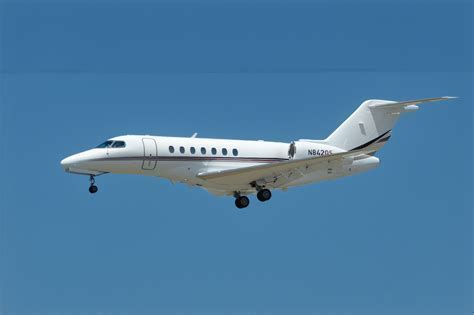
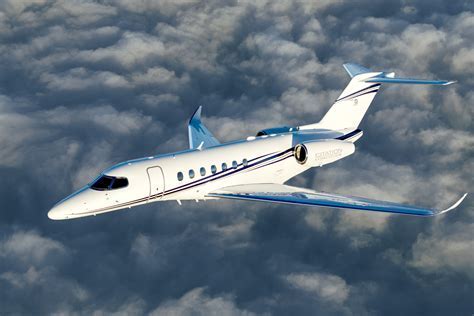
At the core of the Citation Longitude’s design is its swept-wing, T-tail configuration constructed almost entirely of aluminum. The fuselage maintains the 83.25-inch circular cross-section found in the Latitude, stretched to accommodate an extra seat row and reinforced to support increased range and cabin pressure demands.
The wing architecture, with a quarter-chord sweep of 26.8° to 28.6°, is optimized for high-speed cruise and fuel efficiency. Integrated moderate winglets enhance aerodynamic performance and stability at altitude, yielding a wingspan of nearly 69 feet (21.01 m) — 5.3 feet broader than the Hawker 4000, with which it shares similar empennage geometry.
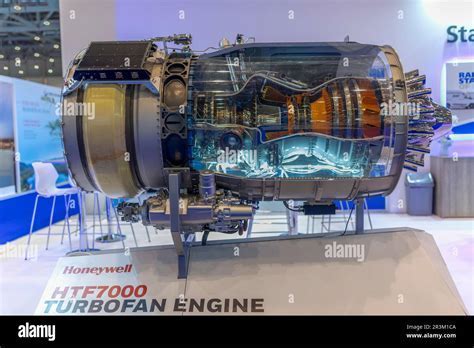
Propulsion comes from two Honeywell HTF7700L turbofan engines, each generating 7,665 pounds of thrust, enabling a maximum cruise speed of Mach 0.84 (483 knots) and a range of 3,500 nautical miles. These engines offer a balance of power, reliability, and fuel efficiency, drawing on Honeywell’s proven HTF7000 series lineage.
Performance and Mission Capability
The Citation Longitude’s mission profile positions it as a true intercontinental business jet, capable of connecting city pairs like Los Angeles to New York, London to Dubai, or Singapore to Tokyo non-stop under optimal conditions.
-
Takeoff distance: 4,810 ft (1,466 m)
-
Landing distance: 3,170 ft (966 m)
-
Service ceiling: 45,000 ft (13,716 m)
-
Fuel capacity: 14,511 lb (6,600 kg)
-
Cruise fuel burn: ~2,400 lb/hr first hour, then 1,600–1,800 lb/hr
-
Cabin altitude: 5,950 ft at 45,000 ft cruising level
Such performance metrics allow operators to access shorter runways at high-elevation airports while preserving long-haul capability — a rare feat among midsize competitors.
Cabin Experience and Interior Design
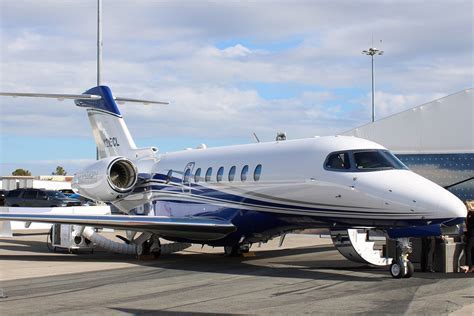
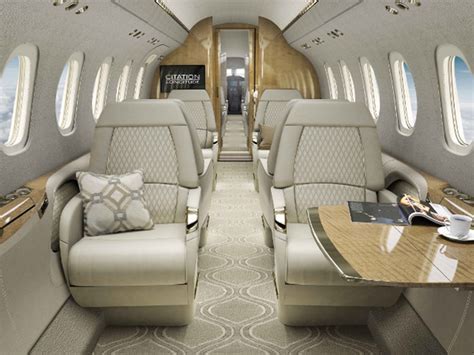
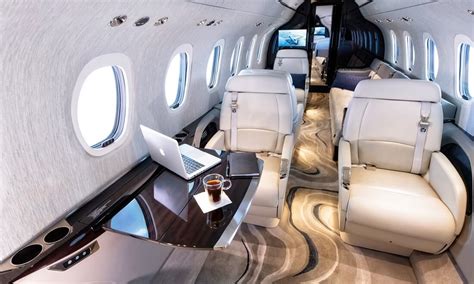
One of the most compelling attributes of the Longitude is its flat-floor cabin, engineered for maximum comfort and configurability. With a cabin length of 25 feet 2 inches, height of 6 feet, and width of 6 feet 5 inches, the aircraft seats 8 passengers in a double-club layout, with optional configurations supporting up to 12 occupants.
Textron’s emphasis on a quiet cabin experience is central to the Longitude’s appeal. The aircraft features an advanced acoustic insulation package, which, combined with pressurization that maintains a 5,950-ft cabin altitude, ensures passenger well-being on long flights.
Highlights include:
-
Fully reclining club seats with ergonomic contours
-
Wireless cabin management system for lighting, media, and climate
-
Optional aft lavatory and spacious baggage compartment accessible in flight
-
Standard galley with refreshment center and cabinetry options
Flight Deck and Avionics
The Longitude’s Garmin G5000-based flight deck offers a compelling mix of automation, situational awareness, and intuitive operation. Designed to reduce pilot workload, the system includes:
-
Three 14-inch widescreen displays
-
Synthetic Vision Technology (SVT)
-
Touchscreen controllers
-
Advanced autopilot and auto-throttle
-
Emergency descent mode
-
Electronic charts and optional head-up display (HUD)
Such avionics support both experienced crews and operators seeking to minimize transition time between Citation platforms.
Development Journey and Global Certification
The Citation Longitude’s path to certification was comprehensive, involving over 1,650 test flights and extensive simulation modeling. Textron’s Wichita, Kansas facility oversaw aircraft assembly and flight validation. While the program faced modest delays related to certification documentation and flammability compliance, the aircraft’s FAA type certification was finalized in September 2019, followed by EASA approval in July 2021.
A pivotal moment came with NetJets’ 2018 announcement to purchase up to 175 Longitudes, establishing the model as a cornerstone in the fractional ownership space and bolstering its credibility among institutional operators.
Operators and Mission Versatility
Beyond private and corporate users, the Longitude has been adopted for specialized governmental roles. The Japan Civil Aviation Bureau uses a modified Longitude for navigation aid calibration, while Turkey’s General Directorate of State Airports Authority has ordered one for similar duties. These variants underscore the platform’s adaptability beyond VIP transport.
The Longitude’s combination of high-speed cruise, short-field performance, and large-cabin comfort enables it to compete directly with aircraft such as:
-
Bombardier Challenger 350
-
Gulfstream G280
-
Embraer Praetor 600
-
Dassault Falcon 2000S
Conclusion
The Cessna Citation Longitude stands as a testament to Textron Aviation’s commitment to performance, luxury, and mission flexibility. As the largest Citation jet in production, it bridges the gap between midsize efficiency and large-cabin capability. Whether for corporate executives, fleet operators, or government agencies, the Longitude offers an unmatched value proposition in the super-midsize category — combining range, speed, and comfort in a single, unified solution.
As market preferences increasingly favor aircraft that provide transcontinental range without sacrificing airport accessibility or cost control, the Longitude proves that Cessna’s flagship jet is more than a business tool — it’s a competitive advantage.
Frequently Asked Questions
How far can the Cessna Citation Longitude fly non-stop?
The Citation Longitude has a maximum range of 3,500 nautical miles (6,482 km), enabling non-stop flights such as New York to London or Los Angeles to Honolulu, depending on payload and weather conditions.
What is the price of a new Citation Longitude?
As of 2023, the equipped price of a new Citation Longitude is approximately $29.995 million, making it competitive within the super-midsize market when considering its cabin size and performance.
Who typically operates the Citation Longitude?
The aircraft is widely used by corporate flight departments, fractional ownership providers like NetJets, and government agencies. It is favored for its blend of range, cabin comfort, and ease of operation across a wide variety of mission profiles.