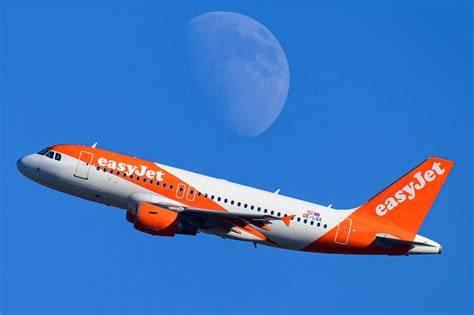
Apollo Funds has secured the votes needed to buy easyJet, with 97.07% of shareholders backing a £5.7 billion ($7.57 billion) takeover that will end the budget carrier’s 26-year run as a publicly listed company. The deal, struck at 715p ($9.50) per share, passed both the Court Meeting and General Meeting held to ratify the acquisition, clearing the most consequential hurdle on the road to privatization. Pending regulatory approval, the transaction is expected to complete by the end of March, and when it does, one of Britain’s most recognizable airline brands will disappear from the FTSE.
The ownership structure revealed in the approved terms is more nuanced than a straightforward buyout. Apollo Funds will hold up to 49.9% of easyJet, while rollover shareholders—those who elected to retain equity rather than accept cash—will control between 45.1% and 49.9%. An EU Trust will hold up to 5%, a structure designed to satisfy European ownership and control rules that require airlines operating within the bloc to be majority-owned by EU or associated nationals. The bidding vehicle is Eagle Bidco Ltd, a company indirectly owned by Apollo Funds and managed by affiliates of Apollo Capital Management, L.P.
Sir Stelios Haji-Ioannou, who founded easyJet in 1995 and, together with his family, held roughly 15% of the airline, is understood to have backed the takeover. His support carried weight: as the company’s largest single shareholder bloc, the Haji-Ioannou family’s endorsement helped convert a contested bid into an overwhelming mandate. In a statement, easyJet confirmed that the requisite majority of Scheme Shareholders approved the Scheme at the Court Meeting and that the requisite majority of easyJet Shareholders passed the Resolution at the General Meeting.
Why easyJet Was Ripe for a Private Equity Buyer
The airline’s willingness to entertain a sale was hardly mysterious. easyJet had been consulting on proposals to cut approximately 50 head office roles from a 2,300-strong corporate team, a signal of the cost discipline investors had been demanding. It had also previously engaged with Castlelake, a US investment firm, about a potential takeover before Apollo emerged as the preferred counterparty. For a carrier navigating thin margins, seasonal demand swings and relentless competition from Ryanair and Wizz Air, the appeal of deep-pocketed private capital proved difficult to resist.
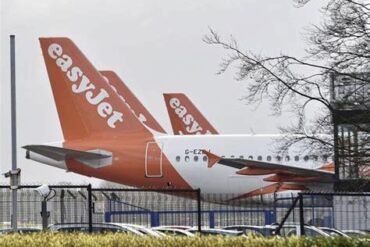
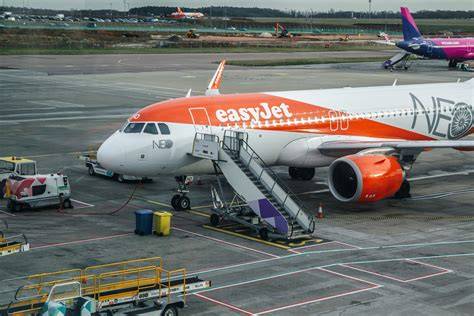
The assets Apollo is acquiring are overwhelmingly uniform: a fleet entirely composed of Airbus narrowbody jets. According to Planespotters.net, easyJet currently operates 44 Airbus A319s averaging 18.3 years old, 81 A320s at 13.8 years, 52 A320neos at 5.8 years and 22 A321neos at 3.7 years—199 aircraft in total, with an average fleet age of 11.6 years. The airline has previously flown Boeing 737s and 757s as well as British Aerospace BAe 146s, but its modern identity is built squarely on Airbus. That fleet represents the core of the physical business that will pass into Apollo’s control.
Inside Apollo: The $840 Billion Private Equity Giant Behind the Bid
The buyer brings formidable financial firepower. Apollo began operations in 1990 and is headquartered in New York City; in Private Equity International’s 2024 ranking of the world’s largest private equity firms, it placed 29th. In 2025 the company managed $840 billion in assets and reported net income of $3.5 billion, with $99 billion of those assets invested in private equity. Against those figures, a £5.7 billion airline acquisition is a meaningful but far from balance-sheet-breaking commitment. Apollo’s most visible UK presence is through its ownership of The Restaurant Group, the operator of the Asian-style chain Wagamama, giving it prior experience in consumer-facing British brands.
What Apollo Has Pledged on Operations, Jobs and Strategy
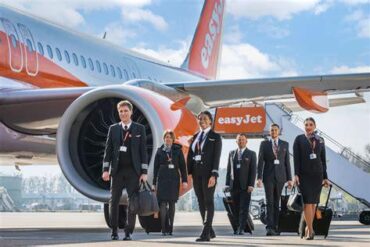
Apollo has moved to reassure stakeholders that the airline will not be dismantled. Reuters reported that Apollo will maintain the status quo: easyJet will remain a standalone business with consistent branding, the UK headquarters will stay in place, and the UK, Austrian and Swiss Air Operator Certificates will be retained. The group has also pledged to avoid redundancies during the first 12 months of its control, limiting immediate upheaval for the workforce.
Beyond continuity, Apollo argues that private ownership unlocks what public markets could not. Access to additional capital and freedom from quarterly reporting will allow easyJet to plan for the long term, deploying its existing network and slots more aggressively. According to the Financial Times, the strategy is to “do more” with what easyJet already has while preserving its low-cost proposition for customers.
Two changes are already on the agenda. The first is a far more expansive loyalty program, a lever low-cost carriers increasingly use to deepen customer relationships and lift ancillary revenue. The second is the introduction of premium elements on select routes—a careful departure from easyJet’s pure low-fare model, targeted where business and leisure travelers will pay for extra comfort. Both moves point toward a carrier that keeps its budget DNA but extracts more value from every passenger and every seat.
The Road Ahead: Regulatory Approval and a Privatized Future
Completion still hinges on regulatory clearance, with the parties targeting the end of March. Should approval arrive on schedule, easyJet’s 26-year presence on the London stock market will come to an abrupt halt, closing a chapter that began with Haji-Ioannou’s vision of cheap European air travel and ending with one of America’s largest alternative asset managers at the controls. For passengers, the near-term outlook is continuity of brand and service; for the European aviation industry, the deal marks another step in the quiet transfer of airline ownership from public shareholders to private capital, and a test of whether patient money can make a low-cost carrier fly higher than the market ever allowed.