Spirit AeroSystems’ Belfast division is grappling with staggering financial losses, pushing the renowned aerostructures manufacturer toward a precarious future as it awaits its takeover by Boeing and Airbus. This crisis, emerging from decades of operational and financial turbulence, threatens to undermine one of Northern Ireland’s largest manufacturing hubs, raising concerns across the global aerospace supply chain.
The Depth of Belfast’s Financial Crisis
Spirit AeroSystems’ 2024 financial results reveal a grim picture. Its Belfast operations reported pre-tax losses exceeding $500 million last year alone, marking a significant deterioration from prior periods. While annual turnover climbed to $804 million—a rise from $723 million in 2023—the growth was overshadowed by substantial one-time charges totaling $403 million. The result: a financial black hole that questions Belfast’s ability to remain operational until its acquisition finalizes.
Further compounding its woes, the Belfast plant’s liabilities now stand near $1 billion, doubling the figure from 2023. With just $72 million in available cash, auditors warn that Spirit’s Northern Irish hub may survive only until September 2026 without significant external intervention.
Boeing and Airbus: Dividing Spirit’s Assets
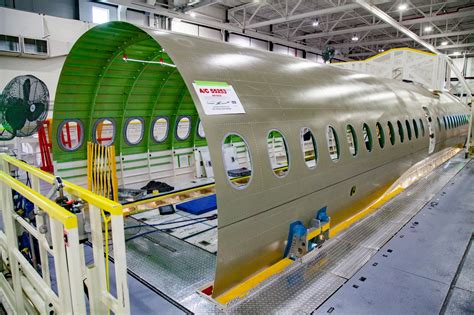
Spirit AeroSystems’ financial collapse has accelerated its breakup and sale to the aerospace giants that once relied on its production lines. In 2024, Boeing moved to reclaim parts of Spirit’s U.S. operations, primarily those tied to its 737 MAX fuselage production. Conversely, Airbus targeted Spirit’s Belfast, Prestwick, and other international facilities, all critical for its A220 and A320 families.
At the center of this corporate reshuffling:
- Belfast, Northern Ireland: Airbus acquires A220 wing manufacturing, Boeing secures unrelated assets.
- Prestwick, Scotland: Airbus takes over A320 and A350 wing operations.
- Kinston, North Carolina: Airbus absorbs key component production.
- Wichita, Kansas: Both Boeing and Airbus divide pylon production lines.
Notably, for assets disconnected from Airbus or Boeing programs, Spirit seeks third-party buyers, though this strategy faltered for portions of Belfast. In those cases, Boeing stepped in as the buyer of last resort.
The Quality Control Crisis Fueling Financial Collapse
Quality assurance failures have long haunted Spirit AeroSystems, particularly in its Boeing 737 program. This came to the forefront following the Alaska Airlines 737 MAX 9 incident, where a door plug blew out mid-flight. Investigations revealed the component had been improperly reinstalled during Spirit-conducted repairs.
These failures are not isolated. Spirit’s history includes:
- Misdrilled fastener holes
- Incorrectly installed tail fin fittings
- Foreign object debris inside aircraft structures
Each of these flaws led to delivery delays, increased operational costs, and severe reputational harm. Boeing and Airbus, already stretched with production challenges, found their own operations jeopardized by Spirit’s shortcomings, accelerating their moves to internalize production through acquisitions.
Government Scrutiny and Market Uncertainty
In parallel, the UK government’s Competition and Markets Authority (CMA) launched an investigation into Boeing’s acquisition of Spirit’s Belfast assets. Regulators fear that Boeing’s expanded control could stifle competition in the aerostructures market, given its strategic importance to both defense and commercial aviation. This scrutiny introduces yet another layer of uncertainty over Belfast’s future.
While Boeing, Airbus, and other stakeholders have injected emergency funding into Spirit’s operations, this lifeline is temporary. Auditors emphasize that these interventions are stopgap measures, unable to resolve Spirit’s core problems of quality control failings, overextended operations, and decades of strategic missteps.
Strategic Importance of Belfast to Airbus
Despite its financial instability, Spirit Belfast remains strategically vital for Airbus. The site is integral to the production of A220 composite wings, critical components that Airbus cannot easily replicate elsewhere. Airbus’s acquisition of Belfast thus serves dual purposes: securing supply chain continuity and preventing production disruptions that could ripple across its global assembly lines.
Moreover, Airbus’s leadership views Spirit’s woes as symptomatic of a broader industry reliance on underperforming suppliers. By absorbing these facilities, Airbus can implement its own production standards, enhance oversight, and mitigate supply chain vulnerabilities. However, integrating these distressed assets poses its own risks, especially with ongoing financial hemorrhaging in Belfast.
Boeing’s Strategic Rationale
Boeing’s acquisition strategy focuses largely on reclaiming control over critical fuselage and structural components, especially after persistent delays and faults in its 737 MAX program. By reincorporating these assets, Boeing aims to streamline production, enforce stricter quality protocols, and limit reliance on external vendors with checkered operational histories.
While Boeing previously spun off these facilities in 2005 to reduce costs, the resultant supply chain fragmentation has arguably backfired. The current acquisition signifies a strategic pivot, acknowledging that long-term stability and quality control outweigh short-term outsourcing savings.
Can Spirit AeroSystems Survive Until Acquisition Completes?
With $500 million in annual losses, $1 billion in liabilities, and just $72 million in cash reserves, Spirit AeroSystems’ Belfast division stands at the edge of operational collapse. Whether Airbus’s intervention will arrive in time remains uncertain, particularly under regulatory reviews that could delay takeover proceedings.
Unless external capital injections continue at pace, or if regulatory authorities expedite approval processes, Belfast could see shutdowns or significant workforce reductions by mid-2026. The outcome of this crisis will likely redefine supply chain strategies for both Airbus and Boeing, reshaping the future of aerospace manufacturing in Northern Ireland.
Conclusion: A Future Hanging by a Thread
Spirit AeroSystems’ Belfast division exemplifies the vulnerabilities facing modern aerospace supply chains. Years of mismanagement, compounded by technical failings and overreliance on outsourced production, have led to a financial catastrophe. Airbus and Boeing’s carve-up of Spirit’s assets reflects not merely opportunistic expansion but strategic necessity, aimed at securing control over critical manufacturing nodes.
Yet, for the workers in Belfast, the fate of their plant—and their livelihoods—hangs in the balance. Whether under Airbus stewardship or through prolonged uncertainty, the next 12 months will determine whether Spirit Belfast becomes a cornerstone of Airbus’s future or a cautionary tale of industry miscalculation.