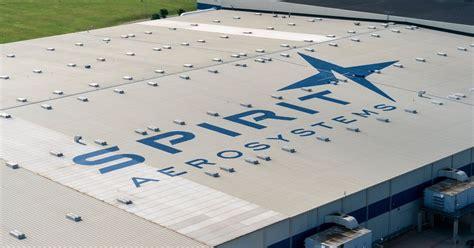
The U.S. Federal Trade Commission has taken a bold and uncompromising stance in the aerospace sector, approving Boeing’s acquisition of Spirit AeroSystems only under terms that strengthen Airbus instead of weakening it. The regulator’s consent order requires Boeing to hand over Spirit units responsible for producing Airbus components—an extraordinary twist that forces one aviation titan to arm its greatest rival as the cost of securing an $8.3 billion merger. The transaction now moves forward under heavy oversight, friction, and historic competitive safeguards that reshape both commercial and military aerospace power balances.
Boeing may acquire Spirit, but it cannot keep the parts of the company that build Airbus aircraft. The FTC determined that owning those Airbus-facing operations would give Boeing a potentially dangerous degree of influence—allowing price manipulation, capacity restriction, or deliberate degradation of Airbus access to critical aerostructures. Instead, Boeing must divest those operations—including facilities, tooling, intellectual property, and key personnel—to Airbus itself.
This enforced handoff hands Airbus something more valuable than components: autonomy and insulation from its competitor’s control. Rather than relying on a supplier owned by its fiercest commercial enemy, Airbus now gains internal industrial capability—expanding production security and reducing long-term vulnerability.
The divestiture aligns with an earlier cooperation framework negotiated between Airbus and Spirit in early 2025, making the regulatory mandate less a rupture and more an acceleration of a strategic shift already in motion. In practice, Airbus transitions from customer to owner of the very pipeline that feeds its aircraft assembly lines—an unexpected gift delivered by U.S. antitrust authority.
Global Aerostructures Capacity Squeezes While Boeing Concedes Ground
While Boeing regains a supplier it once spun off for short-term financial efficiency, it returns home with less than it bargained for. Losing Airbus-linked business narrows integration benefits, reduces scale, and blunts expected vertical recovery advantages. Yet the concession also removes regulatory roadblocks and stabilizes supplier infrastructure already stressed by global demand spikes.
The ruling acknowledges a reality shaping every aerospace boardroom: aerostructures capacity is scarce, fragile, and strategically priceless. Ensuring both giants retain access to high-output fabrication protects program continuity worldwide. Boeing absorbs pain for approval—but gains predictability for long-term ramp-up.
Mandatory Supply Fairness for U.S. Defense Contractors
This order reaches far beyond Toulouse and Seattle. The FTC explicitly classified Spirit as a gatekeeper to defense-critical materials and structures, emphasizing the risk of allowing Boeing unilateral control. Spirit must continue supplying rival defense primes with non-discriminatory pricing, schedule parity, and protected proprietary data. Firewalls prevent Boeing from using Spirit access to gather intelligence on competitors’ costs, designs, or contract strategies.
These guardrails matter in an industry where winning a single contract can define a decade, and where a marginal procurement advantage compounds into strategic dominance. Boeing may gain manufacturing uniformity, but it loses leverage. Washington, meanwhile, gains assurance that U.S. airpower will not hinge on a single private production corridor.
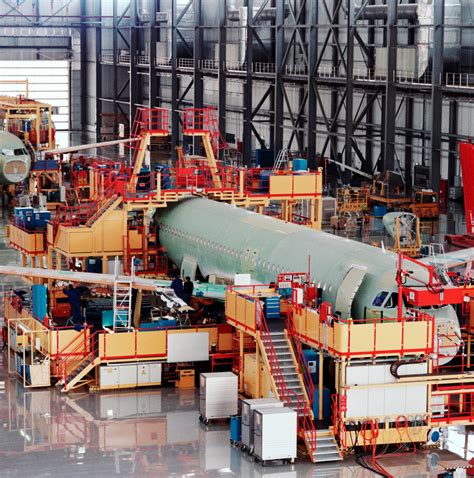
A Deal Approved—But Only Under Watchful Eyes
Spirit must now enter a monitored integration period, supply Airbus with transitional support, and submit to public comment scrutiny. Boeing calls the acquisition a necessary quality correction. The FTC calls it a competition defense maneuver. Both views are right—the arrangement simultaneously stabilizes production, preserves rivalry, and redraws market share dynamics.
The aerospace world now watches as one of the most unusual antitrust remedies in aviation history unfolds: Boeing gets its supplier back, but only by fortifying Airbus’ industrial independence and by treating defense rivals with enforced neutrality. Global duopoly competition survives—perhaps even strengthens.
The next chapter belongs to Toulouse and Seattle. Steel, composites, and carbon fiber will write it.