
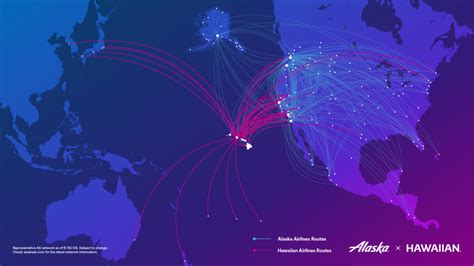
In a landmark decision with wide-reaching implications for the U.S. aviation market, the U.S. Department of Transportation (DOT) has officially approved the $1.9 billion acquisition of Hawaiian Airlines by Alaska Air Group, the parent company of Alaska Airlines and Horizon Air. This move comes after nearly a year of regulatory scrutiny, market speculation, and industry anticipation, ultimately paving the way for a unified airline group set to serve more than 54 million passengers across 138 destinations annually.
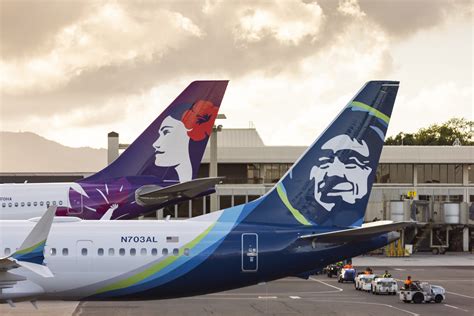
DOT Greenlights Merger Following Months of Review
The DOT’s approval marks the final federal regulatory milestone needed for the integration of Hawaiian Airlines into the Alaska Air Group family. The green light follows the December 2023 announcement that Alaska would acquire Hawaiian Airlines for $1.9 billion—a figure that includes approximately $900 million of Hawaiian’s existing debt. By July 2024, the two carriers had jointly filed with the DOT to transfer economic authorities, international route certificates, and existing codeshare arrangements.
According to the DOT’s formal statement, the approval was granted after “carefully reviewing the application and other available information, and determining that the proposed certificate transfer is in the public interest,” citing Title 49 of the U.S. Code Section 41105. Notably, no objections were raised by stakeholders or competing airlines during the review process, further streamlining the path toward consolidation.
Unifying Two Distinct Brands Under One Holding Group
While the merger enables Alaska Airlines and Hawaiian Airlines to combine resources and networks, the Alaska Air Group emphasized its commitment to preserving the Hawaiian brand, its long-standing legacy, and essential interisland services critical to the state’s infrastructure. Executives reiterated that no changes to ownership structure or operational identity are currently planned for either brand, ensuring a dual-brand strategy that seeks to balance synergy with cultural sensitivity.
Alaska CEO Ben Minicucci has publicly stated that maintaining Hawaiian Airlines’ heritage is a key part of the acquisition. This pledge includes retaining the Hawaiian name, protecting employee roles, and continuing the vital intra-Hawaii routes that serve as lifelines for residents.
Enhancing Domestic Competition Amid Big Four Dominance
One of the core justifications presented by both airlines is the potential to inject fresh competition into the U.S. domestic and international airline sectors, long dominated by the so-called Big Four—American Airlines, Delta Air Lines, United Airlines, and Southwest Airlines—who together control approximately 80% of the U.S. market.
By merging operations while maintaining brand differentiation, Alaska and Hawaiian aim to deliver more affordable pricing, enhanced cabin class variety, and increased capacity across key routes. With a newly expanded reach, the group now commands a significant presence in the western U.S., Pacific, and Asia-Pacific markets.
Expanded Global Reach Through Codeshares and Alliances
The DOT’s approval also clears the path for Alaska Airlines to absorb and continue Hawaiian Airlines’ international route authorizations and codeshare partnerships. Hawaiian currently holds valuable approvals to operate or market flights to destinations such as Tokyo Haneda (HND), Tahiti (PPT), and Mexico, as well as third-country codesharing with Vietnam and Hong Kong.
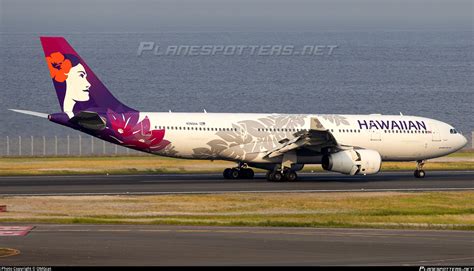
Hawaiian’s robust list of codeshare partners includes:
- Japan Airlines (oneworld member)
- Air China
- China Airlines
- Korean Air
- Philippine Airlines
- Turkish Airlines
- Virgin Australia
Alaska Airlines, which joined the oneworld alliance in 2021, adds its own list of key codeshare partners to the mix, including:
- Singapore Airlines
- STARLUX Airlines
- Air Tahiti Nui
- Icelandair
- LATAM Airlines
- Condor Airlines
This consolidation grants passengers broader access to more than 1,200 global destinations, unified under the frequent flyer ecosystem of Alaska’s Mileage Plan. Hawaiian customers stand to benefit directly from elite tier reciprocity, global lounges, and tighter connectivity between U.S. West Coast gateways and the Asia-Pacific region.
Boost to International Services From West Coast Hubs
The integration has already begun manifesting in Alaska’s international strategy. Since the merger was finalized in September 2024, Alaska Airlines has announced or launched multiple long-haul international routes:
- Seattle to Tokyo Narita (NRT) — launched May 2025
- Seattle to Seoul Incheon (ICN) — launching September 2025
- Seattle to Rome Fiumicino (FCO) — scheduled for May 2026
These flights, some of which will be operated using Alaska’s newly acquired Boeing 787-9 Dreamliners, represent a major leap forward for a carrier once focused largely on domestic operations. Alaska is currently pursuing a Single Operating Certificate from the FAA, which is expected in late 2025. Once achieved, it will allow both brands to consolidate behind-the-scenes operations such as maintenance, dispatch, and training—maximizing cost efficiencies.

Synergies and Economic Impact
The Alaska-Hawaiian union is projected to generate $400 million in run-rate synergies within two years of closing, according to Alaska Air Group. These savings are expected to come from network optimization, unified vendor contracts, streamlined back-end systems, and more efficient fleet utilization.
More importantly, Alaska has made firm commitments to Hawaiian employees, vowing better compensation packages, enriched benefits, and expanded career mobility within the merged organization. Given the ongoing labor tensions at several legacy U.S. carriers, this pro-worker approach could offer a blueprint for future mergers.
Additionally, the newly combined entity is poised to bolster Hawaii’s tourism economy, which remains one of the state’s primary industries. With improved connectivity to mainland cities and global gateways, Hawaii could see a rise in visitor volumes and business travel, particularly from underserved secondary cities.
Regulatory Context and Market Reaction
The DOT’s approval arrives amid broader regulatory scrutiny of airline consolidation. Notably, this merger avoids the kind of antitrust pushback that derailed the JetBlue–Spirit Airlines merger earlier in 2024. Unlike that pairing, which would have removed a low-cost competitor from the marketplace, Alaska and Hawaiian argued persuasively that their combination enhances rather than limits consumer choice, especially on trans-Pacific and interisland routes.
Wall Street and market analysts have responded positively, citing the deal as a strategic win for both carriers. Alaska’s stock experienced a mild uptick after the DOT announcement, while Hawaiian’s stock showed gains following the initial merger news in late 2023.
The Future of Dual-Brand Airline Groups
As the airline industry continues to navigate post-pandemic recovery, sustainability pressures, and infrastructure challenges, this merger could signal a new phase of cooperative consolidation. Instead of full brand absorption, Alaska’s preservation of Hawaiian’s identity reflects a hybrid merger model, one that prioritizes local loyalty, cultural uniqueness, and route integrity.
From a strategic standpoint, Alaska gains long-coveted access to Asian markets and Pacific islands, while Hawaiian secures financial stability and greater network scale. For consumers, the deal promises enhanced loyalty programs, broader destination options, and stronger service offerings across both carriers.
Whether this merger model inspires similar arrangements in the U.S. or abroad remains to be seen. But for now, the Alaska-Hawaiian union stands as one of the most carefully executed and broadly supported mergers in recent U.S. aviation history.
Conclusion: A Pacific Powerhouse Emerges
With the DOT’s seal of approval, the Alaska-Hawaiian merger moves from possibility to reality. The strategic blending of two distinctly regional airlines into a globally capable group not only strengthens their competitive standing but also reshapes the U.S. aviation narrative for the decade ahead.
As passengers begin to see more seamless travel, expanded networks, and enhanced perks, the combined might of Alaska and Hawaiian Airlines offers something rare in modern aviation: growth with respect for legacy, and scale with a commitment to service.