South Korea has taken a decisive step into the upper tier of modern airpower by approving a 1.9 trillion won ($1.29 billion) program to develop a dedicated electronic warfare aircraft for the Republic of Korea Air Force. Announced by the Defense Acquisition Program Administration in January 2026, the initiative targets an operational debut around 2034 and is designed to counter increasingly complex radar networks, missile batteries, and communications systems surrounding the Korean Peninsula.
This decision reflects a sober assessment of how air combat has changed. Control of the skies no longer depends solely on speed, stealth, or firepower. It depends on control of the electromagnetic spectrum—the invisible terrain where radars search, data links whisper, and command networks coordinate every move. By investing in a purpose-built electronic warfare aircraft, Seoul is signaling that future conflicts will be decided as much by signal dominance as by kinetic force.
Unlike pod-equipped fighters that provide localized protection, the new platform is envisioned as a wide-area, stand-off jammer capable of shaping the battlespace from outside the reach of long-range surface-to-air missiles. It places South Korea among a small and technically demanding club of nations that operate large, specialized electronic attack aircraft, a category historically dominated by the United States.
A Strategic Leap Into Electromagnetic Dominance
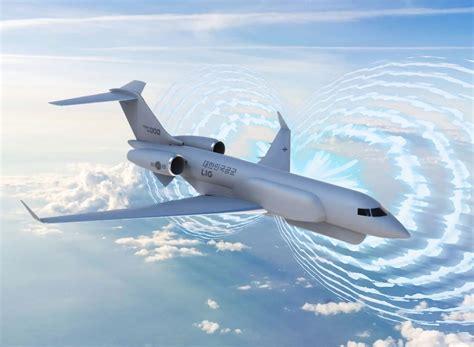
At the heart of the program lies the Electronic Warfare Aircraft (Block-I), a system designed to both observe and disrupt hostile electromagnetic activity. In peacetime, the aircraft will conduct persistent monitoring, cataloging radar emissions and communications patterns across the region. In crisis or war, it will shift roles, delivering tailored jamming against radars, data links, and command-and-control nodes that form the backbone of integrated air defense systems.
This dual-use concept reflects a broader strategic philosophy. Modern electronic warfare is not just about noise jamming; it is about understanding an adversary’s systems in exquisite detail and exploiting their vulnerabilities at precisely the right moment. By building a dedicated platform rather than relying solely on allied assets, South Korea gains autonomy in how, when, and where it applies this capability.
The program’s scale also matters. A budget exceeding a billion dollars signals that this is not an experimental add-on but a core pillar of future air operations, integrated into planning for both national defense and combined missions with allies.
Platform Choices and Mission Architecture
South Korean authorities have not yet confirmed the final airframe, but official statements and domestic reporting point toward a long-range business jet platform. Aircraft such as the Bombardier Global 6500 or Gulfstream G550 are frequently cited as reference designs due to their altitude, endurance, and internal volume—attributes essential for high-power electronic warfare missions.
These aircraft offer more than range and comfort. They provide the electrical generation capacity, cooling margins, and cabin space required to host modern electronic attack suites. Inside, racks of digital signal processors, high-power transmitters, and multiple operator consoles will work continuously to detect, classify, and disrupt hostile emissions across multiple frequency bands.
From a design perspective, the aircraft is expected to feature conformal antenna arrays along the fuselage and specialized ventral structures to enable near-360-degree coverage. This architecture allows simultaneous detection and jamming, supporting the complex choreography required to suppress layered air defenses without revealing unnecessary signatures.
Domestic Industry at the Core of the Program
One of the most consequential aspects of the initiative is its industrial structure. LIG Nex1 has been identified as the lead contractor for the mission system, responsible for the electronic support measures and electronic attack payloads that define the aircraft’s combat power. Korean Air is widely expected to handle airframe modification and overall integration, drawing on its experience with special-mission platforms and complex aerospace programs.
This arrangement is deliberate. By anchoring the program domestically, Seoul aims to consolidate sovereign expertise in electronic warfare—a field traditionally constrained by export controls and classified technologies. South Korea’s strengths in microelectronics, software, and signal processing position it well to develop agile systems capable of coping with modern threats such as frequency-hopping radars and low-probability-of-intercept waveforms.
The Block-I designation also hints at a longer roadmap. Official planning documents refer to a future Block-II evolution, suggesting that the initial aircraft will be designed with modularity and growth potential, allowing upgrades as adversary systems and electronic warfare techniques evolve.
Filling a Critical Capability Gap
Until now, the Republic of Korea Air Force has relied primarily on fighter-mounted jamming pods and allied support to address electronic threats. While effective for escort and self-protection, these solutions lack the persistence and power needed to systematically degrade an adversary’s air defense network over a wide area.
The new aircraft is designed to operate differently. By orbiting at standoff distances, it can build a real-time electromagnetic picture of the battlespace and apply selective, high-power jamming that opens temporary corridors of reduced detection. This capability is essential for enabling follow-on operations by strike aircraft, intelligence platforms, and aerial refueling assets.
In practical terms, the aircraft acts as a force multiplier. It does not destroy targets directly, but it reshapes the environment in which every other aircraft operates, increasing survivability and operational tempo during the most dangerous phases of a campaign.

Tactical Impact on the Korean Peninsula
The tactical implications of a dedicated stand-off jammer are especially acute on the Korean Peninsula, where distances are short and air defenses are dense. Potential adversaries deploy layered radar networks linked to mobile surface-to-air missile systems, creating a challenging environment for conventional air operations.
By targeting not only individual radars but also the communications links that connect them, the new aircraft can fracture the coherence of these networks. This disruption delays detection, complicates tracking, and forces defenders into reactive modes, reducing the effectiveness of missile engagements and command decisions.
Such effects are not binary. Even partial degradation can create critical windows of opportunity, allowing friendly forces to operate with reduced risk during the opening stages of a conflict.
Strategic Signaling and Regional Context
Beyond the battlefield, the program carries strategic weight. Investing heavily in electronic warfare signals that South Korea is preparing for high-intensity, technologically sophisticated conflict, not just limited contingencies. It aligns Seoul with a broader regional trend in which air defense and counter-air systems are growing more complex and more networked.
At the same time, the move enhances South Korea’s standing as a defense technology producer, not merely a consumer. Mastery of electronic warfare systems opens doors to future export opportunities, particularly as many air forces seek to upgrade their electromagnetic capabilities without total reliance on U.S. platforms.
For allies, the aircraft promises improved interoperability. A South Korean stand-off jammer operating alongside allied forces enhances combined planning options and reduces strain on limited allied electronic attack assets.
From Program Approval to Operational Reality
Development timelines extending to 2034 underscore the technical complexity of the project. Integrating high-power electronic systems onto a compact airframe requires careful management of heat, power, and electromagnetic compatibility. It also demands extensive testing to ensure that jamming effects are precise, controllable, and adaptable to evolving threats.
Yet the long horizon is also a strength. It allows South Korea to incorporate lessons from ongoing conflicts, where electronic warfare has proven decisive in both offensive and defensive roles. By the time Block-I enters service, it is expected to reflect a decade of rapid advances in digital signal processing and software-defined architectures.
A New Pillar of South Korean Airpower
The approval of the Electronic Warfare Aircraft (Block-I) program marks a clear shift in South Korea’s defense posture. It recognizes that future air superiority will be contested not just in physical space but in the electromagnetic domain, where information, deception, and disruption determine outcomes.
By committing significant resources to a domestically led, stand-off jamming capability, Seoul is closing a long-acknowledged gap in its force structure. If development proceeds as planned and is followed by the envisioned Block-II upgrades, the Republic of Korea Air Force will gain a strategic enabler capable of shaping the air battle before the first missile is launched.
In an era defined by sensors and signals, South Korea’s investment is not merely about building a new aircraft. It is about claiming control of the invisible terrain that will define air combat for decades to come.