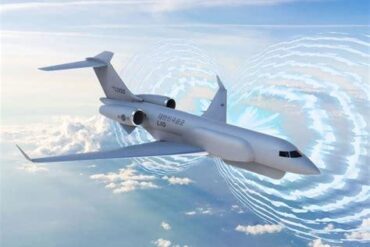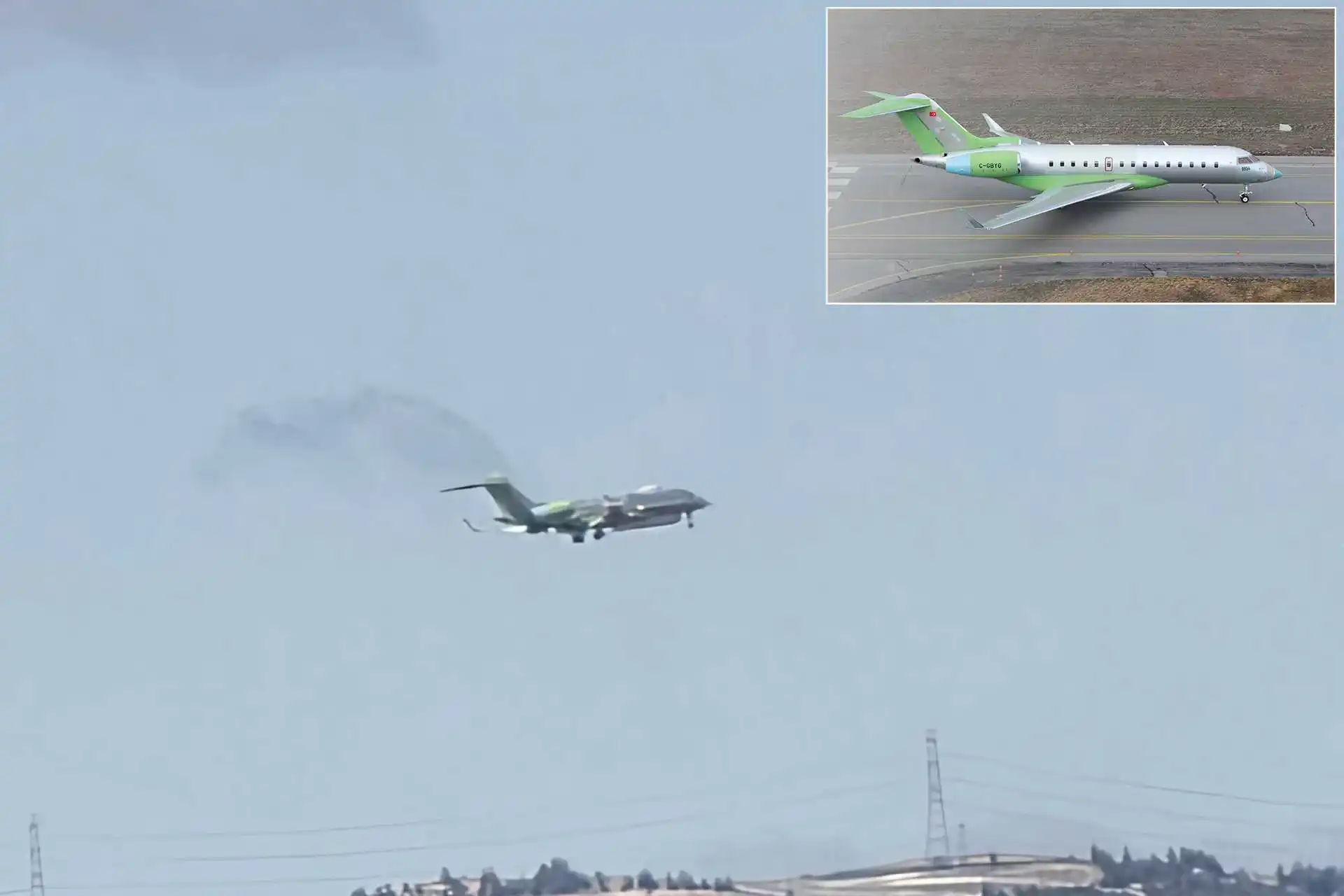
Türkiye has taken a decisive step into the future of networked air warfare with the latest test flight of its HAVA SOJ electronic warfare aircraft, a stand-off jammer designed to protect fighters and unmanned systems in high-threat environments. Conducted on March 1, 2026, the flight featured fully integrated mission systems, signaling that the program is approaching its targeted full operational capability by the end of the year.
At its core, HAVA SOJ is about reshaping the electromagnetic battlespace before a single bomb is dropped or a missile is fired. Modern air defense systems are no longer isolated radar dishes; they are layered, mobile, digitally networked ecosystems. To survive in that environment, combat aircraft must first dismantle the enemy’s ability to see, track, communicate, and coordinate. The HAVA SOJ aircraft is engineered precisely for that mission—crippling hostile sensors and communications while remaining safely outside their engagement range.
The program will deliver four dedicated stand-off electronic warfare jets, each based on the long-range Bombardier Global 6000 business jet platform. Development is overseen by Türkiye’s Secretariat of Defence Industries and encompasses more than aircraft modification. It includes purpose-built hangars, squadron facilities, and a dedicated planning and training center that anchors the entire operational ecosystem. This is not a single aircraft solution; it is a full-spectrum capability architecture.
The Strategic Role of HAVA SOJ in Future Air Campaigns
The HAVA SOJ platform performs two primary electronic warfare disciplines: electronic support (ES) and electronic attack (EA). Electronic support involves detecting, identifying, classifying, and locating enemy radar and communications emissions. In practical terms, the aircraft listens to the electromagnetic chatter of the battlefield—pinpointing radars, tracking systems, command nodes, and communication relays.
Electronic attack moves from observation to disruption. Using noise jamming and deception techniques, HAVA SOJ can degrade radar performance, feed false information into tracking systems, and interfere with communications links. When executed effectively, this process fractures an adversary’s command-and-control loop. Radar operators may see phantom targets. Missile batteries may lose tracking coherence. Command posts may struggle to relay clear instructions. Confusion becomes a weapon.
The aircraft is specifically designed to operate outside hostile airspace, a defining characteristic of stand-off jamming. Rather than penetrating deep into defended zones, HAVA SOJ projects electromagnetic power from beyond enemy radar and missile envelopes. This creates corridors through which friendly aircraft—most notably Türkiye’s emerging Kaan fifth-generation fighter and various UCAV platforms—can enter and exit contested zones with reduced detection risk.
The psychological dimension is just as important as the technical one. When adversary radar coverage becomes unreliable, decision-makers hesitate. That hesitation creates time and maneuvering space. In modern warfare, seconds can decide survival.
Integrated Mission Systems and Ground Coordination
HAVA SOJ’s onboard systems are built to handle complex, multi-domain signal environments. The mission suite conducts detection, recognition, classification, direction finding, and geolocation of radar and communication emitters across land, sea, and air domains. The aircraft effectively builds a dynamic map of the electromagnetic spectrum in real time.
Electronic attack functions are then tailored to the threat. Older radar systems may be susceptible to barrage noise jamming, which overwhelms receivers with electromagnetic clutter. More advanced digital systems require deception techniques—spoofing signals to create false returns or shifting perceived target positions. Precision in these operations matters; indiscriminate jamming risks interfering with friendly forces.
Crucially, the airborne element is linked to a ground-based planning and training center. This facility supports mission preparation, live execution coordination, and post-mission analysis. Electronic warfare is data-intensive. Every mission generates vast signal libraries that refine future threat recognition. The learning loop between aircraft and ground infrastructure transforms HAVA SOJ from a static tool into an adaptive system.
A Layered Turkish Electronic Warfare Architecture
HAVA SOJ does not operate in isolation. It forms the apex airborne stand-off layer within Türkiye’s expanding electronic warfare ecosystem.
Unmanned systems are being adapted under the UAV SOJ program, including electronic warfare variants of the Akinci and Aksungur drones. The Akinci, with greater onboard power generation, is oriented toward electronic attack missions, while the endurance-focused Aksungur supports electronic intelligence and surveillance roles.
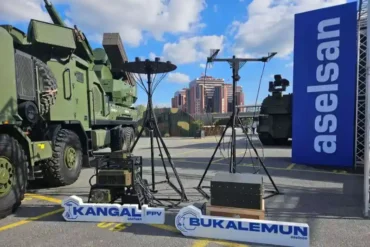
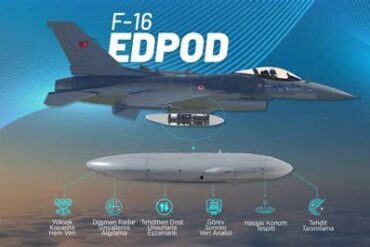
Ground-based assets such as Koral, Redet, Milkar, and Vural provide terrestrial jamming and radar suppression capabilities. Airborne systems include electronic warfare pods on F-16 fighters, alongside signal interception platforms such as Puhu 3-Lt and Karakulak. Additional components—Antidot and Bukalemun—expand deception and jamming options.
This layered approach reflects a doctrinal shift. Rather than relying on a single penetrative strike platform, Türkiye is constructing an interconnected web of airborne, unmanned, and ground-based systems. HAVA SOJ becomes the high-altitude conductor of this electromagnetic orchestra, synchronizing disruption across multiple vectors.
Why the Bombardier Global 6000 Was Chosen
The choice of the Bombardier Global 6000 as the HAVA SOJ airframe is strategically pragmatic. Originally part of the Global Express family announced in 1991, the platform entered service in 1999 and has matured into one of the world’s most versatile long-range business jets.
The Global 6000 variant, introduced in 2011, features the Bombardier Vision flight deck built around the Rockwell Collins Pro Line Fusion suite. With a maximum range of 6,000 nautical miles and a service ceiling of 51,000 feet, the aircraft offers endurance and altitude essential for stand-off electronic warfare. Its twin Rolls-Royce BR710A2-20 engines, each rated at 14,750 pounds of thrust, provide reliable high-altitude performance.
Fuel consumption follows a declining pattern across flight hours, optimizing long-duration missions. Maintenance cycles—A checks every 750 hours and C checks every 30 months—are well understood globally, reducing logistical uncertainty. In 2018, the unit cost was approximately $62.31 million, and more than 315 aircraft had been delivered by early 2019, establishing a broad support ecosystem.
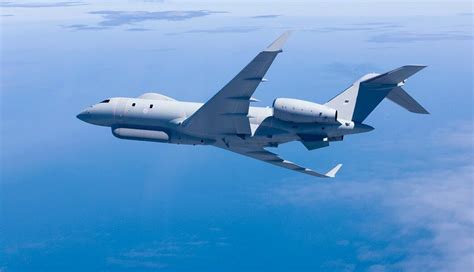
The Global platform’s adaptability has already been demonstrated worldwide. The Saab GlobalEye integrates an Erieye ER AESA radar for airborne early warning. Germany’s PEGASUS program selected the same airframe for signals intelligence. The UK’s former Sentinel R1, the U.S. Air Force’s E-11A Battlefield Airborne Communications Node, and U.S. Army intelligence variants based on the Global 6500 all underscore the airframe’s modular potential.
Türkiye’s decision reflects a pattern seen globally: pair a proven civilian long-range jet with advanced military payloads to achieve high performance with manageable cost and risk.
Shaping the Electromagnetic Battlefield
The emergence of HAVA SOJ signals Türkiye’s recognition that air superiority now hinges as much on spectrum dominance as on kinetic firepower. Radars guide missiles. Data links coordinate drones. Communications sustain command authority. Disrupt the spectrum, and the physical battlefield begins to unravel.
By 2026, when HAVA SOJ is expected to reach full operational status, Türkiye aims to field an integrated electronic warfare architecture capable of shielding manned and unmanned platforms alike. In a world where stealth is contested and air defenses are proliferating, the quiet art of electromagnetic disruption may prove more decisive than the loud detonation of ordnance.
In future conflicts, the first salvo may not be visible at all. It may be a pulse of carefully shaped electromagnetic energy, launched from a high-flying jet well beyond the horizon—silently rewriting the rules of engagement before the shooting even begins.