In a strategic leap forward for national defense technology, the Turkish Air Force has formally inducted the indigenously-developed Electronic Support Pod (EDPOD) into operational service for its fleet of F-16 Fighting Falcons. This critical advancement, achieved through domestic innovation, significantly enhances Turkey’s electronic warfare (EW) capabilities while further reducing its dependency on foreign defense systems.
Developed by the Informatics and Information Security Research Center (TÜBİTAK BİLGEM), a prominent institution under Turkey’s leading scientific body TÜBİTAK, the EDPOD represents the culmination of years of research and field-testing in signal intelligence and radar countermeasures. The system is designed not only to protect fighter jets from modern radar-guided threats but also to record, analyze, and share signal data in real-time, offering a force multiplier effect across all branches of the Turkish Armed Forces.
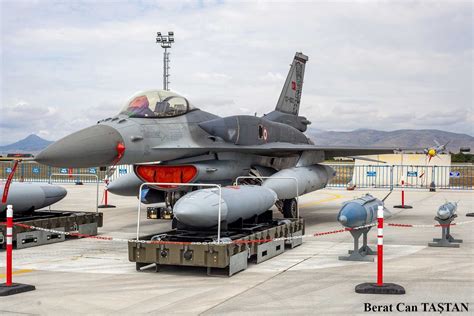
EDPOD: Redefining Electronic Defense for Turkish Air Combat
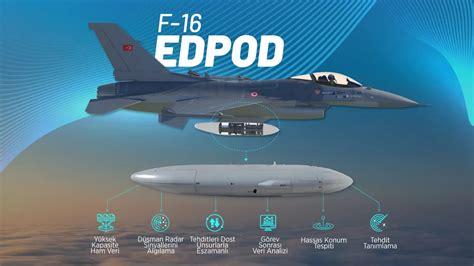
The Electronic Support Pod (EDPOD) is more than just a jamming or detection device. At its core, it is a next-generation electronic warfare suite that acts as an intelligent sensor and communication node. It can detect, classify, locate, and log radio frequency (RF) emissions, particularly those associated with enemy radar systems, missile guidance networks, and tracking radars.
Once active, the EDPOD performs three principal tasks:
- Signal Intelligence Collection – EDPOD continuously scans for hostile RF signals and logs their characteristics.
- Geolocation and Threat Analysis – It identifies the signal’s source, estimates the emitter’s coordinates, and determines the threat type and priority.
- Data Sharing and Mission Coordination – The pod enables secure relay of collected data to ground stations, other aircraft, and command centers, ensuring a synchronized electronic battlespace.
This modular pod can be externally mounted on the F-16, providing non-intrusive integration that doesn’t disrupt the aircraft’s core avionics or weapons systems. Its plug-and-play architecture also allows for future upgrades and compatibility with other platforms, potentially expanding to drones or other tactical aircraft in Turkey’s growing arsenal.
National Defense Autonomy: A Driving Force Behind EDPOD
The unveiling of the EDPOD is emblematic of Ankara’s intensified push for defense sovereignty. Industry and Technology Minister Mehmet Fatih Kacır, present during the launch ceremony, emphasized the system’s strategic relevance:
“Developed with the aim of reducing our country’s external dependency in defense technologies, EDPOD has made a strategic contribution to our electronic warfare capabilities.”
This aligns with Turkey’s broader defense policy, which increasingly favors homegrown solutions over foreign procurement. TÜBİTAK BİLGEM’s successful test and evaluation phase for the EDPOD—conducted using live radar threat environments—marks a technological milestone in this policy’s realization.
Supporting Infrastructure: Mission Data Lab
To enable the full potential of the EDPOD, the Turkish Air Force has simultaneously commissioned a dedicated Mission Data File Preparation, Test and Analysis Laboratory. This facility plays a crucial role in:
- Pre-mission configuration of EDPOD signal libraries.
- Real-time threat database updates based on recent intelligence.
- Post-sortie analysis for battle damage assessment and strategic evaluation.
The lab’s infrastructure allows rapid updates to the system’s threat recognition algorithms, ensuring up-to-date responses against evolving enemy radar systems. This tight integration of airborne hardware with ground-based support represents a paradigm shift in how Turkey conducts network-centric warfare.
F-16 Modernization and EDPOD Compatibility
The Turkish Air Force currently operates over 200 F-16s, making it one of the world’s largest fleets of the type outside the United States. Most of these aircraft were produced under license by Turkish Aerospace Industries (TAI), granting Turkey a unique advantage in customizing the fighter to suit local requirements.
The EDPOD’s arrival comes at a time when Ankara is also implementing mid-life upgrades for its older Block 30 and Block 40 F-16s while preparing to integrate 40 new F-16 Block 70/72 variants, ordered from the United States in 2024. Importantly, these newer jets will also benefit from locally-developed mission systems, further blending American airframes with Turkish subsystems.
The EDPOD is fully compatible with:
- Legacy F-16C/D Blocks 30/40/50
- Modernized F-16 Viper-class avionics
- Turkish-designed ECM/EW systems such as SPEWS-II
Its scalable interface ensures that as future jets incorporate new digital bus systems, the EDPOD can evolve without major structural overhauls.
Strategic Implications for Regional Air Superiority
Turkey’s adoption of the EDPOD brings operational, strategic, and geopolitical advantages. In contested electronic environments like the Eastern Mediterranean, Syria, and potentially Caucasus regions, the ability to detect and preempt radar threats provides the Air Force with crucial survivability and intelligence-gathering leverage.
From a deterrence perspective, EDPOD’s activation aboard F-16s signals to potential adversaries that Turkish fighters are no longer reliant on legacy U.S. or NATO jamming pods. The presence of a domestic and covertly-updated EW suite makes electronic counterattack planning by hostile forces significantly more complex.
The Road Ahead: From Prototype to Deployment
While the initial units of EDPOD have been successfully inducted, full operational capability (FOC) will require further distribution, pilot training, and doctrine integration. Key phases ahead include:
- Fleet-wide integration schedule for frontline squadrons.
- Live-fire exercises with joint air and ground assets to stress-test pod behavior under battlefield conditions.
- Expansion of software threat libraries, including signals from new generation surface-to-air missile (SAM) systems.
- Possible export variants, tailored for allied air forces in the Middle East or Central Asia that operate F-16s.
TÜBİTAK BİLGEM is also reportedly exploring AI-assisted signal interpretation for future EDPOD variants, which could allow the system to autonomously react to unfamiliar radar signatures in milliseconds—a necessity in modern electromagnetic warfare.
Conclusion: A New Chapter in Turkish Airpower
The EDPOD represents far more than a new pod hanging beneath a fighter jet—it encapsulates Turkey’s transition into a self-reliant defense innovator, capable of developing and fielding complex battlefield technologies. As threats become more sophisticated and electronic warfare moves to the frontlines of modern combat, systems like EDPOD will define whether a mission succeeds or fails.
By deploying this indigenous electronic threat defense kit, Turkey has placed a decisive marker on the map—not only in terms of regional air superiority, but in the broader narrative of technological sovereignty, deterrence, and strategic depth. The era of Turkish F-16s flying with foreign pods is ending; the era of flying with Turkish-engineered electronic eyes and ears has begun.