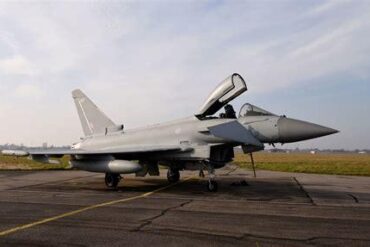
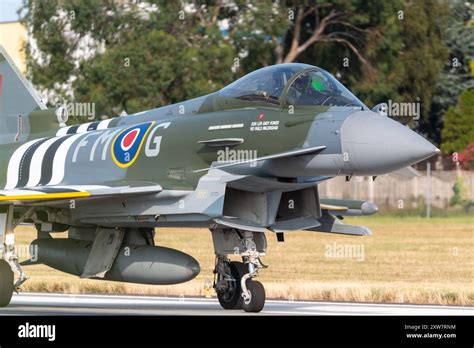
Modern air combat is no longer a contest of turning circles and raw thrust. It is a war of electrons, algorithms, and milliseconds. The Royal Air Force’s Eurofighter Typhoon was conceived in the shadow of the Cold War, designed explicitly to survive and dominate inside dense, Soviet-style integrated air defense systems. That legacy defines how it avoids electronic jamming today. The aircraft is not merely fast and agile; it is a networked combat system built to fight in an environment where every radar pulse can be a weapon and every emission can be a liability.
In contemporary operations, the Typhoon behaves less like a classic fighter and more like a flying node inside a vast digital ecosystem. It assumes that the enemy will jam, deceive, and saturate the spectrum. Its design philosophy accepts chaos in the electromagnetic environment as a starting condition, not an anomaly. From its advanced radar to its defensive aids suite and secure datalinks, every layer of the Typhoon’s architecture contributes to resilience against electronic attack.
The Royal Air Force operates the Typhoon not as a standalone solution but as part of a complementary force structure that includes the F-35B Lightning II. Within this ecosystem, the Typhoon is optimized to exploit information, not merely generate it. It leverages shared targeting data, passive sensing, and long-range weapons to engage threats without unnecessarily revealing its own position. This integration is central to how it avoids being neutralized by jamming: it does not rely on a single sensor or a single method of detection.
The Electromagnetic Battlefield: Where Jamming Defines Survival
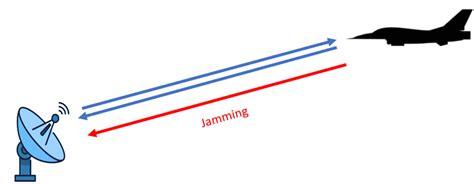
Electronic jamming is the deliberate transmission of radio frequency signals to disrupt an adversary’s sensors or communications. In air combat, this usually targets radar systems. A traditional fighter dependent on a single radar emission risks blindness if that radar is suppressed or deceived. The Typhoon was engineered under the assumption that its radar would be contested from the first second of combat.
Instead of relying solely on brute-force signal strength, the Typhoon employs a layered strategy. It uses active electronically scanned array (AESA) radar, passive infrared sensing, datalinked targeting information, and sophisticated electronic countermeasures. If one pathway is degraded, others compensate. This redundancy is not accidental; it is doctrinal.
Modern jamming is not just noise. It includes deceptive techniques that inject false targets or manipulate radar returns. The Typhoon’s counter to this lies in its ability to cross-validate data. If the radar picture looks suspicious, the aircraft’s Infrared Search and Track (IRST) system can provide a passive thermal signature. If both are uncertain, off-board assets such as AWACS aircraft or stealth platforms can refine the targeting solution. Electronic warfare becomes a puzzle, and the Typhoon solves it by comparing pieces from multiple sources.
EuroDASS Praetorian: The Typhoon’s Electronic Shield And Spear
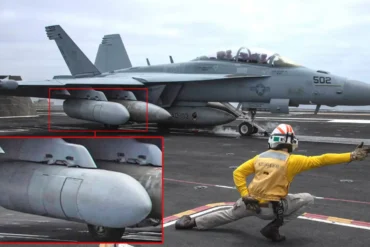
At the heart of the Typhoon’s self-protection lies the EuroDASS Praetorian Defensive Aids Sub-System. Developed by a European consortium including Leonardo, ELT Group, Indra, and Hensoldt, Praetorian is not a bolt-on accessory. It is deeply integrated into the aircraft’s architecture.
Praetorian continuously scans the electromagnetic spectrum for radar emissions. When it detects a signal, it identifies the radar type, estimates its distance, and determines whether it is an early warning system or a fire-control radar preparing to guide a missile. This classification matters. An early warning radar suggests surveillance; a fire-control radar implies imminent threat.
Unlike older systems that merely blasted noise to overwhelm radar receivers, Praetorian uses coherent deceptive jamming. Through digital radio frequency memory (DRFM), it captures an incoming radar pulse, modifies it, and retransmits it with altered timing or characteristics. The enemy radar does not simply see static; it sees ghosts. False targets bloom on screens. Range information becomes unreliable. Tracking solutions collapse.
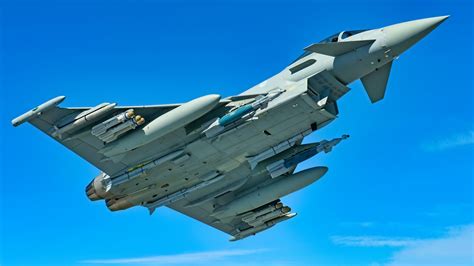
This approach is far more effective against modern monopulse radars, which are specifically designed to resist simple chaff or noise interference. The Typhoon does not attempt to be invisible in the classic sense. Instead, it manipulates what the enemy believes it sees. In electronic warfare, perception is everything.
Towed Radar Decoys: Outsmarting The Missile In Flight
Cinematic depictions of air combat often highlight flares and chaff as the last-ditch defenses against incoming missiles. The Typhoon certainly carries both. However, one of its most sophisticated survival tools is less visually dramatic but far more technologically advanced: the Towed Radar Decoy (TRD).
The TRD is deployed behind the aircraft on a fiber-optic cable. Once extended, it emits signals designed to mimic or even exaggerate the radar signature of the Typhoon. To an incoming radar-guided missile, the decoy appears as the primary target. In many cases, it presents a stronger return than the aircraft itself.
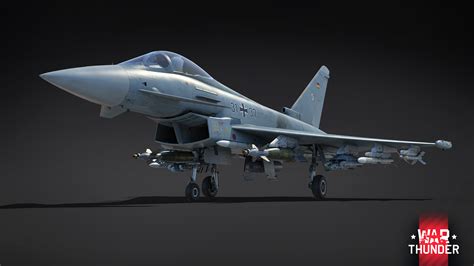
The brilliance of the system lies in its separation from the aircraft. If a missile locks onto the decoy and detonates, the Typhoon remains intact, having displaced the threat physically and electronically. Against advanced seekers capable of resisting chaff clouds, this active deception provides a critical layer of survivability.
Stealth is often misunderstood as total invisibility. In reality, it is about delaying detection and complicating targeting. The TRD embodies this philosophy. It does not make the Typhoon vanish; it ensures that the missile’s solution is flawed.
Captor-E AESA Radar: Frequency Agility And Burn-Through Power
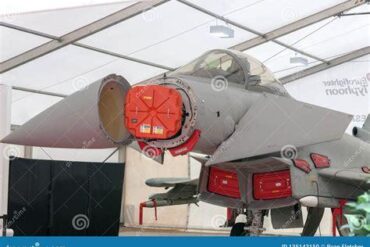
The Typhoon’s transition from the mechanically scanned Captor-M radar to the Captor-E AESA radar marks a decisive improvement in electronic resilience. An AESA radar uses hundreds or thousands of small transmit/receive modules. Each module can emit and receive signals independently, allowing rapid beam steering without moving parts.
This architecture enables frequency agility, meaning the radar can hop between frequencies in microseconds. If an enemy attempts to jam a specific band, the radar shifts elsewhere. Instead of being pinned down, it becomes elusive.
The Captor-E also employs low probability of intercept (LPI) modes. These modes spread radar energy across a wide bandwidth at lower power levels, making detection by enemy receivers more difficult. In effect, the radar whispers rather than shouts, reducing the chance of revealing the aircraft’s position.
When confronted with noise jamming at closer ranges, the radar can “burn through” by focusing energy in a narrow beam. This increases signal strength on target relative to background interference. Simultaneously, sidelobe reduction minimizes vulnerability to deceptive techniques aimed at exploiting peripheral emissions.
The result is a sensor that expects resistance and adapts dynamically. The Typhoon’s radar is not a static emitter but a living participant in the electronic duel.
Infrared Search And Track: Passive Vision In A Jammed Sky
Electronic jamming primarily targets radio frequency systems. Infrared sensing operates in a different domain. The Typhoon’s Infrared Search and Track (IRST) system detects heat signatures rather than radar reflections. Aircraft engines, aerodynamic heating, and even friction with the atmosphere produce infrared emissions.
Because IRST is passive, it does not emit signals. There is nothing to jam in the conventional sense. In a scenario where radar performance is degraded, the IRST can detect and track airborne threats without betraying the Typhoon’s presence.
This dual-sensor approach forces adversaries into a dilemma. Jamming radar emissions may reduce detection range, but it does not eliminate infrared visibility. The Typhoon’s ability to correlate radar and infrared tracks enhances confidence in targeting data, especially in cluttered or contested environments.
Networked Warfare: The Typhoon And F-35 Partnership
In Royal Air Force doctrine, the Typhoon and the F-35B Lightning II operate as complementary assets. The F-35’s stealth and advanced sensor fusion often allow it to detect threats first. Its passive electronic surveillance can geolocate hostile radars without transmitting.
Through secure datalinks, this information is shared with the Typhoon. The Typhoon, carrying a larger payload and capable of sustained high-speed flight, can then engage targets at long range using the Meteor beyond-visual-range air-to-air missile. Meteor’s ramjet propulsion provides a large no-escape zone, meaning enemy aircraft have minimal chance of outrunning it once launched.
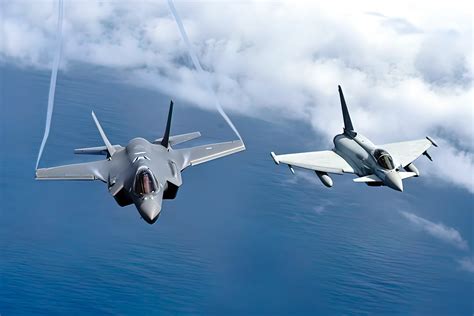
This cooperative engagement reduces the Typhoon’s need to activate its own radar aggressively. By receiving targeting data externally, it can fire while minimizing its electromagnetic signature. In effect, jamming one platform does not blind the force. The network compensates.
The partnership also complicates enemy electronic warfare strategies. If adversaries emit powerful jamming signals, those emissions become detectable beacons. Passive sensors aboard the F-35 and other assets can triangulate the source. The act of jamming becomes self-incriminating.
Offensive Electronic Warfare And The Emission Dilemma
Avoiding jamming is only half the equation. The Typhoon is also capable of offensive electronic warfare. By degrading enemy radars and communications, it reduces the coherence of integrated air defense systems.
In dense electronic environments, the side that emits first risks becoming the first target. This dynamic creates what strategists call an emission dilemma. Turning radars off reduces detectability but sacrifices situational awareness. Turning them on improves awareness but invites suppression.
The Typhoon exploits this tension. Its combination of passive detection, AESA agility, deceptive jamming, and networked targeting means it can operate effectively whether adversaries choose silence or saturation. Either choice imposes costs.
Longevity Through Upgrades: Relevance Into The 2060s
The Royal Air Force plans to operate the Typhoon into the 2060s, with the future GCAP/Tempest sixth-generation fighter intended to replace it gradually. Continuous upgrades are central to this longevity. Electronic warfare is not static; threat libraries must be updated, software refined, and hardware enhanced.
The integration of the European Common Radar System (ECRS) Mk2 further strengthens the Typhoon’s electronic posture. Enhanced processing power, improved electronic attack capabilities, and expanded situational awareness ensure that the aircraft evolves alongside emerging threats.
Electronic warfare is a software-driven contest as much as a hardware one. In that domain, adaptability is king. The Typhoon’s architecture supports iterative improvement, ensuring it remains formidable against new jamming techniques.
Conclusion: Mastery Of The Spectrum
The Royal Air Force’s Typhoon avoids electronic jamming not by relying on a single technological trick but by embracing complexity. It combines AESA radar agility, Praetorian defensive deception, towed radar decoys, infrared passive sensing, and networked integration with the F-35 into a coherent whole. Each layer reinforces the others.
In the modern electromagnetic battlespace, invisibility is less important than resilience and information superiority. The Typhoon does not merely endure jamming; it anticipates it, manipulates it, and often turns it into an advantage. Within a force structure that prizes data fusion and cooperative engagement, the aircraft remains a potent guardian of air dominance.
Air combat has become a contest of minds encoded in silicon, of signals bent and reshaped in microseconds. In that arena, the Typhoon stands not as a relic of Cold War design, but as a continually evolving system built to master the spectrum rather than be mastered by it.