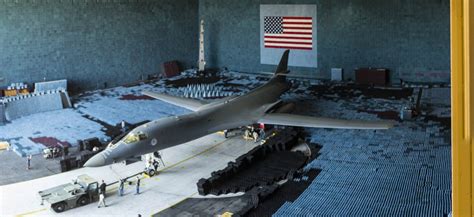
Hidden within the fortified perimeter of Edwards Air Force Base in California stands one of the most mysterious and strategically vital buildings in the United States military’s arsenal: the Benefield Anechoic Facility (BAF). This behemoth, measuring 264 feet long, 250 feet wide, and 70 feet high, is the largest anechoic chamber in the world. Yet its colossal dimensions are not what make it truly formidable—it’s what happens inside, shielded from the outside world, that positions the BAF as a crown jewel in America’s electromagnetic warfare capability.
The BAF was completed in 1989, a time when the Cold War still shaped military planning and technological investment. The facility was envisioned as a critical infrastructure to allow testing of sensitive aerospace and weapons systems in an environment that is free from external electromagnetic interference. The entire building is lined with radar-absorbent materials, forming a cocoon that prevents echoes and stray signals, creating a perfectly controlled electromagnetic vacuum.
What Is an Anechoic Chamber and Why Does Size Matter?
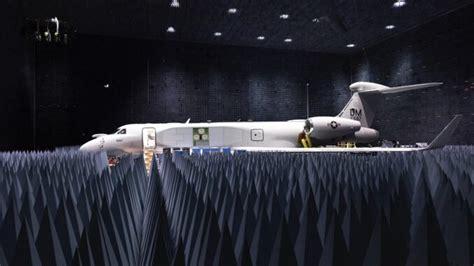
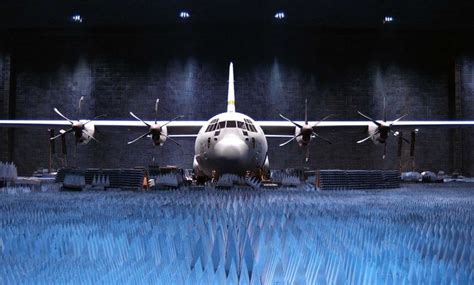
An anechoic chamber is a highly specialized room designed to completely absorb electromagnetic waves and sound. The name “anechoic” literally means “without echo.” In this sterile environment, radio frequencies, radar, and other signals behave in predictable, repeatable ways. Unlike smaller chambers used in academia or private industry, the sheer scale of the BAF allows full-sized aircraft and satellites to be tested without the need to dismantle or simulate components.
Inside the BAF, the walls are lined with thousands of pyramidal foam structures, coated with carbon-based materials that absorb RF (radio frequency) energy. Combined with the complete shielding of the building itself, this design allows military engineers to precisely measure how electromagnetic signals interact with aircraft, spacecraft, and other defense systems—without the risk of outside interference or leaked signals being intercepted.
Core Mission: Electromagnetic Isolation for Stealth and Communications
The primary role of the Benefield Anechoic Facility is to provide electromagnetic isolation for testing aerospace platforms. That includes:
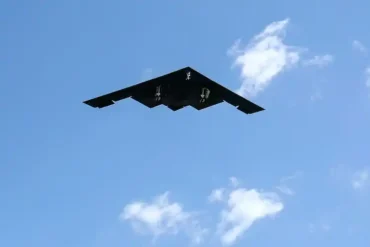
- Measuring radar cross-sections to refine stealth technology.
- Testing communications systems to ensure resilience and fidelity under combat conditions.
- Evaluating electronic warfare (EW) countermeasures.
- Simulating operational conditions for satellites and space-based equipment.
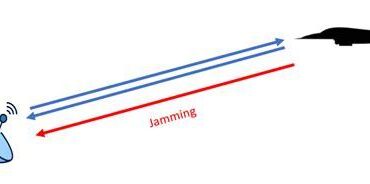
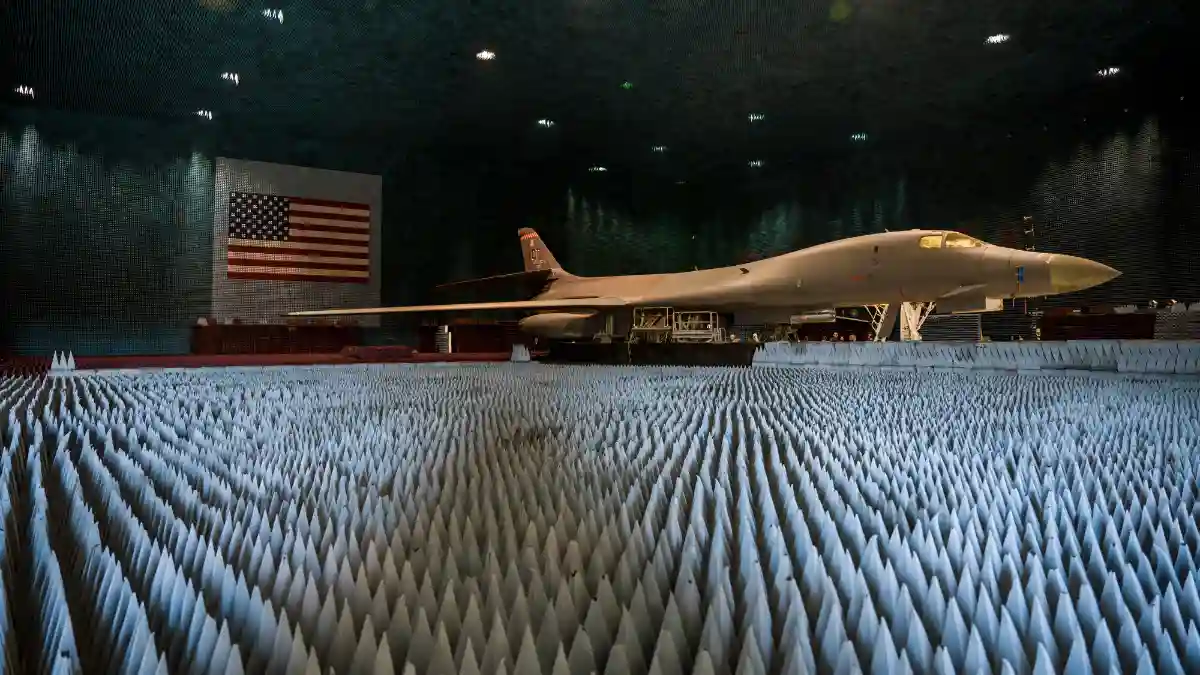
Military aircraft from the B-1 Lancer to the legendary B-52 Stratofortress undergo rigorous testing inside the BAF to ensure their electronic components can withstand jamming, spoofing, and other modern warfare tactics. These evaluations are essential for HERO (Hazards of Electromagnetic Radiation to Ordnance) compliance, ensuring weapons systems won’t be prematurely triggered or rendered inoperable due to RF exposure.
Technological Evolution: Adapting to the Modern Battlefield
Since its inception, the BAF has undergone major upgrades to keep pace with changing technological needs. One of the most transformative improvements was the installation of a massive aircraft turntable, capable of rotating full-sized jets and other large systems for 360-degree analysis. This allows engineers to expose systems to signal profiles from every conceivable angle.
Recent years have seen the return of satellite testing to the facility, a milestone that had not been achieved in nearly five decades. As the U.S. shifts strategic focus toward space dominance, the BAF is evolving into a crucial asset for ensuring space systems are robust, secure, and combat-ready. In a future where space may be the next battlefield, controlling the electromagnetic signature and survivability of satellites will be as important as shielding ground assets.
Strategic Value in the Age of Electronic and Space Warfare
Electronic warfare has become one of the most critical components of 21st-century combat. From cyberattacks to jamming and GPS spoofing, electronic dominance now dictates operational success. The BAF gives U.S. forces a decisive edge by enabling:
- Full-spectrum electromagnetic compatibility testing.
- Pre-deployment validation of communication resilience.
- Advanced EW scenario simulations.
This facility is also central to multi-domain operations, where air, land, sea, cyber, and space forces must operate cohesively. The BAF allows engineers to test how systems behave when all these layers are active, hostile, and congested with both friendly and adversarial signals.
Beyond Aircraft: The Future Role in Space and Joint Force Modernization
While the BAF has historically focused on military aircraft, the shift toward space militarization is pushing its boundaries. The ability to test satellite systems, sensor payloads, and even interplanetary communication hardware in a shielded environment is becoming increasingly crucial. The U.S. military’s renewed emphasis on space—highlighted by the formation of the U.S. Space Force—makes facilities like the BAF indispensable.
Moreover, the rise of hypersonic vehicles, AI-driven drones, and autonomous combat platforms requires testing beyond traditional environments. All these systems rely on ultra-reliable, secure electromagnetic pathways. By simulating worst-case signal jamming and adversarial conditions, the BAF becomes a battlefield rehearsal zone where failure is an opportunity for refinement.

A Hidden Backbone of National Defense Readiness
Despite its imposing size and unmatched capabilities, the Benefield Anechoic Facility remains largely out of public view, shrouded in secrecy appropriate for its mission. Its existence, however, underscores a powerful reality: electromagnetic dominance is as critical as physical firepower in modern conflict.
Without facilities like the BAF, the military would be forced to rely on live-fire environments or partial simulations—options that are costly, less accurate, and more vulnerable to espionage. The BAF gives American engineers a sandbox where they can stress-test, debug, and optimize systems without ever leaving the continental U.S.
Looking Ahead: Continuous Upgrades and Strategic Imperative
The BAF’s value lies not only in what it does today but in its capacity to evolve with future threats. Upcoming improvements include enhanced signal generation capabilities, expanded frequency range testing, and upgraded data analytics systems that use AI to process real-time signal behaviors.
In a world where near-peer adversaries like China and Russia are rapidly developing electronic warfare and anti-satellite systems, the U.S. must double down on its edge. The Benefield Anechoic Facility is a pillar of that edge—providing unmatched simulation, calibration, and training to protect American assets across every domain.
As the electromagnetic spectrum becomes the new front line, the importance of the BAF will only grow. It is no longer just a chamber to test aircraft—it is the nerve center of America’s invisible shield, quietly shaping the battlefield of tomorrow from deep inside the Mojave Desert.