The F-15 Eagle has been one of the most formidable fighter aircraft ever built, a machine forged in the heat of Cold War competition and refined through decades of real combat. Even as stealth aircraft such as the F-22 Raptor and F-35 Lightning II dominate headlines, the Eagle remains deeply embedded in the operational structure of the United States Air Force (USAF). Its combination of raw speed, payload capacity, and mission versatility continues to make it an indispensable element of American airpower.
In 2026, the USAF operates 202 combat-coded F-15 aircraft, spread across three primary variants: the F-15C/D Eagle, the F-15E Strike Eagle, and the latest evolution, the F-15EX Eagle II. These aircraft serve very different missions—from air superiority patrols over the American homeland to deep-strike missions thousands of miles away. Together, they form a layered capability that bridges older fourth-generation combat doctrine with modern network-centric warfare.
Understanding the composition of this fleet reveals something fascinating about military aviation strategy. While stealth fighters are often framed as replacements for legacy aircraft, the reality is far more nuanced. The Air Force continues to rely on the Eagle because it fills roles that stealth jets alone cannot economically or operationally handle.
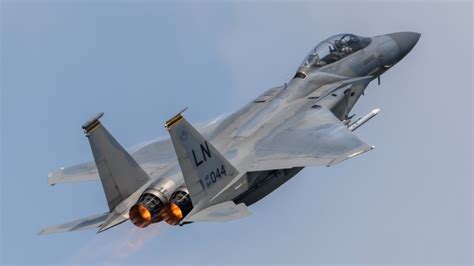
The persistence of the F-15 in frontline service highlights a recurring pattern in military technology: platforms that are exceptionally well designed often outlive the strategic assumptions of the era that created them. The Eagle is precisely that kind of aircraft—an aerodynamic and engineering triumph that still performs tasks newer aircraft struggle to match.
How Many F-15s Are In Service With The US Air Force In 2026?
As of 2026, the US Air Force maintains 202 combat-coded F-15 aircraft across three operational variants. These aircraft represent a mix of aging airframes nearing retirement and cutting-edge fighters entering service.
The breakdown of the fleet is as follows:
- F-15C/D Eagle: 42 aircraft
- F-15E Strike Eagle: 133 aircraft
- F-15EX Eagle II: 27 aircraft
Although these jets share the same iconic silhouette—twin vertical stabilizers, large wings, and widely spaced engines—they serve dramatically different operational purposes.
The F-15E Strike Eagle currently forms the backbone of the fleet, representing nearly two-thirds of all operational Eagles. However, modernization plans are already underway. The Air Force intends to reduce the Strike Eagle fleet to 78 aircraft by 2028, gradually shifting emphasis toward the more advanced F-15EX.
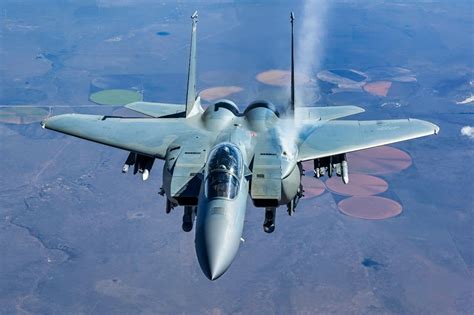
Meanwhile, the F-15C/D models—once the primary air superiority fighters of the Air Force—are approaching the end of their operational lives. Originally scheduled for full retirement by 2026, 42 specially upgraded aircraft known as “Platinum Eagles” have had their service lives extended until approximately 2030 to maintain homeland defense capabilities.
This mixture of old and new highlights a transitional phase in American airpower, where legacy fighters remain crucial even as new generations of aircraft arrive.
Three Variants, Three Distinct Missions
The F-15’s continued relevance comes from the fact that each variant performs a specialized role within the Air Force’s broader tactical ecosystem.
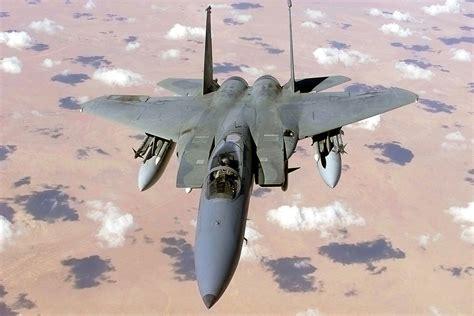
The F-15C/D Eagle, introduced in the late 1970s, was designed with a singular philosophy: absolute air superiority. Engineers famously adhered to the mantra “not a pound for air-to-ground.” Everything about the aircraft—from its thrust-to-weight ratio to its radar—was optimized for defeating enemy fighters.
Even today, these aircraft remain formidable interceptors. However, structural fatigue and aging avionics have gradually forced their retirement. Only the most structurally sound examples remain in service.
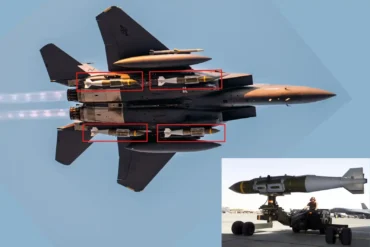
The F-15E Strike Eagle, introduced in the late 1980s, radically transformed the Eagle concept. Instead of a pure dogfighter, the Strike Eagle became a deep-strike multirole platform capable of attacking ground targets day or night, in any weather conditions.
The aircraft’s distinctive Conformal Fuel Tanks (CFTs) hug the fuselage, dramatically extending range while allowing the jet to carry massive weapon loads. Combined with modern targeting pods and precision-guided munitions, the Strike Eagle evolved into one of the most effective strike aircraft ever fielded by the United States.
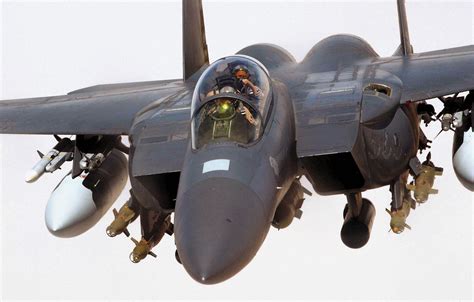
Finally, the F-15EX Eagle II represents the latest evolutionary step. Rather than reinventing the aircraft, engineers took the proven Strike Eagle airframe and infused it with modern avionics, radar systems, and electronic warfare capabilities.
The result is a fighter designed for the networked battlefield, where aircraft share sensor data, coordinate strikes, and integrate with stealth platforms.
Why The Air Force Still Relies On The F-15
At first glance, maintaining a fourth-generation fighter in an era of stealth aircraft might seem counterintuitive. Yet the F-15 remains extremely valuable because it offers advantages stealth fighters simply cannot match.
One of the biggest is payload capacity.
Stealth fighters must carry weapons internally to preserve their low radar signature. This design constraint limits how many missiles or bombs they can bring into combat. The F-15, by contrast, can carry far larger weapon loads on external hardpoints.
This characteristic has led to a fascinating tactical concept sometimes referred to as the “missile truck.”
In this role, stealth fighters such as the F-22 or F-35 penetrate hostile airspace first using their low observable profiles. Once threats are detected, F-15s flying farther back launch large numbers of missiles guided by targeting data shared from the stealth aircraft.
The stealth jets act as eyes and sensors, while the Eagle acts as the arsenal.
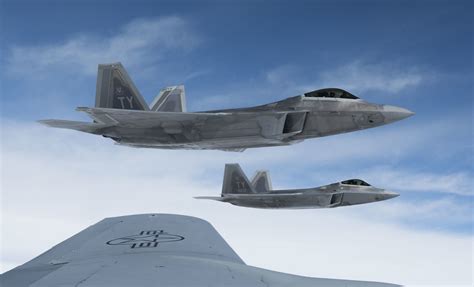
The approach combines the strengths of both aircraft types, creating a hybrid combat system that is far more powerful than either platform operating alone.
The F-15EX: The Future Of The Eagle
The newest member of the family, the F-15EX Eagle II, represents Boeing’s answer to the Air Force’s need for a powerful non-stealth fighter that can operate alongside fifth-generation jets.
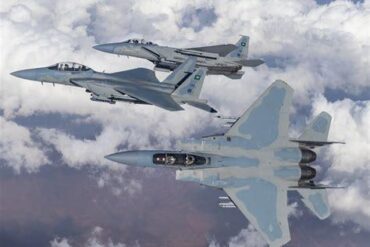
The aircraft originated from the F-15 Advanced Eagle, which Boeing initially developed for export customers such as Saudi Arabia (F-15SA) and Qatar (F-15QA). These advanced export variants incorporated digital fly-by-wire controls, new radar systems, and enhanced electronic warfare suites.
When the U.S. Air Force sought a quick solution to replace aging F-15C/D airframes, the Advanced Eagle design became the logical candidate.
The F-15EX made its first flight in 2021, and the Air Force has already increased its procurement target to 129 aircraft. Although only 27 are currently operational in 2026, the fleet is expected to grow steadily throughout the decade.
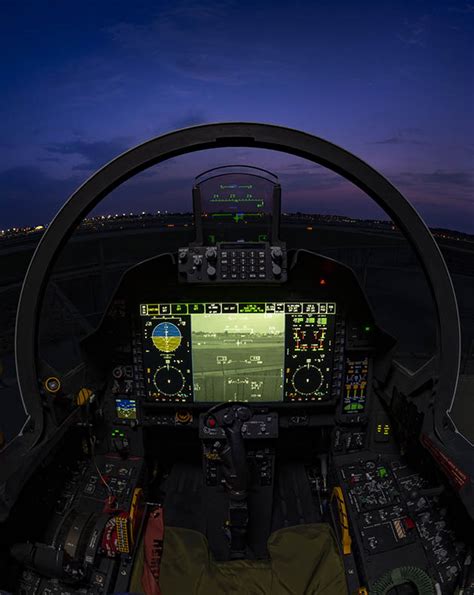
The aircraft features cutting-edge systems such as the AN/APG-82 active electronically scanned array (AESA) radar, advanced electronic warfare suites, and a fully digital cockpit.
But its most striking advantage remains its ability to carry enormous payloads. The Eagle II can carry up to 12 air-to-air missiles, far more than most stealth fighters.
For certain mission types—especially large-scale air battles—that capability becomes extremely valuable.
Speed Still Matters: The Fastest Jet In The US Air Force
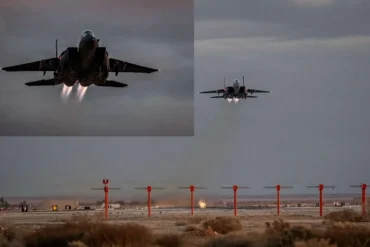
Despite the arrival of modern stealth fighters, the F-15EX retains a crown that surprises many observers: it is still the fastest fighter in the U.S. Air Force inventory.
The aircraft can easily exceed Mach 2.5, and under certain conditions—particularly with minimal external payload—it can approach Mach 3.
This level of performance stems from the aircraft’s powerful F110-GE-129 engines, which generate enormous thrust. When combined with the F-15’s relatively large wing area and aerodynamic design, the result is extraordinary high-altitude performance.
During early test flights, Boeing’s chief test pilot reportedly took a newly built aircraft directly from takeoff into a steep climb, reaching 40,000 feet while traveling at Mach 2.5. That kind of raw speed is rare even among modern fighters.
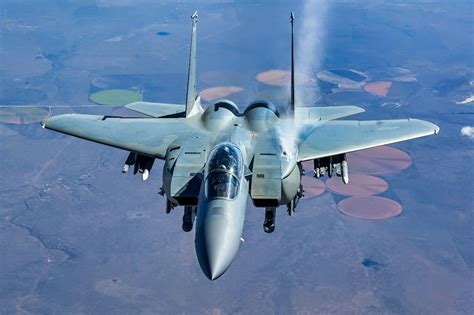
Speed provides tactical advantages beyond simple bragging rights. A fast aircraft can reach interception points more quickly, respond to threats faster, and launch missiles with greater kinetic energy.
Physics has not gone out of style.
A Fighter Born From Cold War Competition
To truly understand the Eagle’s longevity, it helps to travel back to the 1960s, when American fighter designers were grappling with lessons from the Vietnam War.
Early jet combat revealed serious shortcomings in aircraft like the F-4 Phantom, which lacked the maneuverability many pilots desired. Meanwhile, intelligence reports suggested the Soviet Union was developing highly agile fighters such as the MiG-25.
The United States Air Force responded by launching the F-X program, an ambitious competition to create a new air superiority fighter capable of defeating any adversary in the sky.
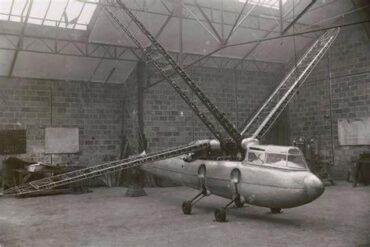
Several aerospace companies proposed designs, including North American Aviation, which submitted a concept known as the NA-335. On paper, the aircraft offered remarkable performance.
However, the proposal ultimately failed to progress beyond early development stages.
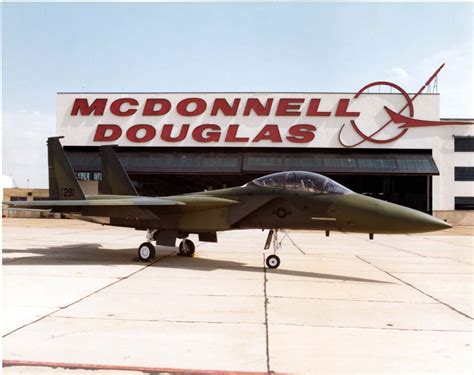
McDonnell Douglas, which had already built the successful F-4 Phantom, ultimately won the competition. The company’s reputation for reliability and manufacturing capability helped convince the Air Force that it could deliver the ambitious fighter on schedule.
On December 23, 1969, the F-15 was officially declared the winner of the F-X program.
Few decisions in aviation history have proven more consequential.
A Combat Record Unlike Any Other Fighter
One reason the Eagle still commands respect is its extraordinary combat record.
Across decades of service with multiple nations—including the United States, Israel, and Saudi Arabia—the F-15 has achieved over 100 confirmed air-to-air victories with no combat losses.
Israeli F-15 pilots alone accounted for dozens of kills during regional conflicts in the Middle East, often against Soviet-designed fighters flown by highly trained adversaries.
This record does not mean the aircraft is invincible—machines rarely are. But it demonstrates how well the design performs when placed in the hands of skilled pilots.
Engineering brilliance meets human ingenuity.
The Eagle’s Role In The Future Air Force
Although stealth fighters represent the cutting edge of aerial warfare, the future Air Force will almost certainly remain a mixed fleet of stealth and non-stealth aircraft.
The F-15EX is a perfect example of this philosophy.
Rather than replacing the F-22 Raptor or F-35 Lightning II, the Eagle II complements them. It provides long-range missile capacity, rapid response capabilities, and immense strike payloads that stealth aircraft cannot always carry.
It can defend U.S. airspace, enforce no-fly zones, escort bombers, and support troops on the ground with devastating precision.
In short, it fills the gaps.
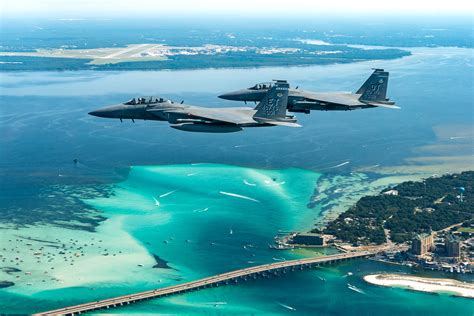
The numbers tell the story clearly. With 202 aircraft still active in 2026 and dozens of F-15EX fighters scheduled to arrive in the coming years, the Eagle remains far from retirement.
Some aircraft fade quietly into history as technology moves on.
The F-15 refuses to do that. It keeps evolving—like a predatory bird that has learned new hunting tricks while still remembering how to dive at impossible speed.