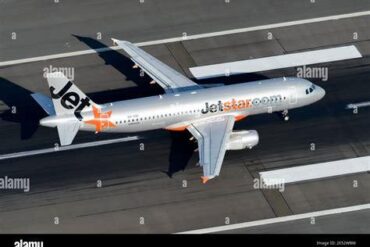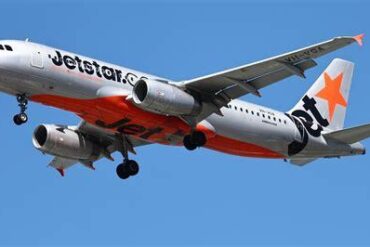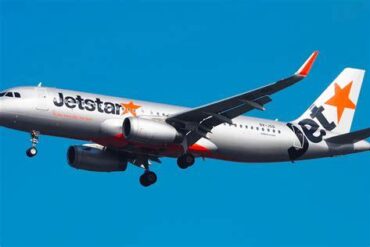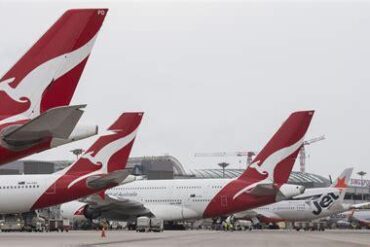
Jetstar Airways, the low-cost subsidiary of Qantas, continues to assert its dominance in the Australian domestic airspace. With over 800 scheduled flights per month using its fleet of Airbus A320s, Melbourne Airport (MEL) stands as a powerhouse hub for the airline’s short-haul operations. This strategic focus not only cements Jetstar’s grip on Australia’s busiest air corridors but also showcases how the A320 family—particularly the A320-200 and the newer A320neo—is the backbone of its high-frequency, high-demand service model.
Jetstar’s headquarters in Melbourne make this city more than just a launchpad; it is the airline’s operational heart. With a fleet comprising 49 A320-200s and three A320neos, Jetstar’s aggressive domestic route structure places Melbourne at the core of its national strategy. The airline has 10 more A320neos on order, suggesting even deeper integration of next-generation aircraft into these high-density routes in the near future.
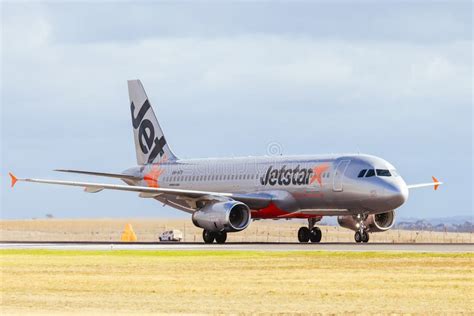
Melbourne to Sydney: Australia’s Densest Domestic Corridor
Unsurprisingly, the Melbourne–Sydney route tops the chart with 271 flights in May 2025, offering nearly 50,000 seats over the month. This corridor, linking the two largest cities in Australia, is one of the busiest in the world and a vital commercial artery.
The flights average 439 miles per trip and generate an impressive 21.8 million Available Seat Miles (ASMs). These short but frequent hops perfectly suit the A320’s capacity and economics, making it the go-to aircraft for shuttling business and leisure travelers alike.
Jetstar’s dominance here also sets up fierce competition against Qantas, Virgin Australia, and Rex. Yet, its low-cost model remains appealing to budget-conscious flyers needing flexibility and frequency. With Western Sydney Airport due to open soon, industry observers are watching closely to see whether Jetstar reallocates some of these movements to the new site to take advantage of the lack of curfew restrictions.
Hobart: Tasmania’s Capital Gets Major Lift From Jetstar
Coming in second with 155 monthly flights, the Melbourne–Hobart route exemplifies Jetstar’s regional dominance. These flights cover an average of 384 miles, with a monthly seat count of 28,830. Despite its smaller market size, Hobart Airport receives a high frequency of flights, indicating strong tourism and local travel demand.
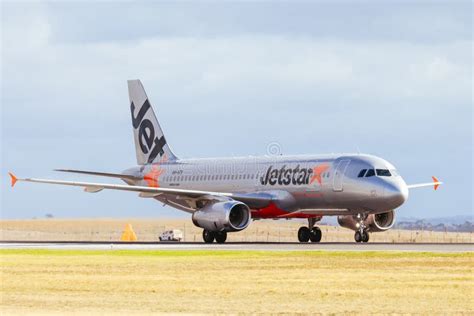
The route made headlines during the early COVID-19 period when a passenger incident caused a prolonged tarmac delay. Still, the demand on this route remains strong. Although A320s are the primary aircraft type, Jetstar has occasionally deployed its A321neos on this route to increase capacity—especially during peak periods.
Brisbane: Longest High-Frequency A320 Route
Brisbane, with 103 Jetstar A320 flights scheduled, represents the longest route among the top seven, clocking in at 857 miles. This greater distance translates into 16.2 million ASMs for May 2025, spread across 18,944 available seats.
Brisbane is also a strategic gateway for Jetstar’s Boeing 787 Dreamliner international routes, such as the one connecting Brisbane and Bangkok. This city ranks third for domestic connections in Australia, right behind Sydney and Melbourne, which further explains the route’s significance.
Competition on this corridor is intense. Besides Jetstar, Qantas, QantasLink, and Virgin Australia all operate frequent services between the two cities. Furthermore, the route is also supported by multiple freight operators, underlining its economic importance.
Adelaide: High Frequency on a Shorter Hop
The Melbourne–Adelaide sector accounts for 102 flights per month, just one less than Brisbane, but it’s a much shorter route at 398 miles. With nearly 19,034 seats available, the ASM yield drops to 7.57 million.
While the A320-200 remains the workhorse for this connection, Jetstar has started shifting away from using these aircraft for longer international flights from Adelaide. In 2023, it replaced A320-200s with A321LRs on the Adelaide–Bali route, enabling up to a 25% increase in capacity and enhanced passenger comfort.
Gold Coast: Gateway to Leisure and Sun
Jetstar flies its A320s 98 times each month between Melbourne and Gold Coast Airport, a scenic coastal destination. The journey spans 825 miles, with 18,150 seats scheduled, contributing to nearly 15 million ASMs in May alone.
The Gold Coast, dubbed the “Glitter Strip”, remains a tourism magnet. The route thrives not just due to leisure demand but also because Jetstar expanded its international reach from the Gold Coast to New Zealand in 2024. The A320’s efficient operating range and cabin capacity continue to make it the ideal aircraft for this beach-heavy market.
Launceston: High Frequency on a Short Hop
The route between Melbourne and Launceston clocks 93 monthly flights over a modest 296-mile average distance. Despite offering 17,236 seats, the lower mileage results in just over 5 million ASMs—almost 10 million fewer than Gold Coast.
Notably, this route made national news in March 2024, when Jetstar flight JQ739 had to abort takeoff due to a latch being left open, initially mistaken for an open door. While it was an operational hiccup, the safe recovery reinforced the robustness of Jetstar’s safety protocols.
Newcastle: A Legacy Route with Historic Value
The final destination in the top seven is Newcastle Airport, with 62 scheduled flights in May. This route is flown more than twice daily, covering 519 miles and offering 11,656 seats, amounting to 6 million ASMs.
Newcastle holds a special place in Jetstar’s history. In May 2024, the airline celebrated its 20th anniversary by recreating its inaugural 2004 flight between Melbourne and Newcastle. On board was Captain Jeff Bray, who co-piloted the very first Jetstar flight.
CEO Stephanie Tully underscored the significance of the milestone:
“Today is about celebrating the 400 million customers who’ve flown with us over the past two decades. As we add more aircraft and destinations, we’re stepping into a new era of low-cost travel.”

A320s and A320neos: The Dual Backbone of Jetstar’s Network
Jetstar’s domestic dominance stems not just from frequency but also from fleet optimization. The A320-200 remains the backbone of operations, but the introduction of A320neos signals a shift toward higher efficiency and lower emissions. Here’s a snapshot of how the two aircraft types compare:
| Specification | A320neo | A320-200 |
|---|---|---|
| Units in Operation | 3 (10 on order) | 49 |
| Range | 3,500 nautical miles | 2,215 nautical miles |
| Max Takeoff Weight | 79,000 kg | 64,500 kg |
| Cruising Speed | 450 knots | 453 knots |
| Wingspan | 117 ft 5 in | 112 ft |
| Max Altitude | 39,800 ft | 39,700 ft |
The gradual fleet modernization—backed by firm orders for 10 additional A320neos—positions Jetstar to lower fuel costs and reduce its carbon footprint while maintaining route frequency. This becomes crucial as sustainability and operational efficiency take center stage in aviation.
Conclusion: Jetstar’s Strategic Mastery From Melbourne
With more than 884 Airbus A320 flights per month across seven high-demand routes, Jetstar’s Melbourne operations epitomize strategic density and network planning. Whether flying to bustling metropolises like Sydney and Brisbane or leisure havens like the Gold Coast and Hobart, Jetstar’s route matrix is tailored to serve Australia’s domestic travel heartbeat.
As the airline gears up for fleet upgrades, network expansion, and a competitive edge through cost-efficiency, Melbourne remains the axis of Jetstar’s domestic vision—supported firmly by the reliable and versatile Airbus A320 family.