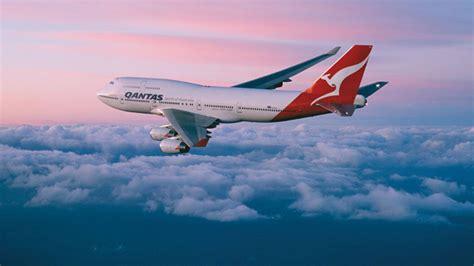
Qantas has officially announced the launch of daily direct flights from Melbourne to Tokyo Narita, starting 16 December 2025, marking a pivotal milestone in its Asia-Pacific expansion strategy. This new air corridor does more than bridge two cities—it connects cultures, fuels economic engagement, and enhances Australia’s global accessibility.
A Major Strategic Expansion into Asia
The route will be serviced by a reconfigured Airbus A330-300, equipped with a two-class configuration offering 297 seats. Renowned for comfort and operational efficiency, this aircraft reflects Qantas’ aim to provide a superior experience not only to premium business travelers but also to leisure tourists. With this move, Qantas strengthens its footprint across Asia and signals a clear intention to dominate the Australia-Japan travel sector.
Gareth Evans, CEO of Qantas International and Freight, underscored the strategic significance of the new route. Citing a “boom time for tourism and business travel,” Evans noted the Group’s capacity to respond rapidly to demand through its dual-brand strategy, encompassing both Qantas and Jetstar. The Melbourne-Narita addition complements Qantas’ existing services from Sydney to Tokyo (Haneda) and Brisbane to Tokyo (Narita), officially making Qantas the largest Australia-Japan network carrier.
Tourism and Trade in Overdrive
This air route is expected to significantly bolster the tourism economies of both nations. Past data illustrates the trend: during the 2015/16 financial year, Japanese visitors to Australia grew by 17%, injecting over AUD 1.5 billion into the economy. Simultaneously, Australian travel to Japan surged by 24%, driven by favorable exchange rates and increased cultural interest, particularly among younger generations.
According to Tourism Australia, Japan ranks among the top ten inbound visitor markets. Policies like relaxed visa requirements and the Australia-Japan Tourism Memorandum of Understanding (MOU) continue to stimulate two-way traffic. These agreements have laid the groundwork for collaborative tourism promotion, bilateral marketing campaigns, and shared data insights.
Melbourne: A Magnet for Japanese Visitors
Victoria, Australia’s most cosmopolitan state, is expected to reap substantial benefits from this direct service. Visit Victoria has been ramping up campaigns targeting Asian markets, and the new Qantas flight is predicted to generate tens of millions in tourism revenue annually. Melbourne’s attractions—such as the Australian Open, Formula 1 Grand Prix, and Melbourne International Comedy Festival—already enjoy strong appeal in Japan. Add to this a flourishing education sector, with thousands of Japanese students choosing Melbourne universities, and the strategic logic becomes evident.
With direct flights now in place, the barriers of long layovers and complex connections are eliminated, opening up spontaneous travel and high-value tourism. Non-stop services remain a vital component in unlocking the full potential of any international market.
Japan’s Growing Appeal for Australian Travelers
The route is not a one-way street. For Australians, Japan’s diverse seasonal appeal—from Hokkaido’s ski fields to Kyoto’s serene temples—has become increasingly irresistible. The country’s rich tapestry of history, innovation, cuisine, and culture draws millions each year. Tokyo remains the vibrant heart of Japan’s urban culture, while regions like Osaka, Fukuoka, and Okinawa beckon with unique local charm.
Jetstar Japan’s extensive domestic network amplifies the convenience of the new Qantas route. Australians landing in Narita can quickly connect to cities across Japan, expanding their itineraries without logistical headaches. From anime pilgrimages in Akihabara to culinary explorations in Osaka, proximity via non-stop travel enables richer, more flexible experiences. Importantly, Australia is one of Japan’s highest-yield inbound markets, with an average length of stay surpassing 10 nights and significant per-trip expenditure.
Jetstar’s Transition and Qantas’ Premium Shift
Jetstar will cease its Melbourne-Tokyo operations after 25 February 2026, transferring all bookings to the Qantas-operated service. During the 2025–2026 holiday peak, Jetstar A330-200s will temporarily support demand, but the long-term plan is clear: Qantas takes full control, offering a more refined experience aligned with its premium brand.
This transition reflects the Qantas Group’s capital optimization strategy and the continued execution of its dual-brand model. While Jetstar remains focused on cost-sensitive and leisure segments, Qantas targets premium business, high-yield leisure, and VFR (visiting friends and relatives) markets. Jetstar’s remaining routes from Cairns, Gold Coast, and Osaka will continue, ensuring Queensland’s north remains linked to Japan.
Economic and Diplomatic Ramifications
This new route is not just an economic opportunity but also a diplomatic bridge. Japan remains one of Australia’s largest trading partners, with significant corporate presence in Melbourne across industries like automotive, finance, and energy. Direct flights simplify the logistics of cross-border business—executive meetings, student exchanges, and academic collaboration can now occur with greater ease.
The route also aligns with broader tourism and foreign policy goals. Japan’s government has recommitted to its post-Olympics inbound tourism targets, aiming for 40 million annual visitors. Australia, meanwhile, prioritizes high-value, long-duration tourists, and the Melbourne-Narita route acts as a funnel for that segment.
Cultural Synergy Beyond the Numbers
Behind the statistics lies a deeper narrative of human connection and shared curiosity. For a Japanese student embarking on a semester at the University of Melbourne, or an Australian couple planning a winter getaway to Niseko, the journey now becomes part of the destination. Families divided by oceans can reunite with fewer complications, while business partnerships forged across borders will benefit from this new era of connectivity.
This route signals a modern reimagining of what air travel between two great nations can be—not merely transactional but transformational.
The Bottom Line: More Than a Flight
On December 16, when Qantas flight QF79 lifts off from Melbourne and lands at Narita International Airport, it will do more than cover the 8,000+ kilometer journey. It will symbolize a shared vision, economic optimism, and the expansion of human possibility.
For travelers in both directions—be it a honeymoon in Kyoto, a semester in Carlton, or a pitch meeting in Tokyo’s financial district—the service delivers accessibility, comfort, and opportunity. And with Qantas’ legacy of operational excellence and customer focus, passengers can expect a premium international experience from takeoff to touchdown.
As the airline industry rebounds from years of uncertainty, routes like Melbourne to Tokyo Narita are not merely profitable—they are essential connectors in a world rediscovering travel. In this new chapter of global mobility, Qantas writes its name not just across skies, but across cultures, economies, and lives.