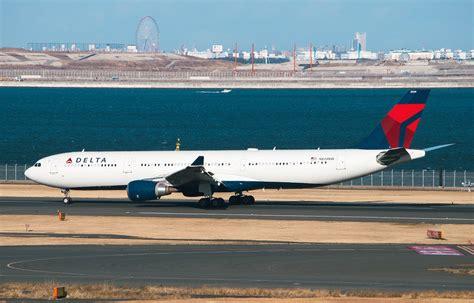
Delta Air Lines once commanded a powerful strategic outpost in Tokyo Narita International Airport (NRT), a hub inherited from its merger with Northwest Airlines. For decades, this gateway served as the linchpin of Delta’s Asia-Pacific ambitions, offering flights that stretched across the continent and back to the United States. But as the dynamics of global aviation shifted, so too did Delta’s strategy. The story of what happened to Delta’s Tokyo hub is one of industry evolution, strategic realignment, and the relentless pursuit of operational efficiency.
The Glory Years of Delta’s Tokyo Narita Hub
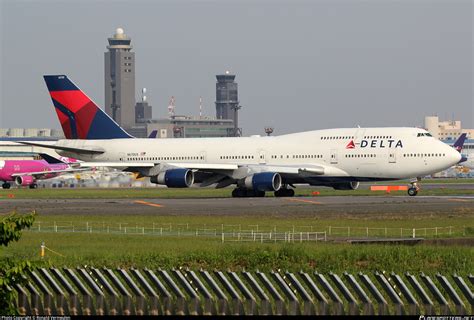
When Northwest Airlines established its hub at Narita in 1978, it was a move deeply tied to the geopolitical and infrastructural realities of the time. Tokyo Haneda, the city’s more central airport, had largely shifted to domestic operations after Narita’s inauguration. Northwest quickly turned Narita into a springboard for intra-Asian and transpacific travel, offering routes to key cities like Seoul, Manila, Beijing, and Bangkok. When Delta merged with Northwest in 2008, it inherited a robust operation, making it the largest U.S. carrier in Japan at the time.
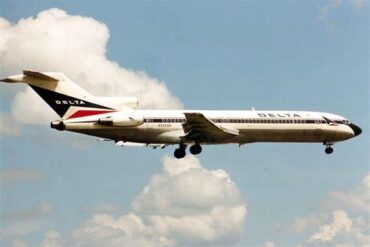
By the early 2010s, Delta’s presence at Narita was formidable. The airline operated up to 50 weekly flights to and from the U.S., utilizing a long-haul fleet dominated by Boeing 747s and DC-10s. Additionally, the hub offered connections onward to Asia, including a notable Fifth Freedom route between Tokyo and Mumbai. These rights allowed Delta to carry passengers not only to Japan but also between foreign countries, boosting yields and load factors across its Asian services.
Fifth Freedom Flights and Network Power
What made Delta’s Narita hub unique was its exploitation of Fifth Freedom rights, a relatively rare competitive advantage for U.S. airlines in Asia. This allowed Delta to transport passengers between Japan and third countries—like flying from Detroit to Narita to Shanghai, or Narita to Singapore, using Tokyo as a functional bridge in its broader network. This model proved lucrative and strategically indispensable in an era before long-range, fuel-efficient aircraft became common.
Delta’s extensive cooperation within the SkyTeam alliance further strengthened Narita’s connectivity. Partner airline Korean Air helped feed Delta’s routes from across Northeast Asia, cementing Tokyo’s role as a powerful axis for intercontinental travel.
The Shifting Tides: Haneda’s Comeback and Market Pressures
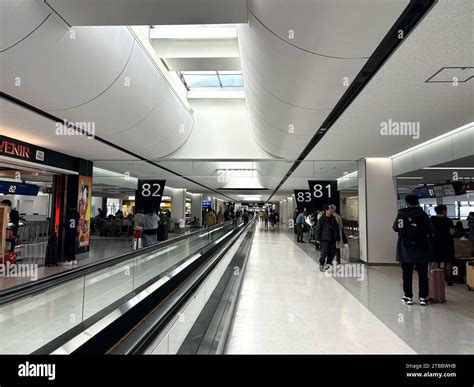
Despite Narita’s role as Tokyo’s primary international airport, it suffered from several critical disadvantages. Located far outside the city center, Narita was increasingly seen as less convenient for time-sensitive travelers, particularly business customers. Meanwhile, Haneda Airport (HND), located much closer to downtown Tokyo, underwent a quiet transformation.
A new international terminal opened at Haneda in 1998, and by 2008, Japanese authorities liberalized access to international carriers. This marked a turning point. Foreign airlines, especially U.S. carriers, began lobbying for coveted Haneda slots—and Delta was no exception. Haneda’s proximity to central Tokyo made it a magnet for premium demand, prompting Delta to start drawing down its Narita presence in favor of Haneda access.
Narita’s High Operating Costs and Strategic Realignment
Beyond geographic inconvenience, Narita’s operating costs were high. Slot constraints, outdated infrastructure in some areas, and the rise of point-to-point flying all contributed to a gradual erosion in the hub’s relevance. The advent of modern aircraft—particularly the Boeing 787 Dreamliner—enabled direct flights between mid-sized U.S. cities and Asian destinations, eroding the economic rationale for a central Tokyo stopover.
Delta began to pivot. It lobbied for more access at Haneda and, simultaneously, deepened its investment in Seattle-Tacoma International Airport (SEA). SEA became Delta’s unofficial transpacific launchpad, with direct routes to cities such as Tokyo Haneda, Seoul Incheon, Shanghai Pudong, and Taipei.
The Role of Korean Air and Incheon in Delta’s New Asia Strategy
Delta’s exit from Narita did not mean abandoning Asia altogether. Rather, it marked a shift in strategy. Delta increasingly leaned on its strategic joint venture with Korean Air, which operates a significant hub at Seoul Incheon International Airport (ICN). From there, Delta could offer seamless connections across Asia, including to destinations that were once served from Narita.
This alliance gave Delta the scale and connectivity it lost in Tokyo, without the need for a dedicated intra-Asian operation of its own. Flights from major U.S. gateways to Seoul allowed the airline to maintain its presence in the Asia-Pacific market while optimizing cost structures and operational complexity.
From Legacy to Obsolescence: The Closure of Narita Hub
Delta’s final withdrawal from Narita came in stages. Post-2010, the airline consistently cut back routes—at times eliminating one per year. By the mid-2010s, most intra-Asia services had vanished, leaving only a few transpacific connections. Eventually, all services were rerouted to Haneda or removed entirely.
The COVID-19 pandemic accelerated the process. Travel restrictions, plummeting demand, and operational uncertainties allowed Delta to fast-track its long-anticipated exit. Narita, once a bustling node of global connectivity, had faded into the background of Delta’s route map.
Haneda Today: Delta’s New Japanese Gateway
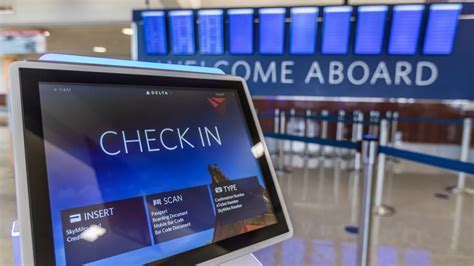
Today, Tokyo Haneda is Delta’s sole Japanese destination. From there, the airline operates regular flights to major U.S. hubs including Atlanta, Los Angeles, Seattle, Detroit, Honolulu, and Minneapolis-St. Paul. These routes are designed for nonstop convenience and are aimed squarely at business and premium leisure travelers.
Though Delta does not have a Japanese airline partner, its strategy in Japan now focuses on point-to-point flying, underpinned by fleet flexibility and a more targeted approach to demand. Haneda, with its city-centric location, is far more aligned with the airline’s post-2020 business model.
Lessons from Narita: A Symbol of Aviation’s Evolution
The story of Delta’s Tokyo Narita hub is emblematic of broader trends in international aviation. It reflects how global network design has shifted from multi-stop connecting hubs to streamlined point-to-point service enabled by technological progress. The fall of Narita in Delta’s network was not a failure—it was an adaptation to evolving economic, technological, and consumer realities.
Yet the hub’s legacy remains significant. It played a key role in shaping transpacific travel during a crucial era and helped Delta establish its credibility as a global airline. The investments made, connections forged, and miles flown through Narita laid the groundwork for the modern network Delta operates today.
The Future: Could Delta Rebuild in Asia?
There remains potential for Delta’s future in Asia, particularly in light of developments like the proposed Korean Air–Asiana merger, which could expand Delta’s footprint in Korea. Additionally, new bilateral agreements and airport expansions across Asia may present fresh opportunities.
Delta continues to maintain strong ties with several international partners, including Air France-KLM, Virgin Atlantic, LATAM, and China Eastern. This network allows the airline to offer competitive coverage without overextending its own fleet. While a full-scale return to a Tokyo hub appears unlikely, incremental growth in the region—particularly via Seoul and Seattle—remains very much on the table.
Conclusion: From Narita to New Horizons
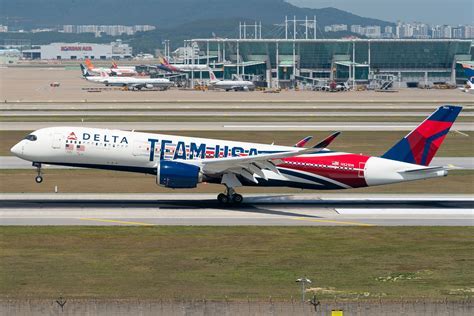
Delta’s Tokyo Narita hub was once a shining example of transpacific ambition. But as the economics of aviation evolved and technology enabled new routes, the necessity of such a hub diminished. In its place, Delta has built a more agile, efficient network centered around Haneda and Seoul, designed to serve the modern traveler’s need for speed, simplicity, and convenience.
Though the terminals at Narita no longer echo with the sound of Delta 747s loading for Beijing or Manila, the legacy of the hub lives on—in the airline’s strategy, its history, and the countless journeys it enabled across continents.