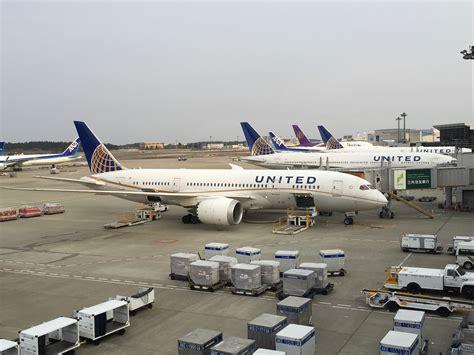
United Airlines’ once-vibrant Tokyo Narita International Airport (NRT) hub, a legacy inherited from Pan Am’s legendary Pacific network, has been dramatically reimagined in 2025. Once a cornerstone of United’s transpacific operations, Narita had faded into the background as demand patterns shifted and Tokyo Haneda (HND) emerged as the preferred entry point to Japan. But now, United is turning back the clock — with a forward-looking strategy — breathing new life into the Narita base with bold route launches, nimble aircraft deployments, and a recalibrated international vision aimed squarely at untapped Asian markets.
A Legacy of Greatness: The Pan Am Connection
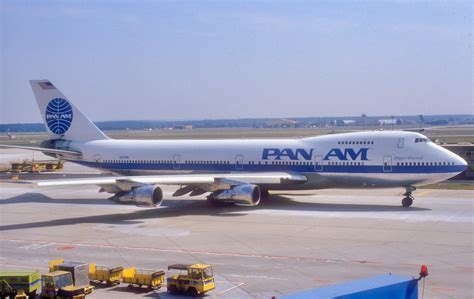
The story of United’s Tokyo hub begins with Pan American World Airways, whose Asia-Pacific operations set the foundation for what would become United’s post-deregulation transpacific network. In the 1980s, with Pan Am on the brink of collapse, United seized the opportunity to take over its Tokyo base — a monumental move that cemented its place in the Asia market. At that time, aircraft range limitations necessitated stopovers across the Pacific, and Tokyo was the perfect linchpin for onward connections to cities like Hong Kong, Bangkok, and Seoul.
United inherited not only the gates and slots but also the prestige. The Tokyo hub became the airline’s jumping-off point for an expanding Asia network — a jewel in its crown during the golden age of long-haul flying. But as aircraft gained longer range capabilities and direct flights to the U.S. became more viable, the need for a Narita-centric model diminished.
Narita’s Decline: The Shift to Direct Pacific Links
By the 2010s, United Airlines began pulling back from Tokyo Narita, responding to shifting market dynamics and competition from Asia-based carriers like All Nippon Airways (ANA) and Japan Airlines (JAL). The last straw came in 2017, when United cut its final Narita-based link to Seoul Incheon (ICN). In its place, direct routes from San Francisco (SFO) and Los Angeles (LAX) to Asian capitals took over, backed by fuel-efficient, long-range aircraft like the Boeing 787 Dreamliner.
Narita was relegated to a shell of its former self. Passengers moved to Haneda for its proximity to downtown Tokyo, and Narita’s slot abundance became a symbol of decline rather than opportunity. For years, the once-bustling hub lay dormant — until the post-pandemic travel boom offered a rare opening.
Reawakening a Sleeping Giant: United’s 2024–2025 Strategy
Starting in late 2024, United reactivated its Tokyo Narita hub — not with flashy routes to saturated markets, but by targeting niche destinations underserved or ignored by ANA and JAL. The first move was a flight to Cebu (CEB), Philippines, followed by Ulaanbaatar (UBN), Mongolia. By July 11th, 2025, United will also launch service to Kaohsiung (KHH), Taiwan, signaling a clear pivot to second-tier but high-potential markets.
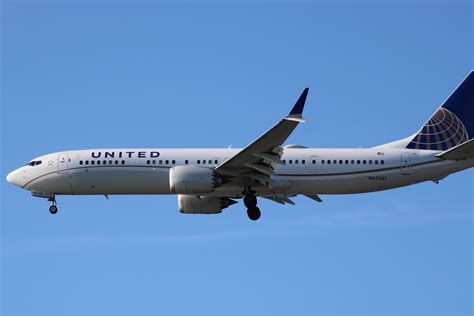
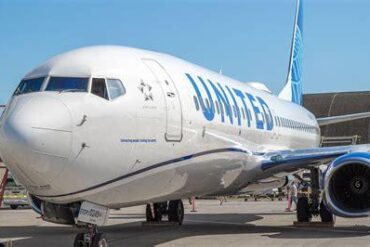
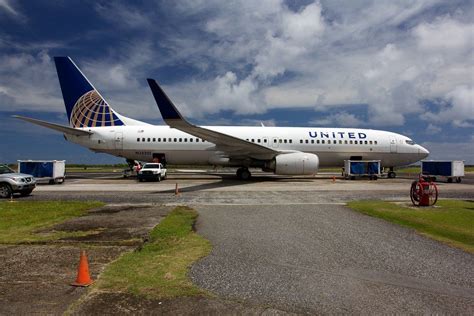
These routes are unlikely to fill widebodies — and that’s the point. Instead, United is deploying the Boeing 737-800, a narrowbody workhorse more commonly seen on U.S. domestic routes. At first glance, this might seem unconventional. But most of these new routes fall well within the aircraft’s range, and United is betting that lower operational costs and moderate load expectations will make them viable.
The Guam Factor: A Strategic Realignment
Key to this strategy is United’s longstanding presence in Guam (GUM), where it operates its unique “island hopper” services across Micronesia. But while Guam remains essential from a military and geopolitical standpoint — especially with Andersen Air Force Base nearby — passenger traffic has been underwhelming.
United is rebalancing capacity by shifting underutilized narrowbody aircraft from Guam to Narita, where they can be more profitably deployed. This gives United a two-pronged Pacific approach: retain strategic military and governmental ties via Guam while expanding passenger services through Narita.
Why Narita Still Matters: Slot Availability & Market Dynamics
Unlike Haneda, where slot scarcity is extreme, Narita offers United room to grow. As Japan welcomes a massive surge in tourism post-COVID, demand for alternate arrival points is expanding. Narita’s location may be further from central Tokyo, but its flexibility, gate space, and access to new regional markets give it renewed value.
United is not simply reliving the past — it’s leveraging Narita to explore previously untapped routes where few or no competitors exist. This mirrors what it recently did in Europe and Oceania, where it added exotic destinations like Nuuk, Greenland (GOH) and Adelaide, Australia (ADL). These “surprise and delight” routes have proven popular among adventurous travelers.
Narrowbodies Across the Pacific: Boeing 737-800 in Focus
The decision to fly transpacific routes with the Boeing 737-800 may seem audacious, but it’s rooted in smart economics. With a range of 3,065 nautical miles and a typical flight time of under six hours for destinations like Ulaanbaatar, the aircraft is more than capable. It offers:
- Lower operating costs per seat
- Flexible scheduling to test route viability
- Smaller capacity, aligning with demand forecasts
This lets United trial destinations without the risk of flying half-empty widebodies. It’s a nimble and pragmatic strategy, particularly useful in today’s volatile aviation environment.
Building A New Web: United’s 2025 Asia-Pacific Growth
United’s ambitions in Asia don’t stop at Narita. In April 2025 alone, it announced new routes from the U.S. to Bangkok (BKK), Ho Chi Minh City (SGN), Manila (MNL), and Adelaide (ADL). Closer to Narita, United now connects Koror (ROR), Palau, and Taipei (TPE) to its Pacific network, forming a regional lattice of connections.
This “hub-and-spoke-lite” model lets Narita function as a mini-hub for Asia, fed by narrowbodies and connected to long-haul U.S. flights. It’s not quite a return to the full-service Pan Am model, but it’s a hybrid revival optimized for 2025’s market realities.
Competitive Advantage: Beating ANA and JAL at Their Own Game
Interestingly, United’s strategy sidesteps direct competition with Japan’s flagship carriers. ANA and JAL dominate Tokyo’s premium-heavy, business-class-focused routes, especially from Haneda. United is choosing a different path — offering nonstop flights to underserved markets that Japan’s airlines don’t cover. That makes it the only option for U.S.-bound travelers in places like Kaohsiung and Ulaanbaatar.
In doing so, United builds brand loyalty among a new class of traveler — one that’s more interested in unique destinations than corporate convenience. The loyalty payoff could be substantial, especially when tied into the MileagePlus program, which remains one of the most flexible frequent flier schemes globally.
Looking Ahead: Will Narita Stay in Play?
The future of United’s Narita hub hinges on how well these routes perform. If load factors and yields are promising, we could see more 737-800 deployments, or even the return of widebodies if premium demand grows. In a post-COVID world where flexibility and niche market strength are more valuable than scale alone, United’s experiment could become a model for modern international expansion.
Patrick Quayle, United’s Senior Vice President of Global Network Planning and Alliances, emphasized this vision:
“At United, we’re changing the way people think about where they travel — by offering the greatest access to see and explore the world, whether it’s for relaxation, adventure or business.”
United Airlines’ Tokyo Narita comeback is more than just nostalgia. It’s a strategic, data-driven bet on the next wave of global travel — one that embraces diversity, decentralization, and daring.
Conclusion: Narita’s Renaissance Is Real
In resurrecting its original Tokyo hub, United Airlines is redefining what international connectivity looks like in 2025. By linking Guam, Palau, Cebu, Ulaanbaatar, and Kaohsiung to its broader Pacific operations via Narita, United is not only making up for lost ground — it’s planting new flags in places few others are willing to go.
The result is a smarter, leaner, and more exploratory United Airlines, perfectly attuned to today’s travelers: flexible, experience-hungry, and eager to venture off the beaten path. Whether the strategy endures will depend on revenue and resilience, but for now, the skies above Tokyo Narita are once again buzzing with potential.