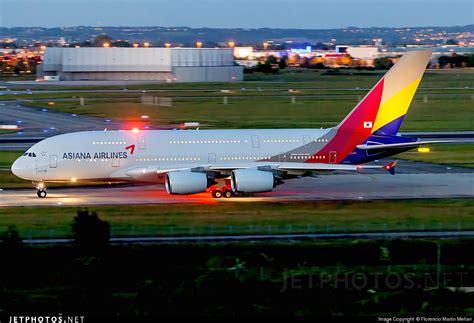
The Airbus A380 was once declared an endangered species of the skies. Parked in deserts, cannibalized for parts, written off as an overambitious relic of pre-pandemic aviation, the world’s largest passenger jet seemed destined for an early retirement. Yet in early 2026, the superjumbo is not only flying—it is thriving in a carefully redefined role. The real question now is no longer whether the aircraft survived, but how many Airbus A380s are still flying worldwide, and what that number reveals about the structure of global air travel.
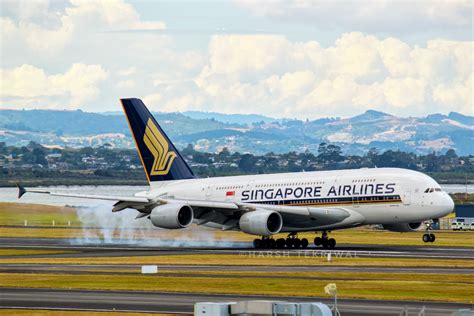
As of February 2026, 159 Airbus A380 aircraft are active in commercial service, according to the latest fleet tracking data. These aircraft are spread across 11 operators, ranging from aviation giants like Emirates to niche long-haul specialists such as All Nippon Airways (ANA). While Airbus ended production of the A380 in 2021, the operational fleet remains younger than many assume. Several airframes have barely reached mid-life, and some are less than a decade old.
The A380’s revival reflects something deeper than nostalgia. It signals the persistence of the hub-and-spoke model, the severe slot constraints at major global airports, and the ongoing delivery delays of next-generation widebody jets.
How Many Airbus A380s Are Active in 2026?
The global fleet currently stands at 159 active A380s, a figure that fluctuates slightly depending on maintenance cycles. At its peak before the pandemic, more than 230 aircraft were in service. Today’s total is smaller, but it is arguably more efficiently deployed.
These aircraft are serving 63 airports worldwide throughout 2026, with operations heavily concentrated at capacity-constrained hubs. Dubai International Airport (DXB) remains the undisputed capital of the A380 network. Between January and August 2026 alone, Dubai is scheduled to handle more than 20,000 one-way A380 departures.
Other key strongholds include:
- London Heathrow (LHR)
- Singapore Changi (SIN)
- Sydney Kingsford Smith (SYD)
- Los Angeles International (LAX)
The superjumbo is no longer scattered across experimental routes. Instead, airlines deploy it with surgical precision on high-density trunk corridors where 450 to 600 seats per flight can be filled consistently.
Why the Airbus A380 Refuses to Disappear
The A380 was originally designed for a world that believed airport congestion would worsen indefinitely. While point-to-point flying expanded with twin-engine aircraft like the Boeing 787 and Airbus A350, reality reasserted itself at mega-hubs.
Airports such as Heathrow and Dubai cannot simply add more frequencies. They lack available takeoff and landing slots. When a slot is scarce, maximizing revenue per movement becomes essential. The A380’s enormous capacity makes it the ultimate slot optimization tool.
Consider this: a three-class A380 typically carries over 500 passengers. A Boeing 777-9 carries approximately 426. Even with improved fuel efficiency, two smaller aircraft cannot replace a single A380 at a slot-constrained airport if no additional slots exist. In those environments, the superjumbo remains economically rational.
Which Airlines Still Operate the Airbus A380?
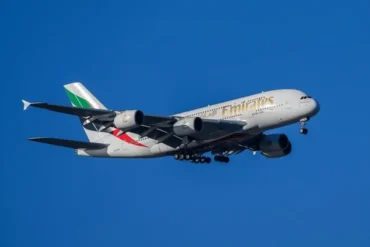
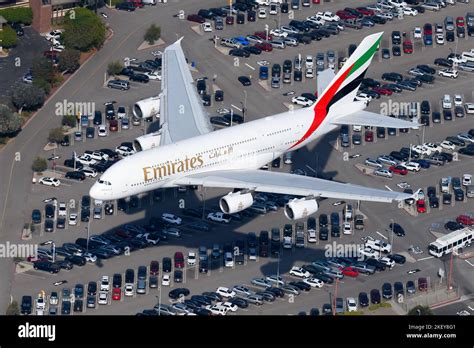
The 159 active aircraft are distributed among 11 operators. Emirates dominates the fleet by a wide margin and intends to keep approximately 110 aircraft flying by the end of 2026. The airline’s reliance on the A380 is not symbolic—it is structural.
Other operators include:
- Singapore Airlines
- British Airways
- Lufthansa
- Qantas
- Qatar Airways
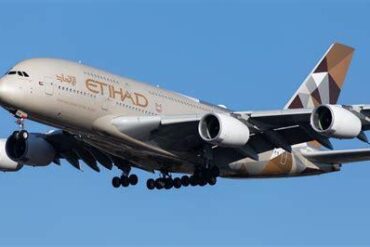
- Etihad Airways
- Korean Air
- All Nippon Airways (ANA)
- Asiana Airlines
- Global Airlines (limited operational status)
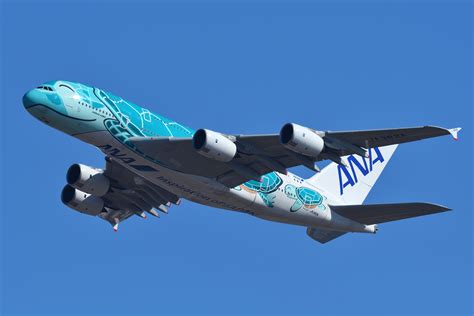
Each airline uses the aircraft differently. Emirates integrates it into its core long-haul strategy. ANA operates its distinctive “Flying Honu” A380s primarily between Tokyo and Honolulu. Lufthansa reactivated aircraft for high-demand U.S. routes from Munich.
The Role of Maintenance in Fleet Numbers
The number 159 is not static. Heavy maintenance events significantly affect how many aircraft are classified as active at any given moment.
The Airbus A380 requires intensive checks:
- C-checks, conducted every 18–24 months
- D-checks, which can require more than 60,000 labor hours
A D-check can ground an aircraft for months. Since production ended, sourcing spare parts has become more complex and expensive. The European Union Aviation Safety Agency (EASA) has issued nearly 95 airworthiness directives affecting various A380 components since 2020, including structural fittings and cabin safety systems.
This means that the active fleet number fluctuates not because of permanent retirements alone, but because some aircraft cycle between service and long-term maintenance.
Emirates: The Superjumbo’s Lifeline
No discussion of the A380’s survival is complete without examining Emirates. The Dubai-based carrier operates the largest A380 fleet in history and has publicly committed to flying the type until 2041.
Sir Tim Clark, President of Emirates, has repeatedly emphasized that premium demand on routes such as London, Paris, and Sydney exceeds available capacity. Emirates reports high spill rates—passengers it cannot accommodate due to full flights.
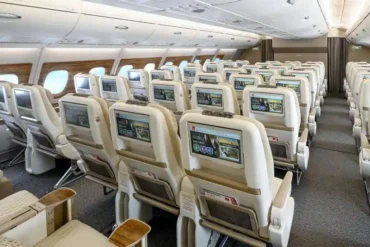
To extend the aircraft’s lifespan, Emirates is investing billions in a massive retrofit program. Over 100 aircraft are receiving:
- New premium economy cabins
- Refreshed first-class suites
- Updated business class interiors
This commitment signals confidence not only in the aircraft, but in long-haul premium travel as a durable revenue driver.
The Competitive Pressure from Twin-Engine Jets
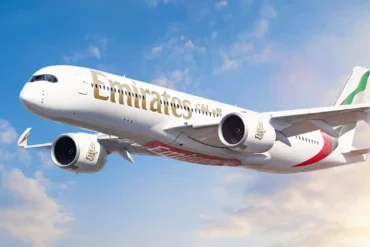
Despite its resurgence, the A380 faces undeniable competitive challenges. The Boeing 777-9 and Airbus A350-1000 promise substantial efficiency gains. Boeing projects that the 777-9 will burn 15–25% less fuel per seat compared to the A380.
Twin-engine aircraft also offer route flexibility. They can operate profitably on thinner long-haul markets where filling 500 seats would be unrealistic.
This efficiency gap explains why Airbus ended A380 production in 2021. Airlines increasingly favored aircraft that allowed frequency over capacity. Yet certification delays for the Boeing 777X program have created a delivery vacuum. Many carriers expected the 777-9 to replace the A380 sooner. Instead, delays forced airlines like Lufthansa and Emirates to reactivate or extend their superjumbo fleets.
In this sense, the A380’s second life is partly the result of industrial bottlenecks.
Operational Economics: Risk and Reward
Operating the A380 remains financially demanding. The aircraft typically requires a load factor exceeding 55% just to break even. High fuel prices can quickly erode margins.
The superjumbo also demands specialized infrastructure. Its 80-meter wingspan requires Code F airport certification. Not every airport can accommodate it, limiting redeployment flexibility during downturns.
Global Airlines provides a cautionary example. The startup acquired an A380 but has struggled to launch regular scheduled operations. Its sole aircraft remains in extended maintenance, underscoring the complexity of running such a large and costly airframe.
Established carriers manage this risk by concentrating the A380 on routes with stable, high-yield demand.
Regional Breakdown of A380 Operations in 2026
Scheduled A380 flights in 2026 illustrate how concentrated the aircraft’s usage has become:
- Middle East: 52,400 flights (Dubai as primary hub)
- Europe: 18,120 flights (London Heathrow dominant)
- Asia-Pacific: 14,850 flights (Singapore major center)
- North America: 5,948 flights (Los Angeles leading destination)
The Middle East accounts for the majority of operations, largely driven by Emirates and Qatar Airways. Europe and Asia-Pacific maintain significant but more selective deployments.
Retirement Timelines: When Will the A380 Disappear?
While 159 aircraft remain active, retirement planning varies by airline.
Singapore Airlines is gradually transitioning toward an all-twin-engine fleet, with partial retirements already underway and further reductions expected after 2027. Korean Air anticipates retirement around 2027, partly influenced by fleet simplification following its merger with Asiana.
Lufthansa aims to phase out the aircraft around 2030, contingent on 777-9 deliveries. Qantas projects replacement by Project Sunrise Airbus A350 aircraft by 2032. Emirates stands apart, targeting a final transition around 2041.
These timelines suggest the global A380 fleet will gradually decline through the 2030s, but not abruptly.
Passenger Experience: The Intangible Advantage
The A380’s survival is not purely mathematical. It is experiential.
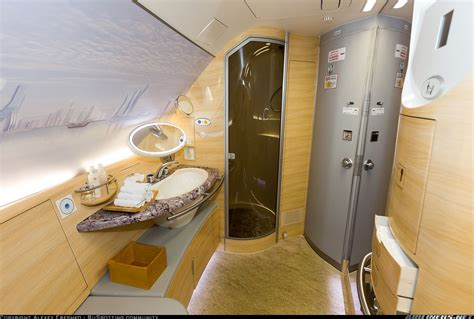
The aircraft’s double-deck design enables amenities physically impossible on smaller jets. Emirates offers onboard showers. Etihad pioneered “The Residence,” a three-room suite in the sky. Even in standard economy, the A380’s wider cabin and quieter interior provide a noticeably calmer environment.
For airlines competing in premium markets, these differentiators matter. The aircraft has become less of a prestige project and more of a strategic asset tied directly to brand identity.
Passengers seeking the full superjumbo experience will find that 2026 represents a peak second act. The fleet is smaller than before 2020, but more concentrated on flagship routes.
How Long Will 159 Aircraft Remain 159?
The fleet number will likely fluctuate between 150 and 170 over the next few years as aircraft cycle through heavy maintenance and limited reactivations.
The decisive variable is the arrival rate of next-generation widebodies. If Boeing resolves 777X certification delays and Airbus increases A350 production capacity, retirements will accelerate. If delivery gaps persist, airlines may extend A380 operations further.
Infrastructure constraints at global hubs are unlikely to ease quickly. Expanding airports in dense urban regions faces political and environmental resistance. As long as slot scarcity remains unresolved, the A380 retains strategic relevance.
The Verdict: How Many Airbus A380s Are Still Flying Worldwide?
As of early 2026, 159 Airbus A380 aircraft are actively flying worldwide. They operate across 11 airlines, serve 63 airports, and remain concentrated on high-demand intercontinental routes.
The aircraft’s production has ended, but its operational significance has not. For Emirates and several other carriers, the superjumbo is not a relic—it is a capacity solution bridging the gap until sufficient twin-engine replacements arrive.
The A380’s future is finite, but its present is unexpectedly robust. The giant once thought destined for scrapyards has reemerged as a calculated tool for maximizing scarce airport slots and capturing premium demand. Whether it continues into the 2040s or fades earlier depends less on nostalgia and more on infrastructure, fuel economics, and manufacturing timelines.
For now, 159 of these double-deck titans still cross oceans daily, reminding the aviation world that sometimes scale, when precisely deployed, remains unmatched.