The Convair B-36 Peacemaker occupies a singular position in aviation history, not merely for its immense physical scale but for the strategic philosophy it embodied. Conceived in an era defined by existential threat and global uncertainty, the B-36 was designed to project American power across oceans without reliance on foreign bases. We examine not only how many B-36 Peacemakers are left, but why their survival matters, how they shaped Cold War doctrine, and what their preserved remains tell us about a vanished chapter of aerospace ambition.
From its first conceptual sketches to its quiet retirement, the B-36 stood as a technological bridge between propeller-driven bombers of World War II and the jet-powered strategic aircraft that followed. Its story is inseparable from the rise of the United States Air Force, the birth of nuclear deterrence, and the escalation of tensions that defined the early Cold War.
Despite producing hundreds of airframes and investing enormous industrial effort, the Peacemaker has nearly vanished from the physical world. Today, only a small number remain, carefully preserved as static monuments to an aircraft that once promised global reach without precedent.
Understanding what survives—and what has been lost—requires looking beyond simple numbers. It demands an exploration of design philosophy, operational reality, and the unforgiving economics of postwar demobilization.
The Question Answered: How Many B-36 Peacemakers Still Exist?
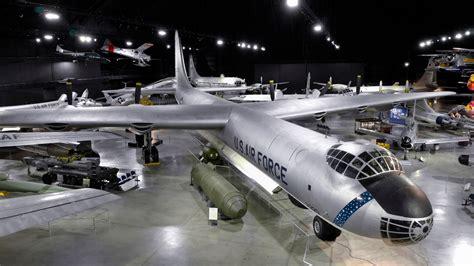
Only four Convair B-36 Peacemakers remain in existence today. None are airworthy, and all survive solely as museum exhibits. Given that 369 aircraft were ultimately delivered to the U.S. Air Force in various configurations, the survival rate is exceptionally low even by historic bomber standards.
The disappearance of the B-36 fleet was driven by several factors: extraordinary maintenance demands, rapid advances in jet technology, and the sheer impracticality of storing or restoring an aircraft with a 230-foot wingspan and unmatched logistical complexity. Unlike smaller bombers that could be repurposed or privately preserved, the B-36 was simply too large and too specialized to escape the scrapyard era of the late 1950s.
Yet the four surviving examples represent different facets of the program’s evolution, from late-production nuclear bombers to reconnaissance variants that pushed surveillance capabilities into the stratosphere.
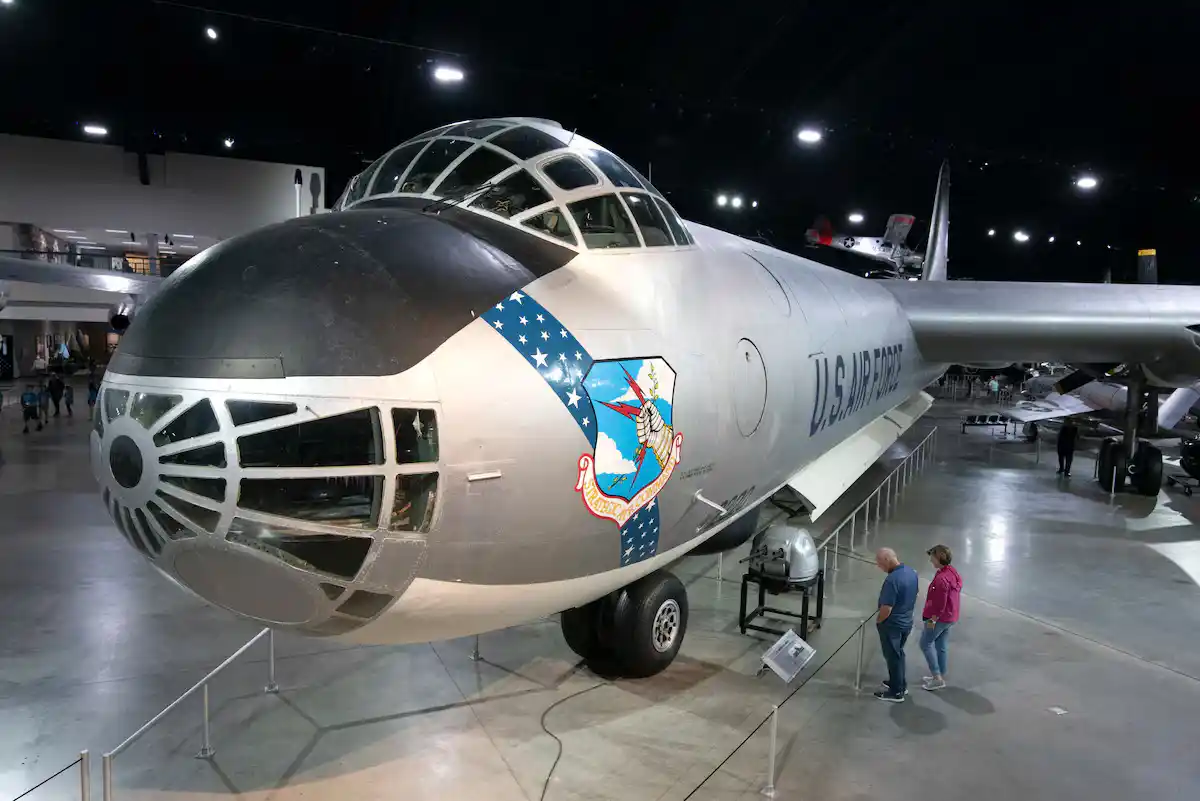
The Surviving B-36 Aircraft and Where They Are Preserved
The remaining B-36 Peacemakers are distributed across four major American aviation museums, each chosen as a long-term custodian due to infrastructure capable of housing such an enormous aircraft.
National Museum of the U.S. Air Force – Dayton, Ohio
B-36J-1-CF, Serial Number 52-2220
Pima Air and Space Museum – Tucson, Arizona
B-36J-10-CF, Serial Number 52-2827
Strategic Air Command and Aerospace Museum – Ashland, Nebraska
B-36J-1-CF, Serial Number 52-2217
Castle Air Museum – Atwater, California
RB-36H-30-CF, Serial Number 51-13730
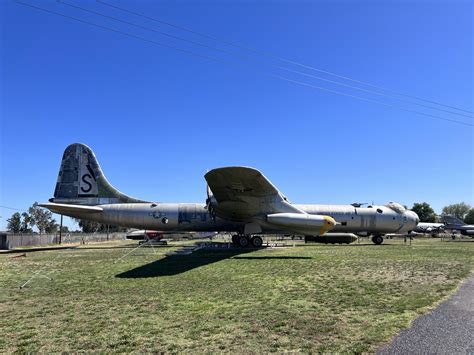
These four airframes collectively represent the final operational maturity of the Peacemaker, particularly the B-36J series, which featured jet-assisted propulsion and extended range.
Origins of a Giant: Why the B-36 Was Built at All
The B-36 was conceived during the darkest days of World War II, when American planners feared the possible fall of Great Britain. The requirement was uncompromising: a bomber capable of flying from North America to Europe and back, carrying a heavy payload at extreme altitude, without relying on overseas bases.
Consolidated Vultee, later Convair, responded with a design so ambitious that it bordered on the surreal. The aircraft’s wingspan exceeded that of any operational bomber before or since in U.S. service. Its intended cruising altitude placed it beyond the reach of contemporary interceptors, while its payload capacity was tailored to weapons that, at the time, existed only as theoretical possibilities.
The war ended before the B-36 could participate, but the geopolitical environment that followed made it more relevant than ever.
Bridging Two Eras of Strategic Bombing
The B-36 uniquely straddled two technological epochs. It was fundamentally a radial-engine bomber, powered by six massive piston engines mounted in a pusher configuration. Yet later variants incorporated four turbojet engines, giving rise to the famous slogan: “six turning and four burning.”
This hybrid propulsion approach was not elegance for its own sake. Early jet engines consumed fuel at prohibitive rates, making them unsuitable for intercontinental missions without refueling—a capability still in its infancy. The B-36’s piston engines provided efficiency and endurance, while the jets delivered speed when required, particularly during takeoff or combat penetration.
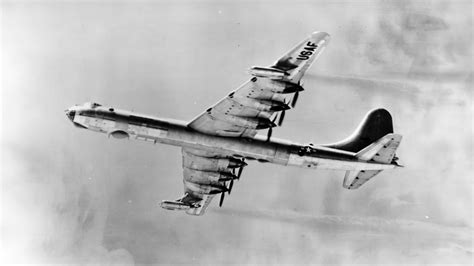
This transitional design allowed the Peacemaker to remain viable while fully jet-powered bombers such as the B-47 and later the B-52 were still under development.
The Peacemaker as a Nuclear Deterrent
The strategic importance of the B-36 peaked during the early Cold War. At a time when the U.S. nuclear arsenal was limited and tightly controlled, the ability to deliver atomic weapons across intercontinental distances carried immense psychological weight.
During the Korean War, small deployments of B-36 aircraft to the United Kingdom and North Africa sent an unmistakable message. From those bases, much of the Soviet Union fell within operational range, even without forward staging. The Peacemaker did not need to drop bombs to fulfill its mission; its mere presence altered strategic calculations.
General Curtis LeMay, one of the most influential figures in Strategic Air Command, viewed the B-36 not as a temporary solution but as an essential component of deterrence. In his view, every bomber was an interim design, valuable only insofar as it extended reach and credibility.
Life Aboard the Largest Bomber Ever Built
Operating the B-36 was a test of endurance for both machine and crew. Standard bomber versions carried a crew of 15, while reconnaissance variants could carry up to 22 personnel, including photographers and technical specialists.
The aircraft featured pressurized compartments connected by a crawl tunnel, allowing crew members to move between stations during missions that could exceed 40 hours. These missions pushed human limits as much as mechanical ones, demanding constant vigilance over engines prone to overheating, vibration, and mechanical failure.
Maintenance requirements were legendary. Ground crews required hours to prepare the aircraft, and in-flight engine issues were common. Spark plug fouling alone necessitated the replacement of hundreds of plugs after extended missions.
The RB-36 and the Age of High-Altitude Surveillance
Among the most fascinating surviving variants is the RB-36, the reconnaissance adaptation of the Peacemaker. While capable of carrying nuclear weapons, its primary mission was intelligence gathering on an unprecedented scale.
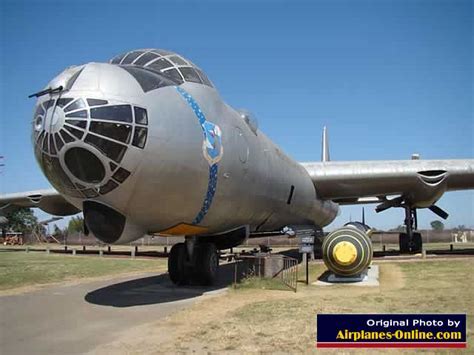
The aircraft housed cameras so large they displaced entire bomb bays. Film rolls measured 18 inches wide and 1,000 feet long, enabling continuous coverage from altitudes exceeding 40,000 feet. From those heights, RB-36 crews could identify industrial complexes, missile installations, and military formations deep inside denied territory.
These missions laid the groundwork for later reconnaissance platforms, proving that strategic intelligence could be gathered without direct confrontation.
Why None of the B-36 Peacemakers Still Fly
Despite occasional speculation, returning a B-36 to flight status is effectively impossible. The aircraft’s size alone poses insurmountable challenges, from hangar space to runway requirements. More critically, the specialized engines, custom components, and unique systems have no modern supply chain.
Even during its service life, the B-36 was maintenance-intensive and temperamental. Restoring one today would require recreating entire manufacturing processes from scratch, at costs that would exceed those of building a modern strategic aircraft.
As a result, preservation efforts focus on static conservation, ensuring structural integrity and historical accuracy rather than operational capability.
The End of the Peacemaker Era
The arrival of fully jet-powered bombers marked the beginning of the end for the B-36. Aircraft like the B-52 Stratofortress offered greater speed, flexibility, and long-term growth potential. Convair’s attempt to reinvent the Peacemaker as the jet-powered YB-60 failed to outperform Boeing’s designs.
By the late 1950s, Strategic Air Command transitioned entirely to jet aircraft, and the remaining B-36s were rapidly retired. Many were scrapped in dramatic fashion, their enormous wings and fuselages cut apart to reclaim aluminum and steel.
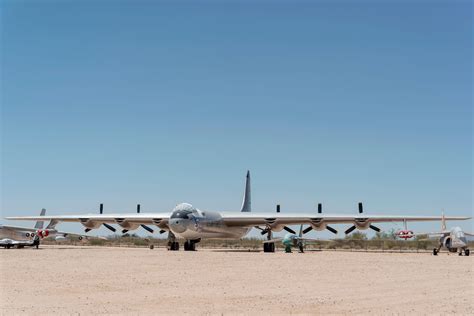
The speed of this dismantling explains why so few survive today.
Why the Remaining B-36 Aircraft Matter
The four surviving B-36 Peacemakers are more than museum artifacts. They are physical reminders of a moment when engineering ambition, geopolitical fear, and technological uncertainty converged. No subsequent aircraft has combined such size, range, and symbolic power.
Standing beneath a B-36 wing, one gains a visceral understanding of the scale at which Cold War planners operated. The aircraft embodies both the promise and the peril of an age defined by nuclear brinkmanship.
Preserving these giants ensures that future generations can engage directly with the realities of early strategic air power—not as abstraction, but as tangible history.
Conclusion: A Vanishing Titan Preserved in Four Places
So, how many B-36 Peacemakers are left? The answer remains firmly at four, and it is unlikely to ever change. These surviving aircraft, scattered across the United States, represent the final physical legacy of a bomber that once promised to reshape global strategy.
The B-36 Peacemaker never fired a shot in anger, yet its influence was profound. It deterred conflict through presence, bridged technological eras, and redefined what was possible in long-range aviation. Its near-total disappearance only heightens the importance of those that remain—silent, immense, and unforgettable.