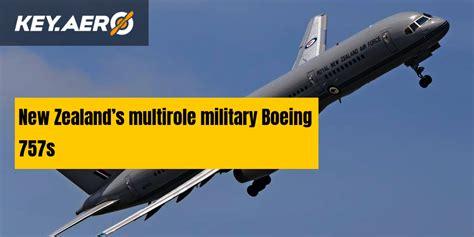
The Boeing 757 occupies a peculiar and fascinating niche in aviation history. Designed as a commercial workhorse, it evolved into something far more specialized in the hands of governments and militaries. Powerful engines, excellent short-field performance, and transcontinental range turned the aircraft into an unlikely strategic asset. Today, when the global commercial fleet is steadily shrinking, a small and highly modified group of Boeing 757s continues to serve in military transport roles, raising an increasingly common question about how many are actually left and why they still matter.
The Boeing 757 was never intended to become a military platform. Yet its combination of narrowbody efficiency and widebody-like performance created a sweet spot no modern aircraft has fully replicated. Capable of operating from relatively short runways while flying intercontinental distances, the jet proved ideal for missions that require discretion, flexibility, and reliability rather than brute lift capacity. These characteristics explain why, decades after its introduction, the aircraft still quietly underpins some of the most sensitive air transport missions in the world.
Globally, only one military operates the Boeing 757 as a formally designated military aircraft rather than a loosely affiliated government transport. That distinction belongs to the United States Air Force. Other nations have used the type for head-of-state travel, but none have integrated it into their military inventory with the same depth of modification, doctrine, and operational secrecy. The result is a fleet that is small in number but outsized in strategic importance.
The United States Air Force and the Last Military 757s
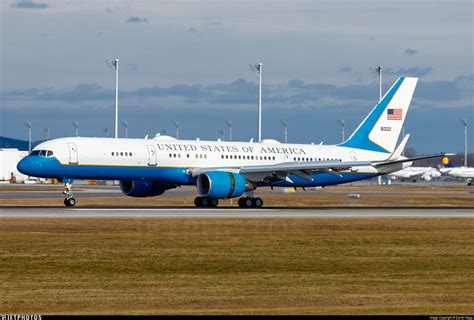
The United States Air Force operates the Boeing 757 under the military designation C-32. These aircraft are not merely repainted airliners. They are deeply modified platforms adapted to meet the demands of high-ranking government transport, emergency operations, and classified missions. In total, ten Boeing 757s remain in military service worldwide, and all ten belong to the United States.
This fact alone underscores how rare the type has become in uniform. While Saudi Arabia and Argentina continue to use Boeing 757s as VIP aircraft, those jets are not part of their air forces in the same structural sense. They function more like state-owned executive transports. The American fleet, by contrast, is fully embedded within the USAF command structure, flown by military crews, maintained to military standards, and tasked with missions that extend far beyond ceremonial travel.
The C-32 fleet is divided into two distinct variants with very different personalities. One is highly visible and instantly recognizable. The other is intentionally anonymous, blending into civilian air traffic while performing missions few people will ever hear about.
Origins of the Boeing C-32 Program
The story of the military Boeing 757 begins in the late 1990s. At the time, the Air Force needed to replace its aging Boeing C-137 fleet, a military derivative of the Boeing 707 that had served presidents and senior officials since the Cold War. Those aircraft were becoming increasingly expensive to maintain and lacked the performance and reliability expected of modern transport platforms.
The Air Force initially leased four Boeing 757-200 aircraft from Boeing, with an option to purchase them later. These jets were built on the same production line as commercial 757s but were modified before entering service. Delivered beginning in 1998, they became known as the C-32A. Their role was clear from the start: provide secure, efficient, and flexible transport for the highest levels of American government.
Each C-32A was equipped with Pratt & Whitney PW2040 engines and auxiliary fuel tanks that dramatically extended range. With a maximum takeoff weight of roughly 116 tons and a range exceeding 5,600 nautical miles, the aircraft could cross oceans without refueling while still accessing airports that were off-limits to larger widebody jets.
Inside the Boeing C-32A Fleet
The C-32A is best known to the public through a familiar callsign. When carrying the vice president of the United States, it operates as Air Force Two. When the president is onboard and the larger VC-25 is unavailable or impractical, it becomes Air Force One. This dual role gives the aircraft a visibility that belies its relatively small fleet size.
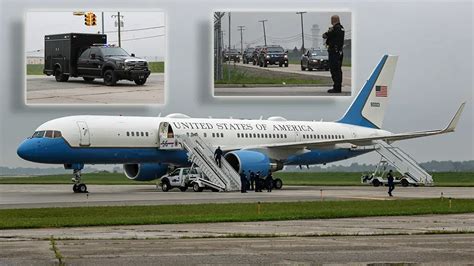
All eight C-32As are operated by the 1st Airlift Squadron, part of the 89th Airlift Wing at Andrews Air Force Base. This unit specializes in special air mission transport, moving presidents, vice presidents, cabinet members, senior military leaders, and combatant commanders around the globe. The aircraft wear the iconic blue-and-white livery originally designed by Raymond Loewy, instantly identifying them as instruments of American state power.
While the first four C-32As were purchased new, the remaining four were acquired second-hand in the late 2000s and early 2010s from commercial operators including American Airlines, Finnair, and Aeromexico. Despite their varied origins, all eight aircraft were standardized, upgraded, and fitted with winglets to improve fuel efficiency and performance. Internally, they feature secure communications, defensive systems, and customized cabins tailored to executive travel and airborne command functions.
The Shadowy Boeing C-32B Gatekeeper
If the C-32A represents the public face of military 757 operations, the C-32B Gatekeeper embodies the opposite philosophy. Only two of these aircraft remain operational, and both are designed to attract as little attention as possible. Painted in an unmarked white livery and lacking visible registration numbers, they resemble ordinary charter aircraft at a glance.
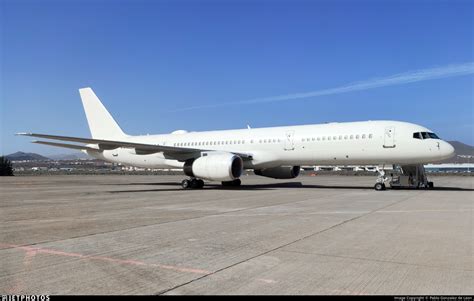
The C-32Bs were converted from second-hand Boeing 757-200s previously flown by airlines such as Air Transat and Avianca. Unlike the C-32A, they are powered by Rolls-Royce RB211 engines and do not feature winglets. Their real distinction lies beneath the skin. These aircraft are equipped with larger auxiliary fuel tanks, giving them a range of approximately 6,000 nautical miles, and they are capable of aerial refueling, a rare feature for a narrowbody jet.
Integrated airstairs allow the aircraft to operate independently at austere or politically sensitive locations. Advanced communications suites and upgraded avionics support classified missions, intelligence activities, and emergency foreign support operations. The aircraft are operated by a mix of active-duty and Air National Guard units, including elements based at Eglin Air Force Base and Joint Base McGuire-Dix-Lakehurst.
How Many Military Boeing 757s Remain
The answer is precise and surprisingly small. Ten Boeing 757s remain in military transport service worldwide. Eight are C-32A aircraft dedicated primarily to VIP and government transport. Two are C-32B Gatekeepers assigned to classified and special operations roles. No other military operates the type in an equivalent capacity, and no additional airframes are expected to join the fleet.
This number is unlikely to increase. The Boeing 757 has been out of production since 2004, and suitable airframes are becoming scarce even on the secondary market. More importantly, the Air Force has already standardized its C-32 fleet, investing heavily in upgrades rather than expansion. The emphasis is on sustaining capability, not growing it.
Operational Relevance in the Modern Era
Despite their age, the military 757s remain intensely relevant. The C-32A frequently operates from runways as short as 5,000 feet, enabling presidential and vice-presidential travel to smaller airports that cannot accommodate larger aircraft. This capability has proven invaluable during domestic visits and international trips to regions with limited infrastructure.
High-profile missions have repeatedly demonstrated the aircraft’s importance. Presidential travel to conflict zones, rapid diplomatic engagements, and contingency operations all benefit from the flexibility the C-32 provides. The aircraft’s size allows it to move discreetly while still offering range and onboard capability that smaller business jets cannot match.
Aging Airframes and the Road to 2040
Every Boeing C-32 is now more than 25 years old. The underlying 757 design dates back to the early 1980s, and the global commercial fleet is steadily disappearing. As airlines retire their aircraft, spare parts become harder to source, and maintenance complexity increases. For a fleet of just ten aircraft, these pressures are magnified.
Even so, the Air Force plans to operate the C-32 until the 2040 timeframe. Continuous avionics upgrades, interior refurbishments, and systems modernization have kept the aircraft compliant with evolving requirements. In many ways, the military 757s are the most advanced examples of the type ever built, benefiting from decades of incremental improvement layered onto a robust original design.
Searching for a Successor to the Boeing 757
The eventual replacement of the C-32 is inevitable, but it remains unresolved. The Air Force has explored the idea of a single platform to replace both the C-32 and the C-40, which is based on the Boeing 737-700. Attention has focused on the Boeing 737 MAX family, particularly a potential derivative of the MAX 9.
Such an aircraft could match the C-32 in size and range but would struggle to replicate the 757’s exceptional field performance. This tradeoff highlights why the Boeing 757 remains unmatched. Its unique blend of power, runway flexibility, and payload has yet to be fully duplicated by any modern narrowbody design.
Why the Military Boeing 757 Still Matters
The continued service of the Boeing 757 in military transport roles is not an accident of inertia. It reflects a clear-eyed assessment of capability versus replacement risk. For missions involving national leadership, strategic discretion, and global reach, the aircraft remains extraordinarily well suited.
Ten aircraft may seem insignificant in numerical terms, but their impact is disproportionate. They move presidents, support classified operations, and quietly connect diplomacy, defense, and logistics across continents. As long as they remain airworthy, the Boeing 757 will continue to occupy a small but irreplaceable corner of military aviation history.