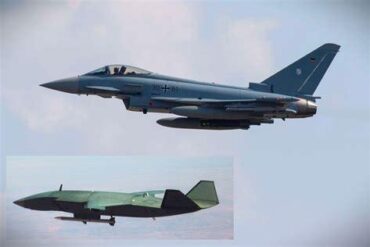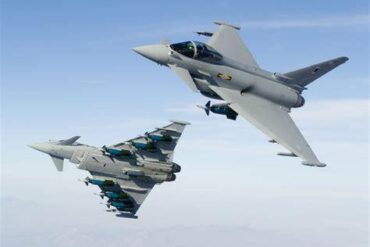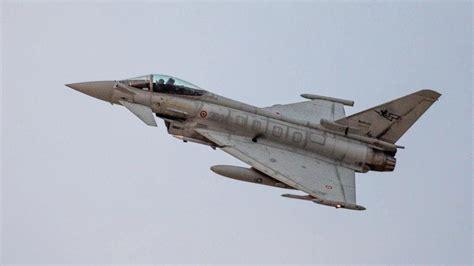
We examine the enduring strength of the Eurofighter Typhoon fleet at a moment when global air forces are renewing production lines, expanding orders, and extending operational lifespans well into the 2030s. More than two decades after entering service, the Eurofighter remains one of the most prominent 4.5-generation multirole fighters in the world, and its numbers continue to rise rather than shrink. Despite isolated retirements among early-generation aircraft, the worldwide Typhoon community remains robust, and recent orders show clear momentum behind Europe’s flagship air-superiority platform.
The most authoritative publicly available data indicates that over 600 Eurofighter Typhoons are still operational, a figure that places the aircraft among the largest advanced fighter fleets outside the United States. With a total of 769 ordered according to the Eurofighter Consortium—and 741 tallied in Airbus’ own dataset—production remains active and strategically important. Global operators continue to expand their fleets, and industry leaders expect total orders to approach or even exceed 900 aircraft as emerging customers join the program.
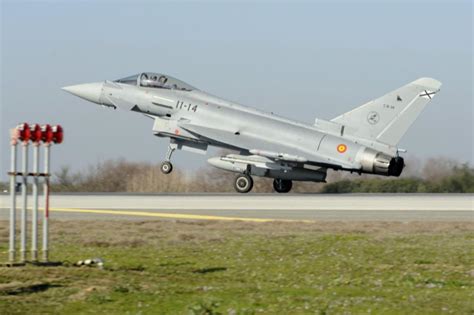
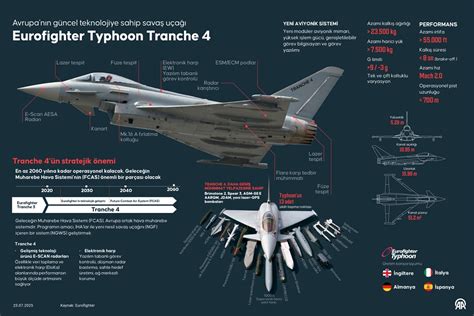
The worldwide picture becomes even more compelling when examining recent commitments from Germany, Italy, Spain, and Turkey. These new orders, together totaling roughly 100 units, illustrate a renewed confidence in the Typhoon’s multirole evolution, especially as Tranche 4 and Tranche 5 variants integrate cutting-edge avionics, AESA radar enhancements, expanded weapons compatibility, and significant survivability upgrades.
Current Global Inventory: How Many Eurofighter Typhoons Are Still in Service?
The most recent consolidated data shows 606 Eurofighters operational as of late 2025. This number reflects a highly active, frontline community across Europe and the Middle East. The delivered fleet stands at 616–613, depending on the source. Nearly every delivered aircraft remains active, highlighting exceptionally strong sustainment performance and continuing airworthiness investments among operators.
The largest fleets belong to the United Kingdom, Germany, Italy, and Spain—the four consortium nations that have collectively guided the Eurofighter’s evolution from a Cold War concept to a mature, combat-ready platform. While these nations drive the program’s modernization roadmap, the Middle Eastern operators—Saudi Arabia, Kuwait, Qatar, and Oman—provide vital export momentum and financial stability to long-term production.
The disparity between Airbus and governmental counts arises primarily from differences in how retired aircraft are classified, especially in the case of the United Kingdom, which has begun withdrawing early-model Tranche 1 jets. Even so, the RAF retains a formidable combat-ready Typhoon fleet composed of its more modern Tranche 2 and Tranche 3 variants.
The United Kingdom’s Retirement of Tranche 1 Jets
The United Kingdom stands as the only operator to begin retiring Eurofighter airframes, a decision driven by the limitations of its earliest Tranche 1 configurations. These aircraft were designed before the Typhoon’s multirole evolution and lack the deep integration of modern weapons and sensors found in later tranches.
According to Parliamentary records, 26 of the RAF’s 30 Tranche 1 Typhoons have already been retired, with the remaining four expected to leave service by 2027. These remaining aircraft are stationed at RAF Mount Pleasant in the Falkland Islands, where they perform a Quick Reaction Alert (QRA) mission.
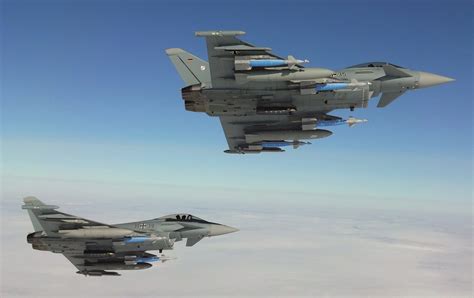
The RAF maintains 107 front-line Typhoons, composed of 67 Tranche 2 and 40 Tranche 3 fighters. These aircraft remain the backbone of the United Kingdom’s air-defense capability and are projected to stay in service until at least 2040, when the sixth-generation Tempest/GCAP program begins delivering operational units.
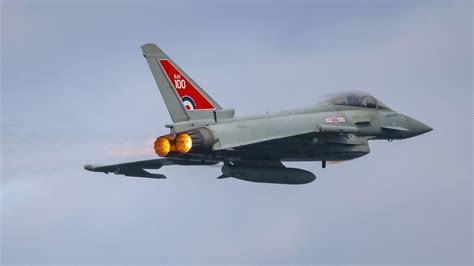
This gradual transition mirrors the RAF’s broader modernization vision, in which the Typhoon plays a powerful complementary role alongside the F-35B Lightning II. The RAF’s operational doctrine frequently describes the Typhoon as the “thug” that dominates airspace and the F-35 as the “assassin” that thrives in stealth-oriented strike missions.
Eurofighter Orders, Deliveries, and Operational Status
Airbus’ most recent published data shows:
- 741 Eurofighters ordered
- 613–616 delivered
- 606 operational
These numbers include aircraft across ten nations, from Europe to the Middle East. Germany—one of the largest operators—has ordered 181 aircraft, with 143 delivered and 141 operational. Italy follows with 112 ordered, 96 delivered, and 95 operational. Spain holds 118 ordered, 73 delivered, and 70 operational.
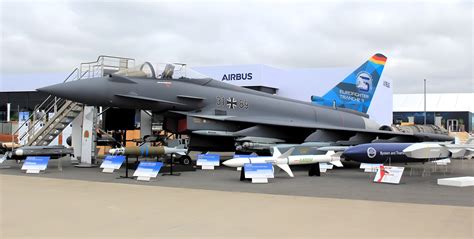
The Middle East represents a major pillar of the Typhoon program:
- Saudi Arabia: 72 delivered, 71 operational
- Kuwait: 28 ordered, 21 delivered and operational
- Qatar: 24 ordered, 22 delivered and operational
- Oman: 12 delivered and fully operational
Notably, Airbus includes the 20 aircraft ordered by Turkey, reflecting Ankara’s formal entry into the program following a protracted diplomatic debate centered on German export controls.
New Momentum: More Than 100 Eurofighters Ordered Recently
The Eurofighter program has seen a significant revival in recent years. Germany alone placed an additional 20 Tranche 5 aircraft on order in late 2025—on top of the 38 Quadriga jets already in procurement. This fresh tranche represents the most advanced Typhoon configuration yet, integrating next-generation sensor fusion, upgraded EW systems, and further future-proofing for long-term relevance.
Spain added 25 aircraft, and Italy ordered 24, both in late 2024. Turkey finalized an order for 20 units in late 2025, representing half of the originally rumored 40 but marking a major breakthrough in overcoming German objections.
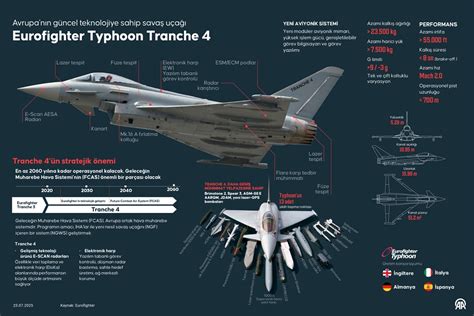
Export campaigns continue to gain traction. Airbus remarks that its official list of nine ordering nations strangely excludes Turkey, reflecting delays in document unification rather than actual procurement discrepancies. The spreadsheet data, however, confirms Turkey’s inclusion.
Future Customers and Emerging Markets
Eurofighter leadership anticipates further orders from several countries. The CEO of Eurofighter GmbH has publicly stated that the Turkish order may grow, and that additional export campaigns might materialize with:
- Saudi Arabia (seeking to overcome past German vetoes)
- Qatar (which may expand its fleet)
- Poland (rapidly rearming and diversifying beyond the F-35)
- Portugal (seeking alternatives to the F-35)
- Austria (exploring upgrades or potential replacement for its Tranche 1 fleet)
A Eurofighter-provided infographic suggests these combined opportunities could amount to 134 additional aircraft, though final figures are subject to geopolitical and budgetary constraints.
Toward a 900-Aircraft Production Line
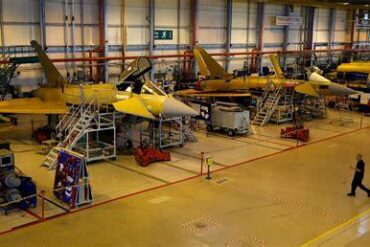
The Eurofighter Consortium currently holds a backlog of 157 aircraft, and production leaders aim to raise annual output to 30 aircraft per year by 2028, more than doubling today’s rate. If current trends hold—and if key export wins are secured—the final production tally could approach 900 aircraft before the line eventually winds down in the 2030s.
This would mark a remarkable turnaround from earlier forecasts that predicted production would end after the Qatar deliveries. Instead, the Eurofighter’s combination of mature technology, modern upgrade pathways, and interoperability with the F-35 and future sixth-generation platforms has secured its place as a cornerstone of NATO and allied airpower.
Conclusion: More Than 600 Eurofighter Typhoons Remain in Service Worldwide
The global Eurofighter Typhoon fleet remains large, capable, and increasingly modernized. With over 600 operational aircraft, strong production momentum, new orders across Europe and the Middle East, and active sales campaigns underway, the Typhoon continues to demonstrate strategic relevance far beyond initial expectations.
As nations refine their future-force structures and pursue a gradual shift toward sixth-generation aircraft, the Eurofighter stands positioned to remain a frontline fighter into the 2040s and, in some cases, beyond. The program’s growing order book and sustained investment confirm that the Typhoon is far from being retired; instead, it is entering a new chapter defined by deeper capability and broader global reach.