Bangladesh Tilts Towards Eurofighter, Jolting China’s Export Hopes
In a dramatic turn that has rattled Beijing’s ambitious defense export dreams, Bangladesh has signed a Letter of Intent (LoI) with Italian aerospace firm Leonardo S.p.A. to acquire the Eurofighter Typhoon, a move that signals Dhaka’s potential departure from the Chinese J-10C “Rafale Killer” narrative. While China has spent years touting the J-10C’s performance and cost-effectiveness, the emerging preferences of prospective buyers like Bangladesh and Indonesia are painting a starkly different reality.
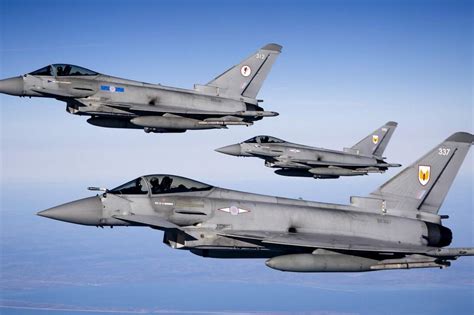
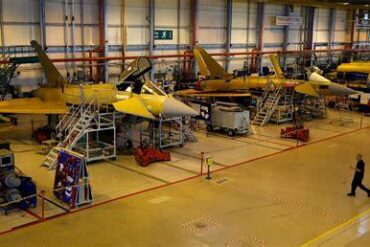
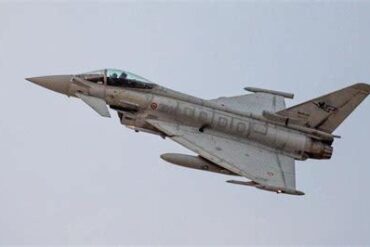
The deal could see the Bangladesh Air Force (BAF) acquire 12 to 16 Eurofighter Typhoon multirole fighter jets, becoming not only the first South Asian nation to operate the aircraft but also the first outside Europe and the Middle East. As one of China’s closest military partners, Bangladesh’s pivot toward a European platform highlights the growing limitations of China’s aerospace diplomacy and defense industry reach.
The Rafale Killer Stumbles: J-10C’s Export Track Record Falters
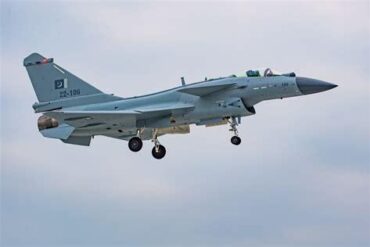
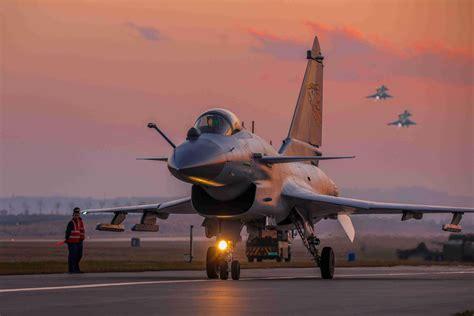
China’s J-10C, promoted with fervor by Beijing as a cost-effective and technologically advanced alternative to Western fighter aircraft, has consistently failed to convert interest into confirmed sales. Marketed aggressively following the India-Pakistan 2019 aerial standoff, Beijing claimed the J-10C—armed with the PL-15 beyond-visual-range air-to-air missile—successfully bested Indian Rafales in simulated engagements. This prompted Chinese media to label the aircraft a “Rafale Killer.”
However, such branding has done little to establish export credibility. Despite being priced at nearly half the cost of the Rafale and the Eurofighter Typhoon, the J-10C has only found one confirmed buyer outside China: Pakistan. Countries like Brazil, Indonesia, Colombia, Iran, and Egypt have all held negotiations or evaluations with Beijing, yet none have sealed a contract.
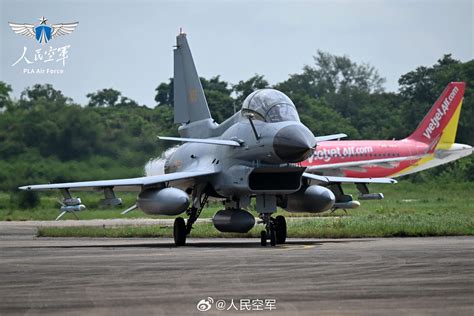
Indonesia briefly excited Chinese officials when, in late 2023, reports emerged that Jakarta had finalized a $9 billion deal for 42 J-10C jets. But the enthusiasm was crushed within days when Indonesia’s Ministry of Defense denied the claim, stating clearly that no decision had been made and that all aircraft options were still under review. The setback exposed the fragility of China’s defense marketing strategy and its struggle to break past political and technological skepticism from key regional players.
Bangladesh’s Defense Realignment: Eurofighter Typhoon Takes the Lead
The BAF’s decision to sign the LoI with Leonardo for the Eurofighter Typhoon did not happen in isolation. Earlier this year, a Bangladeshi delegation visited Leonardo’s Turin facility to test-fly the aircraft—an indication of serious technical engagement. The official signing ceremony, attended by Air Chief Marshal Hasan Mahmood Khan and the Italian ambassador, confirmed Dhaka’s intention to modernize its air force with combat-tested, high-end multirole aircraft from Western defense partners.
Leonardo will lead the delivery of these jets in Asia, and the company has confirmed the aircraft will strengthen Bangladesh’s next-generation combat readiness, citing both operational needs and regional strategic pressure—especially with India’s Rafale squadrons in mind.
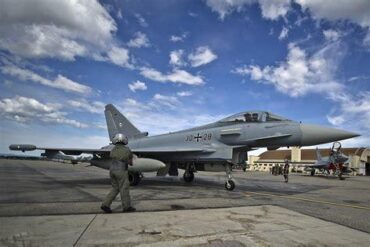
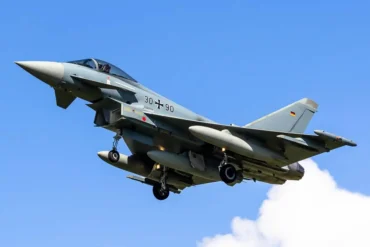
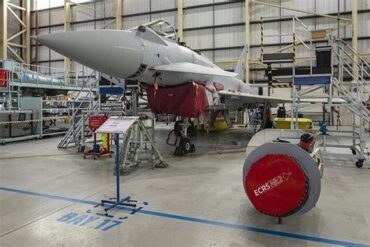
The Eurofighter Typhoon, developed by a European consortium of the UK, Germany, Italy, and Spain, boasts superior agility, radar-evading features, and the ability to perform air superiority, ground attack, and electronic warfare roles simultaneously. This makes it a formidable platform for nations seeking not just defense, but also regional prestige and military interoperability with NATO-aligned forces.
A Growing Global Club: Eurofighter’s Expanding Export Legacy
While China’s J-10C flounders in the international market, the Eurofighter Typhoon has been expanding its footprint. Apart from the four original partner nations, six others have ordered the jet: Austria, Saudi Arabia, Qatar, Kuwait, Oman, and Turkey. The most recent addition, Turkey, signed a deal in October 2025 for 20 Typhoons and a full weapons package worth £8 billion ($10.7 billion USD).
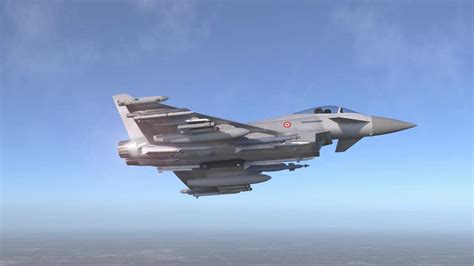
In Asia-Pacific, Leonardo is now in advanced talks with the Philippines for a proposed sale of 32 Eurofighter Typhoons, aimed at bolstering Manila’s air defense amid growing South China Sea tensions. Polish interest has also been rekindled, and Eurofighter Tranche 5 variants are under active consideration by multiple states looking to modernize their air fleets without fully committing to fifth-generation platforms.
The continued export success of the Typhoon, despite its higher cost compared to Chinese offerings, underlines a crucial factor: confidence in systems integration, logistical support, and long-term upgrade paths, all of which European and American aircraft promise in abundance.
J-10C’s Strategic Weaknesses: Not Just About the Price
Although price is often cited as an advantage of Chinese systems, Dhaka’s shift highlights deeper concerns. In October 2025, reports indicated that Bangladesh’s proposed J-10CE deal would cost approximately $1.2 billion for airframes alone, rising to $2.2 billion with weapons, training, and spares. This would still place it under the Eurofighter’s likely total cost—but not by an order of magnitude compelling enough to outweigh political and technical reservations.
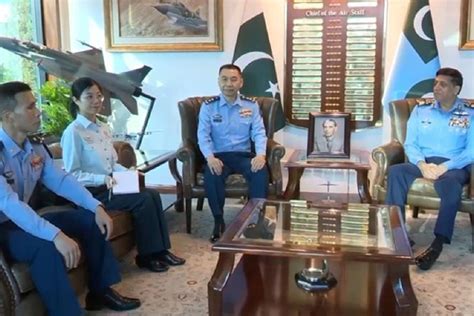
Bangladesh has traditionally been one of the largest recipients of Chinese arms, with an established defense partnership dating back decades. Yet, even this long-standing trust has not been sufficient to push the J-10C deal over the finish line. The delay, and now the signed LoI for Eurofighters, suggest that Dhaka is carefully hedging its bets—seeking greater leverage, technological quality, and diplomatic alignment through defense procurement.
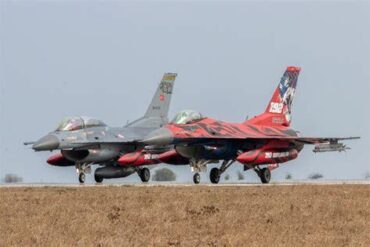
The situation mirrors similar episodes globally. Colombia, once considered a potential J-10C buyer, opted instead for Sweden’s JAS 39 Gripen. Brazil, too, veered away and is now in talks to procure used F-16s from the U.S. Argentina passed on the Chinese-Pakistani JF-17, choosing instead Danish F-16s.
These trends reflect a growing reluctance among buyers to adopt Chinese-origin fighter platforms despite aggressive marketing, price incentives, and geopolitical alignment with Beijing.
Strategic Implications for China’s Military Industrial Outreach
The inability to secure a second export customer for the J-10C—a platform central to China’s ambitions to become a global defense exporter—raises tough questions for Beijing. At the heart of this failure is a credibility gap: concerns over combat performance validation, after-sales support, and weapons system integration with global standards remain unresolved.
Moreover, China’s lack of joint exercises, transparency in combat data, and the political baggage of aligning with Chinese defense systems are deterring many nations from embracing Beijing’s offers. As great power competition intensifies, smaller states are choosing platforms that offer strategic flexibility and alliance options, rather than risk dependence on Chinese military logistics.
Bangladesh’s pivot is particularly symbolic. It comes at a time when India-China tensions are high, and Dhaka has a complex, if not entirely adversarial, relationship with New Delhi. Choosing a European aircraft that is interoperable with India’s NATO-aligned partners, and turning away from Chinese systems, signals a subtle reorientation of Dhaka’s strategic posture.
The Road Ahead: Will China Course Correct?
With only Pakistan operating the J-10C, the pressure is mounting on China to either revise its export strategy or double down on next-gen platforms like the J-20 or FC-31 stealth fighters for future sales. But these jets are unlikely to find widespread acceptance soon due to cost, complexity, and the classified nature of their systems.
Meanwhile, Leonardo and the Eurofighter consortium are thriving off a message of transparency, partnership, and proven battlefield performance—qualities that are still elusive in China’s military-industrial narrative.
Bangladesh’s LoI is not just a sales lead—it’s a strategic inflection point. If the deal goes through, it will not only boost the Eurofighter’s prestige and market presence but also serve as a cautionary tale for China’s defense export ambitions. The Rafale Killer may have fired its best shot—but buyers across the globe seem to prefer the real thing, or at the very least, a proven Western alternative.