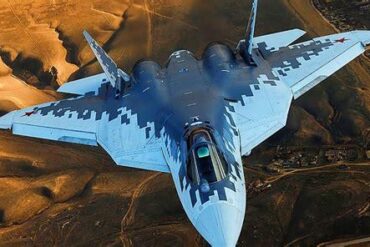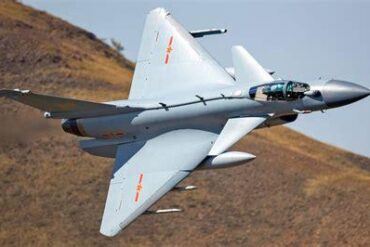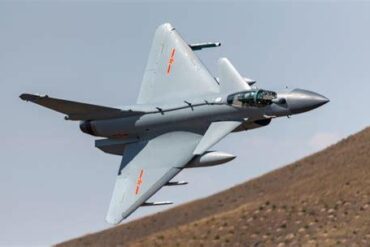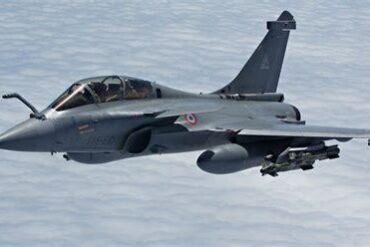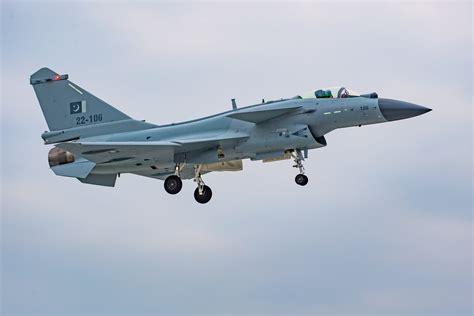
In what could be a game-changing shift in military aviation history, Egypt is on the verge of becoming the only country in the world to operate both the Chinese J-10C and the French Rafale fighter jets, a unique blend that would give Cairo access to high-end combat aircraft from four rival defense powerhouses—the United States, Russia, France, and China. This unprecedented combination may not only bolster Egypt’s military might but could also redefine air combat doctrine in the Middle East.
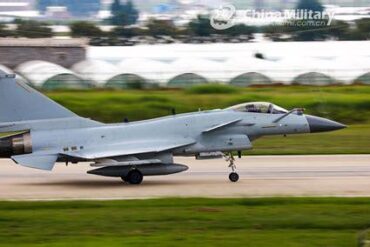
The possibility was reignited after a Chinese J-10C was spotted at the Eagles of Civilization 2025 joint air drills, with an Egyptian pilot in the cockpit. Although Beijing officially dismissed earlier reports of a finalized J-10C deal as “fake news”, the visual evidence has fueled widespread speculation that a deal could still be imminent.
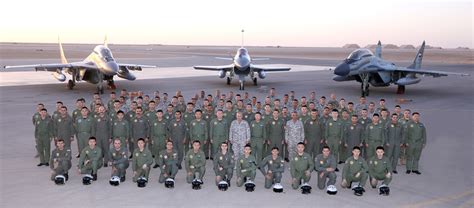
Egypt’s Quest for a Future-Proof Air Fleet
Egypt’s current fleet is as diverse as it is formidable. It includes more than 200 F-16 Fighting Falcons, making Egypt the fourth-largest operator of the type globally. It also flies French Rafales, Russian MiG-29M/M2s, and until recently, operated Chinese H-6 bombers. However, political and logistical constraints have exposed gaps in Cairo’s air defense strategy.
The Russian MiGs have suffered from maintenance issues stemming from the Ukraine conflict and supply chain disruptions. Simultaneously, U.S. restrictions on spare parts and modernization packages for the F-16s have hampered Egypt’s upgrade efforts. In this vacuum, China has aggressively pitched the J-10C as a reliable, modern, and cost-effective alternative.
Strategic Symbolism of the J-10C-Rafale Duo
If Egypt acquires the J-10C, it will not just be an addition to its arsenal—it would mark the first time any air force simultaneously operates combat jets from four competing defense ecosystems. Egypt already made history as the first international customer of the Dassault Rafale in 2015, and now it could become the second customer of the J-10C after Pakistan.
This acquisition would also symbolically unite two jets allegedly fielded against each other in the India-Pakistan border conflict, where unverified claims suggest the J-10C shot down an Indian Rafale using the PL-15E missile. Though unconfirmed, these narratives fuel the perception of both jets as key assets in modern asymmetric air warfare.
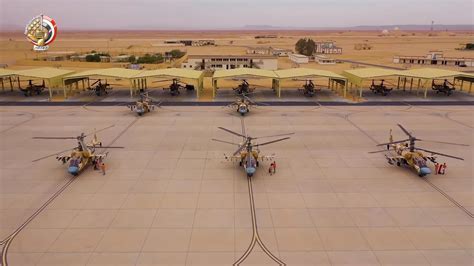
Why Egypt May Prefer the J-10C Over the Korean FA-50
Recent local media reports hinted at Egypt leaning toward the South Korean FA-50. However, the J-10C presents a more capable platform, featuring:
- Indigenous AESA radar
- PL-10 and PL-15 long-range air-to-air missiles
- Fly-by-wire flight control
- In-flight refueling
- Advanced electronic warfare suite
- All-weather, multi-role operations
The cost factor is significant. Each J-10C is priced between $40–50 million, substantially lower than the $90–100 million price tag on Western 4.5-generation fighters like the Rafale or Eurofighter Typhoon. This makes it an economically viable choice for Egypt, which seeks modernization without breaking the bank.
Historical Context: Egypt-China Military Ties Run Deep
The China-Egypt defense partnership is neither new nor opportunistic. It dates back to 1975, when Egypt became the first Middle Eastern country to sign an arms deal with China, acquiring Xi’an H-6 bombers. This paved the way for decades of military cooperation, including the import of:
- F-7B and J-6 jet fighters (assembled locally)
- Missile boats and submarines
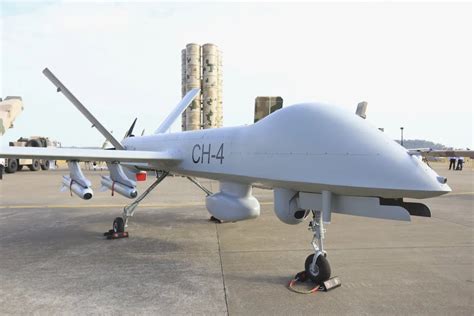
- Advanced UAVs like the CH-4B and Wing Loong I
- K-8 Karakorum trainer jets, also produced domestically
The two countries also collaborate on the Belt and Road Initiative, while Egypt is a member of BRICS, reflecting deeper geopolitical alignment. From a strategic standpoint, Egypt’s drift toward China is a logical evolution.
Rafale: France’s Crown Jewel in Egyptian Skies
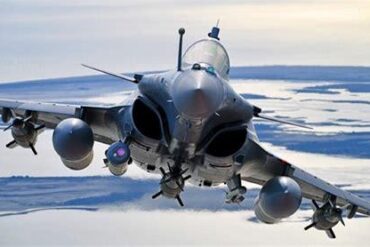
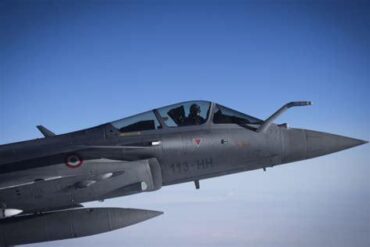
In February 2015, Egypt inked a deal for 24 Rafale jets—16 twin-seat Rafale DM and 8 single-seat Rafale EM. This was followed by an additional 30 Rafales in 2021, with deliveries expected to conclude by 2026. Once complete, Egypt will possess 55 Rafale jets, underscoring its enduring reliance on French aerospace engineering.
The Rafale has proven itself in multiple global conflicts. Its multi-role capabilities—ranging from air superiority and ground support to nuclear deterrence and reconnaissance—have made it a coveted platform. Egypt’s continued investment in the jet reflects its trust in the platform’s long-term value.
MiG-29M/M2: Once a Pillar, Now a Burden
In 2015, Egypt also ordered 46 MiG-29M/M2 fighters, delivered by 2020. But Russia’s ongoing war in Ukraine has made maintenance increasingly difficult. More critically, U.S. pressure led Cairo to cancel its Su-35 order in 2021, further isolating its Russian air assets.
This situation has rendered Russian jets less attractive for future procurement, making the J-10C—a non-Western, non-Russian jet—strategically viable.
J-10C: Technical Powerhouse in the Skies
Nicknamed the Vigorous Dragon, the J-10C is a 4.5-generation, multirole fighter that combines agility, lethality, and modern avionics. Its features include:
- WS-10B indigenous turbofan engine
- AESA radar for advanced target tracking and jamming
- PL-15 long-range air-to-air missile with an estimated range of 200+ km
- PL-10 imaging infrared seeker missile for short-range dogfighting
- Advanced glass cockpit with modern interface and situational awareness tools
- Infrared search and track (IRST) and laser target designator pods
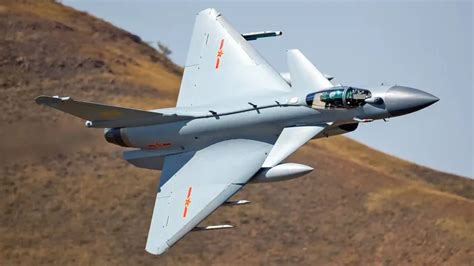
Its advanced electronic warfare capabilities and reduced radar cross-section give it a stealth-lite profile, optimizing it for beyond-visual-range (BVR) engagements. It is this holistic modernity that has drawn Egypt’s attention as it seeks a jet to bridge the operational gaps left by its aging fleet.
What’s Next for Cairo?
While no official contract has been signed yet, Egypt’s increasing exposure to the J-10C via joint drills, air shows, and pilot training is a clear sign of interest. The visual of an Egyptian pilot flying the jet may be more telling than official press releases.
Should the acquisition proceed, Egypt will emerge as the only air force capable of fielding a fully diversified fighter jet fleet spanning East and West, reflecting both tactical flexibility and geopolitical balance. It will also provide Cairo with negotiating power, as it can balance U.S., Russian, French, and Chinese offers without depending solely on any one power.
Final Thoughts: Egypt’s Aerial Chessboard
The potential Egyptian acquisition of the J-10C is not just about replacing an aging F-16 fleet. It is about asserting autonomy in defense procurement, signaling multi-polar allegiance, and preparing for regional turbulence. No other air force in history has aligned such disparate fighter platforms in a single combat doctrine.
If executed, this move will make Egypt’s air force a strategic outlier and operational trendsetter, perhaps inspiring other nations facing similar constraints to rethink their aerial defense strategies. The sky over Cairo is changing, and the world is watching.