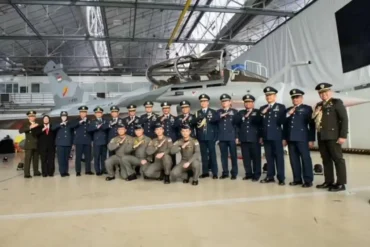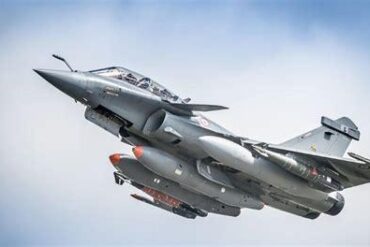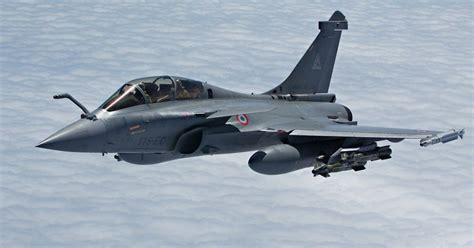
Vietnam’s air power calculus is entering a decisive phase as Hanoi quietly explores the acquisition of France’s Dassault Rafale multirole fighter, a move that would mark one of the most consequential defense procurement shifts in Southeast Asia in decades. Reported by L’Express on 4 February 2026, the discussions are described as unusually advanced, underscored by a rare gesture: a Vietnamese pilot was reportedly allowed to fly the Rafale, an opportunity typically reserved for partners already deep into technical, operational, and political alignment. That single detail speaks volumes in the opaque world of high-end fighter negotiations.
For Vietnam, the Rafale conversation is not about replacing one aircraft with another. It reflects a broader reassessment of strategic dependencies at a time when the regional security environment is tightening and traditional supply chains have become politically and operationally fragile.
Vietnam’s Air Force at a Strategic Crossroads
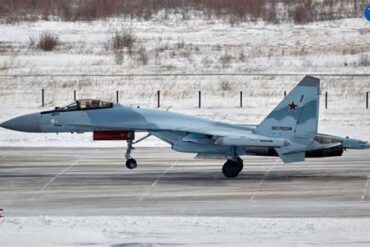
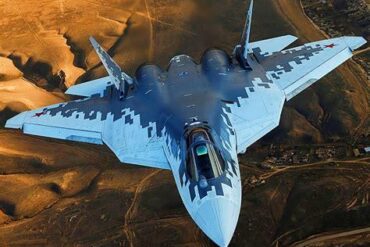
Vietnam’s People’s Air Force has long been shaped by Soviet and Russian aviation doctrine, hardware, and logistics. The backbone of its combat aviation remains the Su-30MK2, a capable twin-engine fighter optimized for maritime strike and air defense missions. Alongside it, older platforms such as the Su-22 still serve in ground-attack roles, even as their survivability declines in increasingly sensor-saturated battlespaces.
This structure once offered affordability, political alignment, and operational familiarity. Today, it presents constraints. Russian supply chains are under strain, upgrade paths are uncertain, and interoperability with non-Russian systems remains limited. For Hanoi, which has consistently pursued strategic autonomy rather than bloc alignment, this creates pressure to diversify without provoking instability.
The Rafale fits neatly into that dilemma. It does not require Vietnam to abandon its existing fleet overnight, yet it introduces a Western-standard multirole capability that fundamentally changes how air power can be applied across air defense, precision strike, and maritime operations.
Why the Rafale Changes the Equation
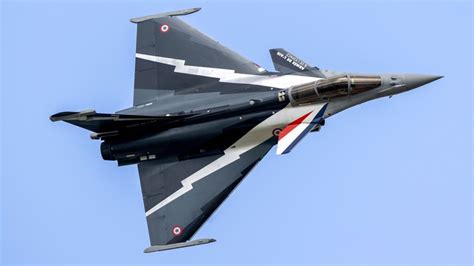
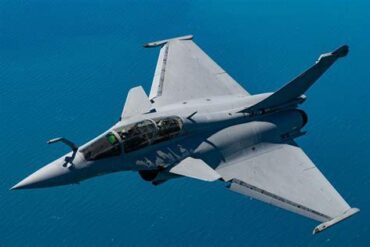
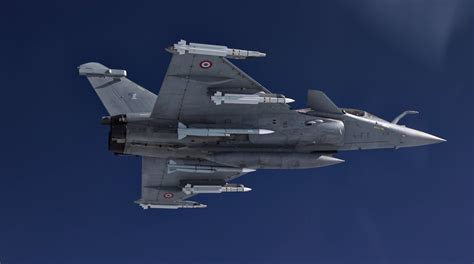
The Dassault Rafale is often described as an “omnirole” aircraft, a term that reflects more than marketing flair. Designed to conduct air-to-air combat, deep strike, reconnaissance, and anti-ship missions within a single sortie, the Rafale emphasizes flexibility over specialization. For an air force like Vietnam’s, which must cover long coastlines, disputed maritime zones, and national airspace with limited numbers, that versatility matters.
Technically, the Rafale brings capabilities absent from Vietnam’s current inventory. Its RBE2 AESA radar enables simultaneous tracking and engagement of multiple aerial targets while generating high-resolution ground and maritime imagery. Coupled with the SPECTRA electronic warfare suite, the aircraft is designed to operate inside contested environments where radar, surface-to-air missiles, and electronic attack systems overlap.
SPECTRA, in particular, is a quiet game-changer. By fusing threat detection, identification, jamming, and countermeasures into a single system, it allows the pilot to survive and fight in environments where older aircraft would be forced to stand off or accept heavy risk. For Vietnam, whose potential conflict scenarios involve dense air defenses and advanced sensors, survivability is not an abstract concept but a daily planning consideration.
A Natural Fit for Maritime Deterrence
Vietnam’s most sensitive security challenges are maritime. The South China Sea is not merely a diplomatic issue; it is an operational theater where air power, naval forces, and surveillance assets interact constantly. The Rafale was explicitly designed with maritime strike in mind, inheriting lessons from French carrier aviation and long-range overwater operations.
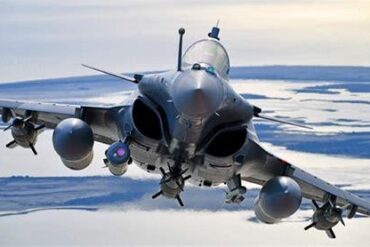
Equipped with the Exocet anti-ship missile, long-range fuel tanks, and advanced targeting sensors, the Rafale would significantly enhance Vietnam’s ability to conduct armed presence missions, maritime patrol support, and precision strikes against naval targets if deterrence fails. Unlike legacy strike aircraft, it can perform these roles while remaining networked, informed, and protected against electronic and kinetic threats.
This is where the Rafale’s real value lies: not as a symbol, but as a tool that expands credible options. Deterrence is strongest when it is believable, and believability depends on precision, reach, and survivability.
Learning From Regional Precedents
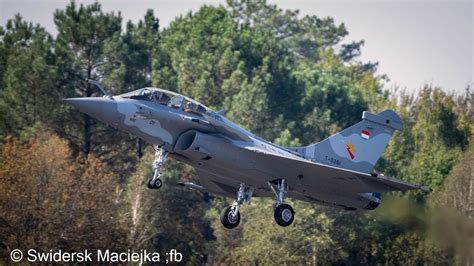
Vietnam would not be stepping into unknown territory. Indonesia’s order for 42 Rafale fighters reshaped perceptions of European combat aircraft in Southeast Asia, proving that the Rafale can compete against American, Russian, and Asian alternatives in both capability and political acceptability. India’s experience is equally instructive. New Delhi integrated the Rafale into an air force still dominated by Sukhoi platforms, demonstrating that French and Russian aircraft can coexist operationally within the same force structure.
For Hanoi, this hybrid model is appealing. It reduces immediate disruption while allowing gradual doctrinal evolution. Training pipelines, maintenance practices, and operational concepts can be adapted over time rather than imposed overnight.
Beyond Hardware: Doctrine and Training Implications
Introducing the Rafale would inevitably reshape how Vietnam thinks about air combat. Western multirole fighters emphasize information dominance, sensor fusion, and decision-making speed. Pilots are not merely aircraft operators; they are node managers in a wider combat network.
This would push Vietnam toward deeper investment in data links, command-and-control systems, and joint operations between air and naval forces. Over time, it could also influence pilot training philosophies, moving from platform-centric tactics toward mission-centric execution where aircraft type matters less than effect achieved.
Such shifts are subtle but profound. They mark the difference between air power as a blunt instrument and air power as a calibrated strategic tool.
Industrial and Political Signals From Paris
For France, a Rafale sale to Vietnam would carry significance well beyond commercial success. It would strengthen France’s Indo-Pacific footprint, reinforcing Paris’s claim to be a resident power with enduring security interests in the region. Industrially, it would extend Rafale production lines and secure decades of follow-on revenue through maintenance, upgrades, and weapons integration.
Politically, France offers something neither Washington nor Moscow can fully replicate: high-end military technology with relatively restrained political conditionality. That balance resonates strongly with Vietnam’s long-standing preference for diversified partnerships and strategic non-alignment.
Signals to Beijing and Moscow
Any Rafale deal would be closely watched in Beijing. While Vietnam has carefully avoided overt military signaling, acquiring a modern Western fighter would clearly indicate a determination to enhance deterrence without escalation. The Rafale’s presence would complicate planning for any actor seeking to dominate air and maritime spaces through numerical or technological advantage.
For Moscow, the implications are quieter but no less significant. Vietnam has been one of Russia’s most loyal defense customers for decades. A pivot toward French combat aircraft would signal that loyalty is no longer sufficient in a world where reliability, upgrade paths, and political flexibility matter as much as performance.
A Calculated, Not Radical, Shift
Vietnam is unlikely to announce dramatic changes or frame the Rafale as a rejection of past partnerships. More plausibly, it would present the aircraft as part of a measured modernization process, initially supplementing rather than replacing existing fighters. Older strike aircraft would likely be the first to go, with the Rafale filling precision-strike and advanced interception roles.
Over time, however, such a move would quietly reshape Vietnam’s air force identity. From doctrine to training, from logistics to strategic signaling, the Rafale represents more than a new jet. It represents a recalibration of how Vietnam prepares for an uncertain future, choosing flexibility and autonomy over dependence and inertia.
In the shifting geometry of Indo-Pacific security, that choice may prove decisive.