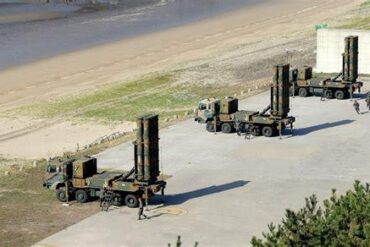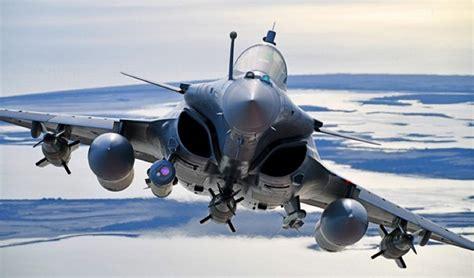
France has intensified its military posture in the Gulf, deploying additional Rafale fighter jets to conduct reinforced combat air patrols over the United Arab Emirates after a drone strike damaged a French military installation in Abu Dhabi. The move transforms France’s longstanding regional presence into a visibly active air defense and interception mission, signaling both operational urgency and strategic resolve as Iranian drone activity expands across Gulf airspace.
The decision follows a strike involving a Shahed-type drone, which hit a hangar at a French facility in the Emirati capital. While French officials have stopped short of formally attributing deliberate targeting, the operational response leaves little ambiguity. Paris has elevated its defensive posture from routine presence to persistent air policing, shortening the sensor-to-shooter timeline and expanding the defensive envelope over its bases and personnel.
France’s forward-deployed assets in the UAE are not temporary expeditionary forces. They form part of a permanent tri-service structure anchored by the Mina Zayed naval base and the Al Dhafra air base, supported by ground elements under a defense cooperation agreement dating back to January 1995. Approximately 900 French personnel are stationed across these installations. The recent strike, despite existing air patrols, demonstrated that the threat environment has evolved from symbolic signaling into sustained cross-border pressure.
Rafale Fighters Shift to Full Air Policing and Interception Role
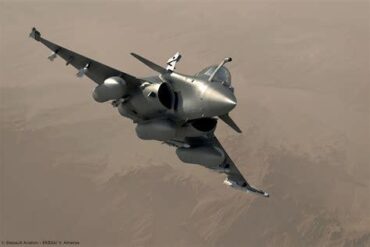
The Rafale’s expanded mission over the UAE reflects more than an increase in flight hours. It represents a shift to a structured defensive counter-air posture, designed to intercept drones, cruise missiles, or hostile aircraft before they can threaten French or Emirati infrastructure.
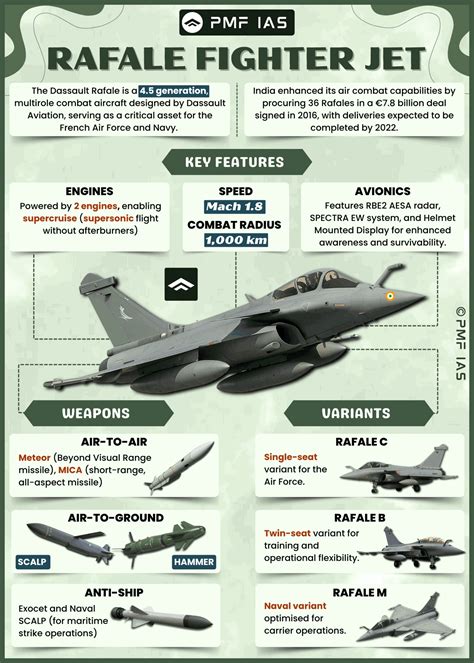
Rafale combat air patrols in the region are typically armed with a combination of Meteor beyond-visual-range air-to-air missiles and MICA missiles for short- and medium-range engagements. This layered air-to-air configuration allows French pilots to address diverse aerial threats, from low-flying unmanned systems to higher-altitude targets.
The Meteor missile, powered by a ramjet propulsion system, provides sustained thrust throughout its flight envelope. Unlike traditional rocket-powered missiles that lose energy after boost phase, Meteor maintains speed deep into engagement range, expanding its no-escape zone and complicating evasive maneuvers. In a theater where reaction time is compressed and multiple threats can appear from different vectors, that sustained energy advantage is tactically decisive.
The MICA missile complements Meteor by covering shorter engagement distances, ensuring flexibility against smaller, agile targets such as drones attempting evasive flight paths. Together, the two systems form a robust air interception framework suited to the evolving threat picture.
Advanced Sensors and Electronic Warfare: The SPECTRA Edge
Air defense effectiveness in modern conflict is determined as much by sensors and electronic warfare as by missile performance. The Rafale’s RBE2 Active Electronically Scanned Array (AESA) radar enables long-range detection, improved resistance to jamming, and precise tracking of small radar cross-section targets. AESA technology allows rapid beam steering without mechanical movement, enabling simultaneous tracking of multiple objects in congested airspace.
Integrated into this architecture is the SPECTRA electronic warfare suite, a highly capable internal system that combines radar warning receivers, laser warning systems, and missile approach detectors. SPECTRA can identify, classify, and geolocate threats while coordinating defensive countermeasures. In drone-heavy environments, where targets may be small, numerous, and launched in waves, this electronic warfare capability enhances survivability and interception efficiency.
Data fusion within the Rafale cockpit consolidates radar, electronic warfare, and off-board sensor inputs into a single tactical picture. This reduces pilot workload during high-intensity patrols and accelerates engagement decisions, a critical advantage when defending fixed installations under potential saturation attack.
Operational Significance of Al Dhafra Air Base
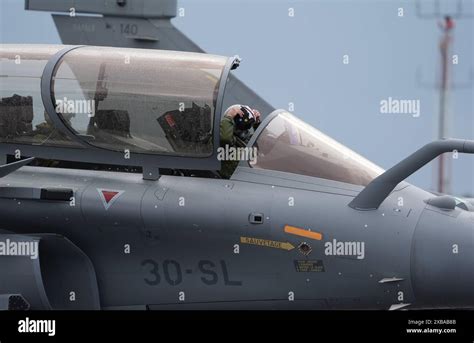
The Al Dhafra air detachment provides France with strategic reach across the Gulf and beyond. Located within operational distance of key maritime chokepoints and regional flashpoints, the base has historically supported counterterrorism missions and coalition operations. Its transformation into an active air defense hub underscores the seriousness of the current security environment.
By maintaining persistent combat air patrols overhead, French forces reduce the vulnerability window between detection and interception. In missile defense terms, this compresses the kill chain—the sequence from identifying a threat to neutralizing it. Airborne fighters extend the defensive perimeter far beyond base boundaries, effectively pushing engagement opportunities outward and reducing reliance solely on ground-based systems.
This layered approach reflects lessons from recent drone conflicts worldwide, where small unmanned systems have proven capable of penetrating static defenses. Airborne interceptors add mobility and unpredictability, complicating adversary strike planning.
Strategic Signaling and Escalation Management
French officials have framed the deployment primarily as a force-protection measure, but the broader implications are unmistakable. By sustaining high-visibility patrols, Paris signals its commitment to protecting both its own installations and regional partners. At the same time, careful diplomatic language maintains escalation control, avoiding explicit attribution that could trigger immediate retaliatory cycles.
The Gulf has become a testing ground for drone warfare and asymmetric strike strategies. Iranian-linked systems have demonstrated range, persistence, and adaptability. The strike on a French facility in Abu Dhabi illustrates that Western military footprints in the region are increasingly viewed as pressure points.
France’s response balances deterrence and restraint. The presence of armed Rafales in Emirati airspace increases the cost of further attacks, establishing a credible threat of interception without immediately escalating to offensive retaliation. It is a textbook case of deterrence by denial—reducing the probability of successful strikes rather than threatening disproportionate punishment.
Rafale Capabilities Tailored for Rapid Reaction
The Rafale’s performance profile enhances its suitability for quick reaction alert duties. With a maximum speed of Mach 1.8 and a service ceiling of 50,000 feet, the aircraft can rapidly climb to intercept altitude. Its twin M88 turbofan engines provide strong acceleration, allowing pilots to respond swiftly to radar cues.
The aircraft’s 24.5-ton maximum takeoff weight and 14 external hardpoints enable substantial fuel and weapons carriage, supporting extended patrol endurance. In environments where tanker support may need to remain outside potential threat zones, Rafale’s ability to conduct buddy-buddy aerial refueling offers operational flexibility.
These attributes collectively ensure that French air defense over the UAE is not symbolic. It is structurally designed to maintain persistent presence, rapid response capability, and credible engagement authority.
Regional Implications and Forward Posture Stability
The reinforcement of Rafale patrols carries implications beyond the immediate incident. The Gulf hosts significant numbers of foreign nationals and critical energy infrastructure, making airspace stability an international concern. For France, the presence of hundreds of thousands of citizens across the broader region adds a humanitarian contingency dimension, including potential evacuation planning.
Maintaining viable basing infrastructure under threat is essential to France’s global force projection strategy. Forward bases in the Gulf enable rapid deployment to Africa, the Indian Ocean, and broader Middle Eastern theaters. Allowing drone strikes to erode confidence in that network would undermine long-term strategic flexibility.
By acting swiftly, Paris demonstrates that its forward posture is resilient under pressure. The message is calibrated but firm: French installations will be defended, and operational continuity will be preserved.
A Calculated Expansion of Defensive Reach
France’s expanded Rafale presence over the UAE reflects a deliberate adjustment to a deteriorating regional threat landscape. The shift from routine deployment to sustained air defense patrols underscores the seriousness of Iranian drone activity while maintaining a disciplined escalation posture.
In practical terms, airborne interceptors increase reaction speed, widen the defended airspace, and integrate seamlessly with ground-based and naval defenses. In strategic terms, they reinforce alliance credibility and preserve freedom of action in a volatile theater.
As drone warfare reshapes modern conflict dynamics, the skies over the Gulf have become a proving ground for layered air defense strategies. France’s Rafale patrols represent both a tactical adaptation and a broader commitment to stabilizing a region under mounting strain.