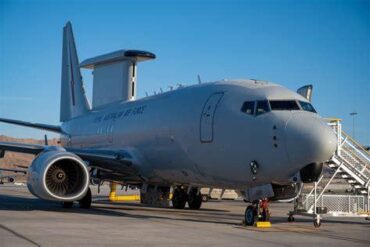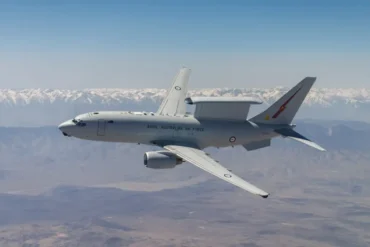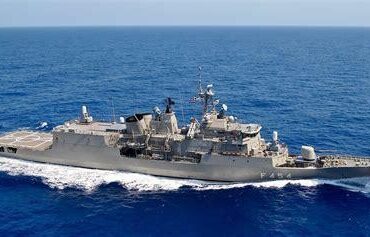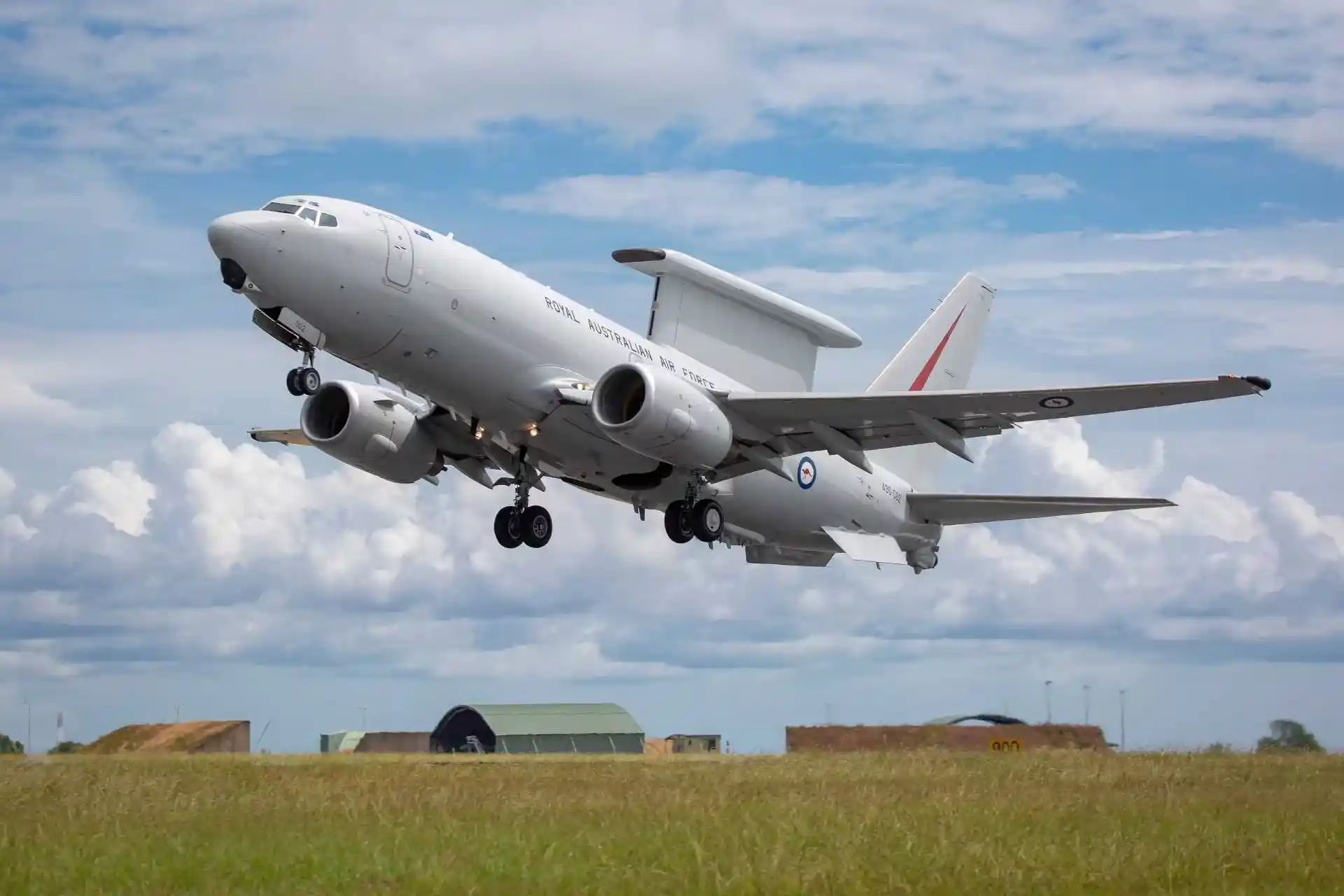
The rapidly escalating security crisis across the Persian Gulf has drawn new international military support for the United Arab Emirates, with Australia deploying one of its most capable airborne surveillance assets—the E-7A Wedgetail airborne early warning and control aircraft. The decision reflects both the scale of recent Iranian aerial attacks and the urgent need to rebuild regional air surveillance after several ground-based radar systems were damaged during waves of missile and drone strikes.
Australia confirmed on March 10, 2026 that an E-7A Wedgetail aircraft from the Royal Australian Air Force (RAAF) had been dispatched to the UAE along with approximately 85 Australian Defence Force personnel. The mission is initially planned for four weeks and is focused exclusively on strengthening airspace monitoring and early warning capabilities over the Persian Gulf region.
The deployment follows a dramatic escalation of hostilities in which the UAE reportedly intercepted more than 1,500 rockets, cruise missiles, and drones launched as part of Iranian retaliation operations affecting more than a dozen countries in the wider Middle East. While Emirati air defense forces successfully destroyed many incoming threats, the sheer volume of attacks exposed weaknesses in regional surveillance coverage and placed enormous strain on interceptor missile inventories.
Strategic Airborne Surveillance Over the Persian Gulf
The E-7A Wedgetail is designed specifically for situations where airspace awareness becomes fragmented or overwhelmed. In the Persian Gulf conflict environment, the aircraft’s ability to monitor enormous areas of sky from high altitude makes it a crucial sensor platform capable of restoring the region’s early-warning network.
During a single mission, the Wedgetail can monitor more than four million square kilometers of airspace. To grasp the magnitude of that coverage, it is roughly comparable to the size of Western Australia and larger than the entire eastern half of the continental United States beyond the Mississippi River.
Flying at high altitude above maritime approaches and coastal areas, the aircraft extends radar visibility across the Gulf’s wide expanse of water where ground radars struggle to maintain continuous coverage. Coastal sensors typically suffer from line-of-sight limitations caused by the curvature of the Earth, terrain features, and infrastructure damage. By operating thousands of meters above sea level, the E-7A effectively pushes the radar horizon far beyond what land-based systems can achieve.
This advantage becomes especially critical when confronting low-flying drones and cruise missiles, which are designed to slip under radar coverage by hugging the terrain or sea surface. The Wedgetail’s vantage point allows operators to detect such threats earlier, transforming reaction time from seconds into minutes.
Iran’s Drone and Missile Campaign Pressures Regional Defenses
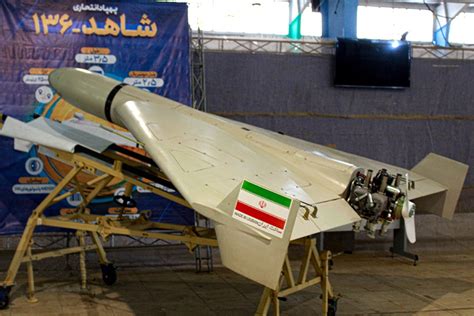
Iran’s recent military actions across the Gulf have relied heavily on saturation attack tactics, combining ballistic missiles, cruise missiles, and large numbers of unmanned aerial vehicles. These operations are intended to overwhelm air defenses by presenting multiple simultaneous threats approaching from different directions.
Such attacks create a complex battlefield in the sky. Defenders must identify incoming targets quickly, determine which ones pose the greatest threat, and allocate interceptor missiles efficiently. When dozens—or even hundreds—of objects appear on radar screens, the challenge becomes less about shooting down individual weapons and more about managing the entire defensive network in real time.
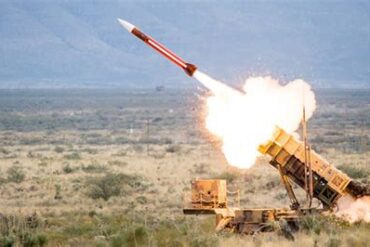
The UAE’s defense forces have already conducted large numbers of interceptions during the current conflict. However, every defensive launch reduces the stockpile of interceptor missiles available for future engagements. The role of the Wedgetail therefore extends beyond simple detection. Its presence allows Emirati forces to prioritize targets more effectively, ensuring that valuable interceptor missiles are used only when necessary.
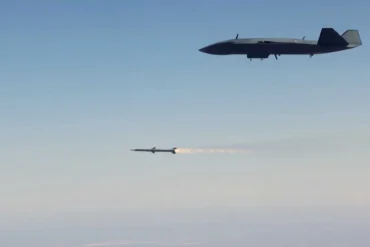
Australia has also indicated that it may support the UAE by supplying AIM-120 AMRAAM air-to-air missiles, widely used by fighter aircraft to destroy incoming aerial threats at long range.
How the Wedgetail Radar Detects Small and Fast Threats
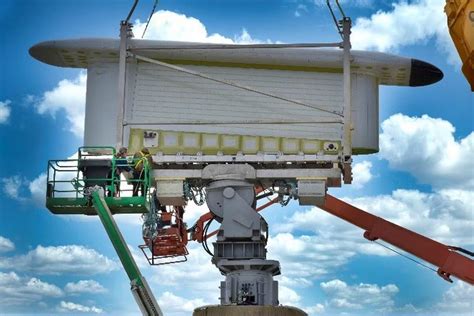
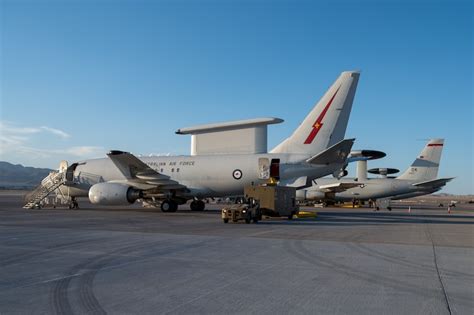
The extraordinary capabilities of the Wedgetail originate from its sophisticated radar system known as the Northrop Grumman Multi-Role Electronically Scanned Array (MESA). Unlike traditional airborne warning aircraft that rely on rotating radar domes mounted above the fuselage, the Wedgetail uses a fixed dorsal fin containing an electronically controlled radar array.
Electronic beam steering means the radar beam can move across the sky within milliseconds, scanning multiple sectors almost simultaneously without any mechanical rotation. This dramatically improves the system’s responsiveness when tracking fast-moving targets such as cruise missiles or maneuvering aircraft.
The radar can detect airborne objects at distances exceeding 400 kilometers, depending on flight geometry and atmospheric conditions. Even more importantly, it can track up to 180 targets simultaneously, allowing operators to maintain a detailed picture of crowded airspace during complex engagements.
Small drones often present a minimal radar signature, making them difficult to detect using conventional sensors. The MESA radar compensates by revisiting specific sectors frequently, refining its tracking solution with each sweep. This constant updating helps maintain accurate tracks even for low-observable or slow-moving aerial vehicles.
Altitude and the Physics of the Radar Horizon
A fundamental constraint of radar technology is the curvature of the Earth. Sensors located near the ground can only see targets that remain above the radar horizon. Anything flying lower than that invisible boundary remains hidden until it comes closer.
Mathematically, the relationship between radar height and detection distance can be approximated using a simplified formula in which the horizon distance increases with the square root of altitude. A radar positioned only 10 meters above ground level can typically observe objects about 13 kilometers away. Raise the same radar to 12,500 meters (around 41,000 feet)—the altitude at which the E-7A often operates—and the potential observation distance expands to more than 450 kilometers.
That enormous difference explains why airborne early-warning aircraft are such powerful tools in modern air defense. They effectively lift the sensor high enough to peer across the Earth’s curvature, detecting threats that would otherwise remain invisible to ground installations.
Over the Persian Gulf, this advantage allows the Wedgetail to spot drones or cruise missiles traveling over open water long before they approach populated coastlines or critical infrastructure.
An Airborne Command Center Coordinating the Battlefield
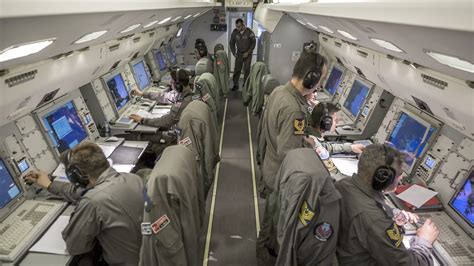
Inside the E-7A Wedgetail, the aircraft functions less like a traditional reconnaissance plane and more like a flying command headquarters. A specialized mission crew works at ten operator consoles equipped with advanced computing systems that process radar data and convert it into a constantly updated tactical air picture.
These air battle managers coordinate with multiple defensive layers simultaneously using a wide range of communications links, including HF, VHF, UHF radio networks, satellite communications, and tactical data links such as Link-11 and Link-16. These digital connections allow the aircraft to transmit targeting data directly to friendly fighter jets, naval vessels, and ground-based missile batteries.
During an engagement scenario, the Wedgetail crew can assign intercept missions to fighter aircraft, direct patrol patterns, and ensure that separate defensive systems are not wasting missiles on the same target. In the chaos of a mass drone attack, such coordination becomes invaluable.
Instead of dozens of disconnected radars and missile units reacting independently, the Wedgetail integrates them into one coherent defensive network.
Australia’s Long Development of the Wedgetail Program
Australia’s ability to deploy the E-7A today is the result of decades of technological development and strategic planning. Discussions about establishing an airborne early warning capability began in the 1980s as defense planners recognized the need for better situational awareness across the vast distances surrounding the Australian continent.
In the 1990s, the government formally launched Project Wedgetail, selecting Boeing in 1999 to build the aircraft based on the Boeing 737-700 airliner platform. Engineers transformed the civilian jet into a sophisticated military system equipped with radar arrays, communications systems, and mission management computers.
The integration process proved complex, causing delays before the first two operational aircraft were finally delivered to the Royal Australian Air Force in 2009. The fleet ultimately grew to six Wedgetail aircraft, all operated by No. 2 Squadron at RAAF Base Williamtown near Newcastle.
The platform reached initial operational capability in 2012, becoming the central pillar of Australia’s airborne command-and-control capability.
Operational Experience From Iraq to Ukraine
Since entering service, the Wedgetail has accumulated extensive operational experience in both humanitarian and combat environments. One of its earliest missions occurred in April 2014, when the aircraft assisted multinational search efforts for Malaysia Airlines Flight 370, coordinating maritime patrol aircraft across vast areas of the Indian Ocean.
Later that year, the Wedgetail conducted its first combat deployment over Iraq, supporting coalition operations against the Islamic State. In that theater the aircraft directed air patrols, monitored hostile aircraft activity, and maintained a comprehensive air picture across the region.
Between 2014 and 2019, Wedgetail aircraft flew continuous missions in the Middle East, coordinating dozens of coalition aircraft during long endurance sorties sometimes lasting more than 17 hours with aerial refueling.
More recently, Australia deployed the E-7A to Europe in 2023 and again in 2025 to monitor airspace activity linked to the war in Ukraine, demonstrating the aircraft’s value not only in combat operations but also in strategic surveillance roles.
Protecting Civilians and Overseas Nationals
Australian officials emphasized that the current deployment to the UAE is strictly defensive in nature. The aircraft is intended to provide surveillance and coordination support rather than conduct direct offensive operations against Iranian forces.
One factor influencing the decision was the large number of Australian citizens currently residing across the Middle East. Approximately 115,000 Australians live or work in the region, including around 24,000 residents in the United Arab Emirates.
As the conflict intensified, Australia launched evacuation operations that have already returned more than 2,600 citizens to safety. Consular teams remain active throughout the region to assist Australians who wish to leave or require emergency support.
The Wedgetail’s surveillance role indirectly contributes to these humanitarian objectives. By strengthening the region’s defensive network, the aircraft helps reduce the likelihood that incoming missiles or drones could strike populated areas or civilian infrastructure.
A Key Sensor in an Era of Drone Warfare
Modern warfare increasingly revolves around autonomous and semi-autonomous aerial systems, which are cheaper and easier to deploy than traditional aircraft. Nations and non-state actors alike now rely on drones to conduct surveillance, strike targets, and overwhelm defenses through sheer numbers.
The events unfolding across the Persian Gulf highlight how quickly aerial battlefields can become saturated with unmanned systems. In that environment, the advantage shifts toward whichever side can detect, track, and coordinate responses fastest.
The E-7A Wedgetail represents one of the most advanced tools available for achieving that advantage. By combining long-range radar, high-altitude endurance, and sophisticated command-and-control capabilities, the aircraft acts as the nerve center of a modern air defense network.
As the UAE continues to confront drone and missile attacks across the Gulf, the arrival of Australia’s Wedgetail adds a powerful layer of awareness above the battlefield—an airborne sentinel watching a vast region of sky where the next threat may appear at any moment.