The decision by the United States Air Force (USAF) to dramatically reduce its planned acquisition of the Boeing E-7 Wedgetail surprised many defense analysts. For years, the E-7 had been viewed as the natural successor to the aging E-3 Sentry Airborne Warning and Control System (AWACS) fleet, a cornerstone of American airborne surveillance since the Cold War. Yet despite selecting the aircraft in 2023 and committing billions of dollars toward the program, the USAF ultimately chose to scale back procurement, reducing plans from 26 aircraft to only seven.
The move was not simply about cutting costs. Instead, it reflected a broader transformation in how the Pentagon views airborne surveillance, command-and-control operations, and future conflicts against technologically advanced adversaries. While the E-7 Wedgetail remains one of the most capable airborne early warning and control (AEW&C) platforms ever developed, military planners increasingly believe that future battlefields may require a combination of smaller aircraft, distributed sensing networks, and space-based surveillance systems rather than a large fleet of traditional airborne command aircraft.
The decision highlights a fundamental debate shaping military aviation today: whether the future belongs to large, highly capable airborne platforms or to a networked ecosystem of smaller aircraft and satellites working together across multiple domains.
For the USAF, the answer appears to be shifting rapidly toward the latter.
The challenge facing American planners begins with the reality of the current AWACS fleet. The E-3 Sentry, which entered service during the late 1970s, remains one of the most recognizable military aircraft ever built. Based on the Boeing 707 airliner, the aircraft was designed during an era when the primary mission involved detecting Soviet bombers and coordinating NATO air defenses across Europe.
Although repeatedly modernized, the platform is showing its age.
The Boeing 707 airframe itself traces its origins to the 1950s. Spare parts have become increasingly difficult to source, maintenance costs continue to rise, and aircraft availability rates have steadily declined. The USAF currently operates only a small number of E-3s, and keeping them mission-ready requires significant resources. As aircraft age further, reliability becomes a growing concern, creating operational gaps at a time when global threats are becoming more complex.
Military leaders therefore concluded years ago that a replacement was essential.
The leading candidate quickly became the Boeing E-7 Wedgetail.
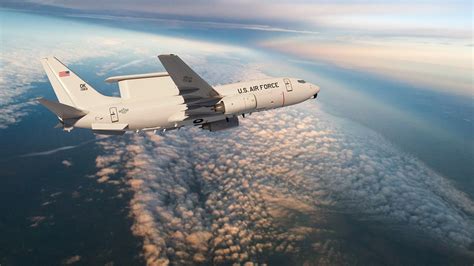
Why the Boeing E-7 Wedgetail Appeared To Be the Perfect AWACS Replacement
The E-7 Wedgetail was not an experimental concept. It was already a proven operational platform with successful deployments across multiple allied air forces.
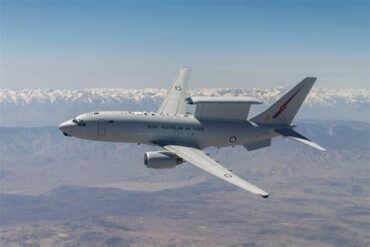
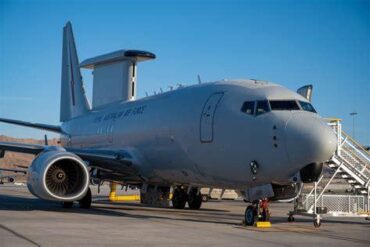
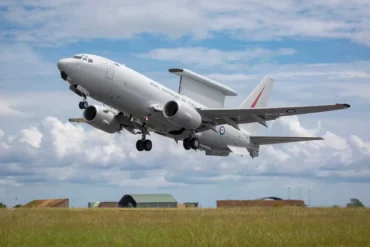
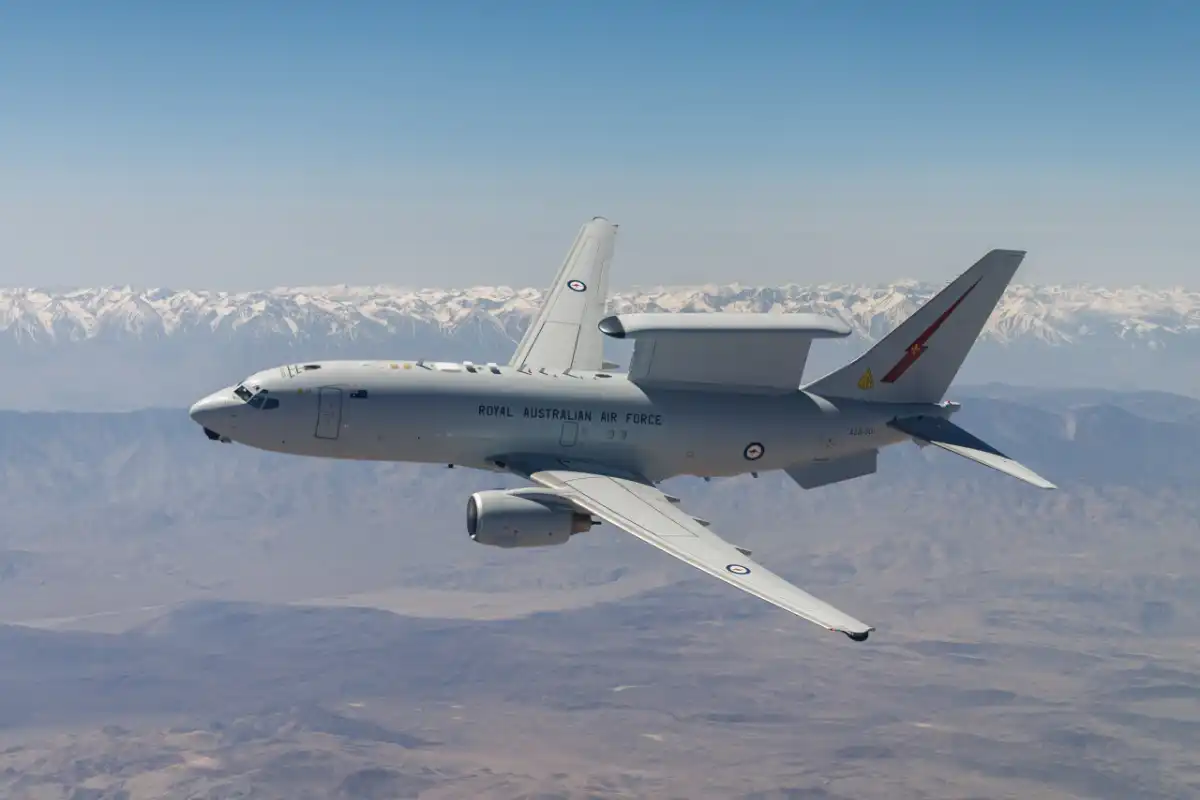
Originally developed for the Royal Australian Air Force, the aircraft is based on the highly successful Boeing 737-700ER airframe. The combination of a modern commercial aircraft platform and advanced mission systems created a surveillance aircraft capable of delivering significantly improved performance compared with older AWACS platforms.
At the heart of the Wedgetail is the Northrop Grumman Multi-role Electronically Scanned Array (MESA) radar. Unlike the rotating radar dome used by the E-3 Sentry, the MESA system employs advanced electronically scanned arrays mounted atop the fuselage. This design allows the aircraft to maintain continuous surveillance across a 360-degree area while reducing mechanical complexity and maintenance requirements.
The radar can detect aircraft, missiles, and maritime targets over enormous distances while simultaneously tracking hundreds of contacts. Combined with advanced communications systems and battle management capabilities, the E-7 effectively serves as a flying command center capable of coordinating large-scale military operations.
Several allied nations recognized these advantages. Australia, South Korea, Türkiye, and the United Kingdom all adopted the platform, reinforcing confidence in its maturity and operational effectiveness.
From a capability standpoint, the E-7 appeared to solve nearly every problem facing the USAF’s aging AWACS fleet.
Yet capability alone did not determine the aircraft’s fate.
Rising Costs and Delayed Deliveries Changed the Equation
One of the primary reasons the USAF reconsidered the scale of the E-7 program was cost.
Although the Wedgetail itself was a mature platform, adapting it to unique American requirements introduced significant development expenses. The USAF wanted extensive modifications, integration with existing command-and-control architectures, and compatibility with future battlefield networks.
As development projections evolved, procurement costs began rising substantially.
The total program value approached $1.8 billion for early phases alone, while long-term fleet acquisition and support expenses were expected to climb considerably higher. At the same time, delivery schedules generated concern.
The Air Force originally anticipated introducing the E-7 into operational service by 2027. However, military leaders increasingly worried that development timelines might slip while the E-3 fleet continued aging. Every delay increased the risk of a capability gap between retiring Sentries and arriving Wedgetails.
This concern became especially important as the Pentagon sought to prioritize resources for emerging technologies, including next-generation fighters, advanced drones, artificial intelligence systems, and space-based surveillance networks.
As budgets tightened and priorities shifted, the question emerged: should the Air Force commit billions toward a traditional airborne surveillance fleet, or invest those funds into future technologies with broader strategic potential?
That debate ultimately reshaped procurement plans.
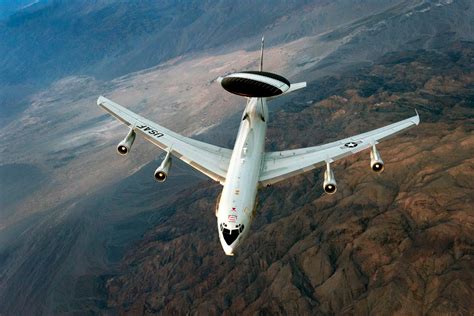
The Survivability Problem in Future High-End Warfare
Another factor influencing the decision involved survivability.
Historically, large airborne warning aircraft operated relatively safely behind friendly lines. Their powerful radars provided immense situational awareness while remaining outside the reach of most enemy weapons.
Future conflicts may be different.
Potential adversaries such as China and Russia have invested heavily in long-range missiles, anti-access systems, electronic warfare capabilities, and advanced fighter aircraft designed specifically to threaten high-value airborne assets.
In such environments, large aircraft like the E-3 and E-7 could become priority targets.
Even though the E-7 offers substantial improvements over the E-3, it remains a large, non-stealthy aircraft operating within predictable mission profiles. Pentagon planners increasingly questioned whether concentrating critical command-and-control functions inside a limited number of large aircraft represented the best approach for future wars.
Instead, defense strategists have increasingly embraced the concept of distributed operations, spreading sensors and command functions across multiple platforms to reduce vulnerability.
This philosophy directly contributed to growing interest in smaller aircraft and space-based systems.
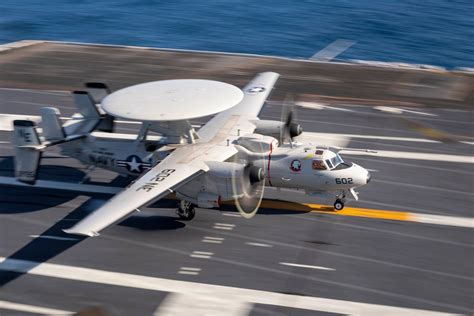
Why the USAF Turned Toward the E-2D Advanced Hawkeye
As concerns surrounding the E-7 program grew, the USAF identified an interim solution in the Northrop Grumman E-2D Advanced Hawkeye.
The Hawkeye is significantly smaller than either the E-3 Sentry or E-7 Wedgetail. Unlike the jet-powered AWACS aircraft traditionally favored by the Air Force, the E-2D uses turboprop engines and was originally designed for aircraft carrier operations with the U.S. Navy.
At first glance, it appears an unusual choice.
The aircraft flies slower, carries fewer personnel, and operates at lower altitudes than larger jet-powered surveillance aircraft. However, it also offers several advantages that aligned with the Air Force’s immediate needs.
The E-2D is already in production, combat-proven, and available without extensive developmental risk. Its radar and battle management systems remain among the most advanced in the world. Most importantly, the aircraft can enter service quickly, helping alleviate pressure created by the retirement of older E-3 aircraft.
The USAF reportedly plans to acquire a small number of E-2Ds as a temporary measure, providing additional airborne surveillance capacity while larger long-term solutions continue to develop.
This approach reflects a pragmatic decision rather than a complete shift toward the Hawkeye as a permanent replacement.
Nevertheless, it demonstrates how urgency and availability can sometimes outweigh ideal capability requirements.
The Real Long-Term Replacement May Be in Space
Perhaps the most significant reason behind the reduction of the E-7 fleet lies far above Earth’s atmosphere.
The Pentagon increasingly views space as the future of global surveillance.
Traditional airborne warning aircraft excel within specific operational theaters. Their radars provide exceptional regional awareness but remain constrained by geography, basing requirements, and aircraft availability.
Satellites offer a fundamentally different approach.
Space-based sensor networks can potentially monitor vast portions of the globe continuously, providing coverage far beyond what airborne platforms can achieve. Such systems are also less dependent on forward operating bases and can support multiple theaters simultaneously.
This vision has become central to the Pentagon’s emerging Golden Dome initiative.
Golden Dome aims to create an extensive network of satellites and sensors capable of tracking aircraft, missiles, and other airborne threats worldwide. Advanced Air Moving Target Indicator (AMTI) technologies are expected to provide surveillance functions traditionally performed by airborne warning aircraft.
The initiative has attracted enormous investment, with contracts worth billions already awarded to support development and deployment.
Supporters argue that a mature space-based architecture could eventually perform many missions currently assigned to AWACS aircraft while offering broader global coverage.
Critics, however, note that the technical challenges remain immense.
Developing reliable space-based tracking systems capable of matching airborne radar performance is extraordinarily complex. Program costs continue to generate debate, and timelines remain highly ambitious. While Pentagon estimates place costs around $185 billion, some analysts believe total expenditures could eventually exceed $1 trillion.
As a result, uncertainty continues surrounding how quickly these capabilities can replace traditional airborne surveillance assets.
The Broader Air Force Modernization Strategy
The Wedgetail decision cannot be understood in isolation.
It forms part of a much larger modernization effort underway across the USAF.
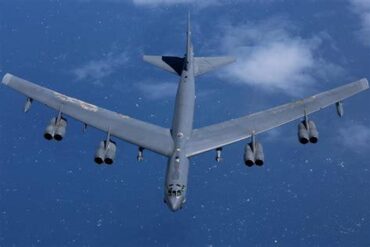
Over recent years, the Air Force has accelerated retirement plans for numerous legacy platforms, including the KC-10 Extender, older F-15 variants, aging F-16s, portions of the C-130 fleet, and even the iconic A-10 Thunderbolt II.
These retirements share a common objective: redirect funding toward technologies expected to dominate future conflicts.
Military leaders increasingly prioritize stealth aircraft, autonomous systems, advanced networking, artificial intelligence, cyber capabilities, and space-based assets. Every dollar invested in maintaining aging fleets is viewed as a dollar unavailable for next-generation capabilities.
Within that context, reducing the size of the E-7 fleet becomes easier to understand.
The decision was not necessarily a rejection of the aircraft itself. Rather, it reflected changing assumptions about how airborne surveillance should function during the coming decades.
Did the USAF Make the Right Decision?
Whether the Air Force ultimately made the correct choice remains an open question.
The E-7 Wedgetail is widely regarded as one of the world’s most capable airborne early warning aircraft. Allied operators have demonstrated its effectiveness, and many analysts continue to view it as the logical replacement for the E-3 Sentry.
At the same time, the Pentagon’s concerns are difficult to dismiss.
Future battlefields will likely be more contested, more networked, and more dependent on multi-domain operations than any previous conflict. Large airborne command aircraft may no longer enjoy the relative safety they once did, while advances in satellite technology offer opportunities that did not exist when the AWACS concept first emerged.
The USAF therefore finds itself balancing immediate operational needs against long-term strategic transformation.
For now, the service appears committed to a hybrid approach. A limited fleet of E-7 Wedgetails will still enter service. E-2D Advanced Hawkeyes will help bridge capability gaps. Meanwhile, enormous resources will continue flowing toward Golden Dome and future space-based surveillance networks.
The outcome of that strategy may shape not only the future of American airborne warning capabilities but also the broader evolution of military command-and-control systems worldwide. If space-based sensors deliver on their promises, the decision to scale back the E-7 could eventually be viewed as a visionary move. If they fall short, the Air Force may find itself wishing it had invested more heavily in one of the most capable AEW&C aircraft ever built.