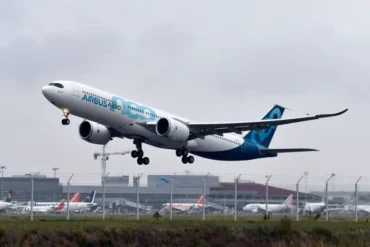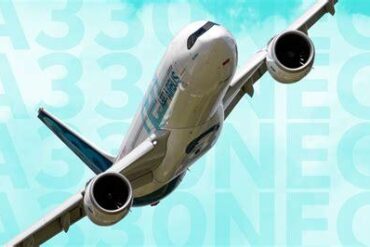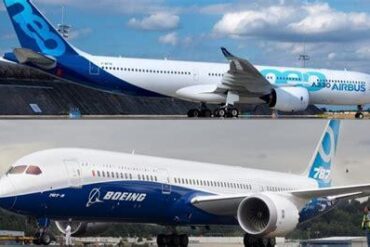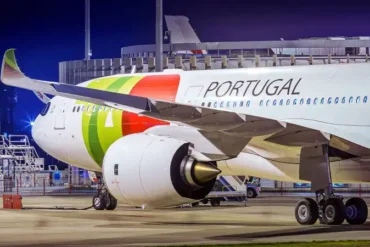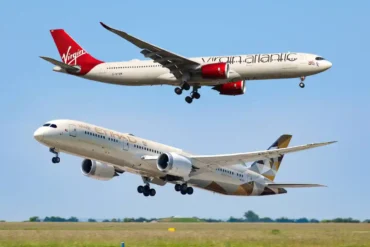
The Boeing 787 Dreamliner and Airbus A330neo occupy one of the most fiercely contested segments of the modern commercial aircraft market. Both are twin-engine widebody families designed to connect cities over medium- and long-haul distances while using substantially less fuel than the generations of aircraft they replaced. For airlines, however, choosing between them is not simply a matter of deciding which aircraft has the lower sticker price.
The purchase price is only the beginning of the financial equation. Airlines also have to consider fuel consumption, maintenance, financing, depreciation, crew costs, range, passenger capacity, delivery schedules, and residual value. A jet that costs less to acquire can ultimately become the more expensive choice if it consumes more fuel or spends too much time waiting for maintenance. Conversely, an aircraft with a higher list price can make financial sense if its economics fit an airline’s network better.
The two families also arrived on very different schedules. Boeing developed the 787 as an entirely new generation of widebody aircraft, while Airbus transformed the established A330 into the A330neo with new engines, aerodynamic improvements, and updated systems. That difference is reflected not only in their capabilities but also in their development costs and eventual market positions.
Boeing 787 Dreamliner Development and Pricing
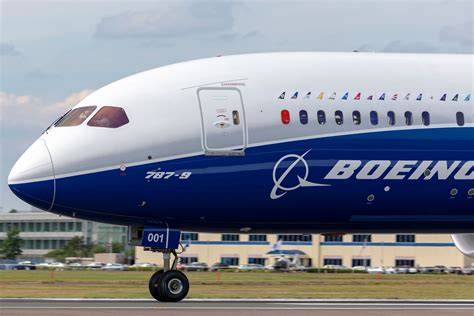
Boeing officially launched the 787 Dreamliner program in April 2004, with All Nippon Airways becoming its launch customer. The aircraft was conceived around a straightforward objective: dramatically improve efficiency compared with older widebody aircraft such as the Boeing 767 while offering airlines the range and capacity needed for new nonstop routes.
One of the most important characteristics of the 787 is its extensive use of composite materials. Roughly 50% of the aircraft’s structure is made from composite materials, helping Boeing reduce structural weight while also enabling aerodynamic and cabin innovations. Advanced engines and the aircraft’s lightweight construction were central to Boeing’s effort to achieve substantially lower fuel consumption than earlier-generation aircraft.
The program eventually produced three main variants: the 787-8, 787-9, and 787-10. They share the same basic architecture but target different airline missions. The 787-8 is the smallest member, while the 787-9 has become the most widely adopted version because it provides an attractive balance of capacity and range. The 787-10 is the largest variant and can accommodate up to approximately 375 passengers, although its greater size comes with a shorter range than the 787-9.
Developing such a technologically ambitious aircraft came at an enormous cost. The total 787 development program has been estimated at around $32 billion, reflecting the expense of creating a new airframe, new production methods, new systems, and a global supplier network.
When looking at published prices, the difference between variants is substantial. The Boeing 787-8 carries a list price of approximately $248 million, while the 787-9 is listed at around $293 million. The larger 787-10 rises to approximately $338 million. These figures can make the 787-10 appear dramatically more expensive than the smaller A330neo variants, but list prices rarely represent what an airline actually pays.
Airbus A330neo Development and Pricing
The Airbus A330neo followed a very different path. Rather than designing an entirely new aircraft, Airbus modernized its established A330 platform. Airlines had repeatedly expressed interest in an updated A330 capable of competing with the 787, and Airbus eventually launched the A330neo at the 2014 Farnborough Airshow.
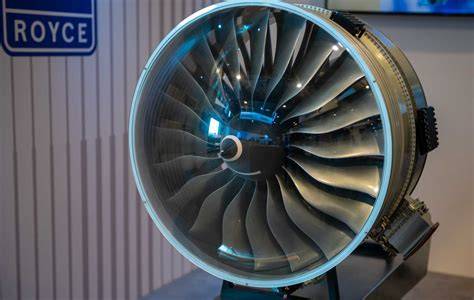
The A330neo family consists of the A330-800 and A330-900. Both use Rolls-Royce Trent 7000 engines, while aerodynamic improvements, including redesigned wingtip technology, further improve efficiency. According to the supplied reference data, the new engines and associated improvements deliver roughly 14% better fuel burn per seat than the previous-generation A330ceo.
That evolutionary approach significantly reduced development expenditure. The A330neo program cost approximately $2 billion, a fraction of the investment required for the clean-sheet 787 program. Airbus could reuse much of the existing A330 design, production infrastructure, and operational knowledge while incorporating modern technology where it mattered most.
The A330-800 is the longer-range member, with a published range of approximately 8,100 nautical miles. The larger A330-900 sacrifices some range for additional capacity and can accommodate up to 465 passengers in a high-density configuration.
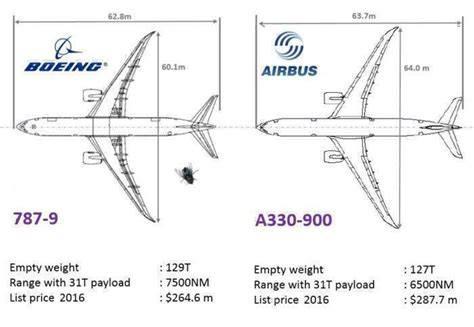
The list prices sit surprisingly close to Boeing’s offerings. A new A330-800 is priced at roughly $260 million, while the A330-900 reaches approximately $296 million. That places the A330-900 close to the 787-9 in published pricing, although the aircraft are configured differently and are not necessarily performing identical missions.
Boeing 787 vs A330neo List Prices
At first glance, the numbers suggest that Airbus has a remarkably competitive product. The smallest 787 is cheaper on the published price list than either A330neo, while the 787-9 and A330-900 sit within a relatively narrow price band. The 787-10, meanwhile, is the most expensive member of the group in terms of the supplied list prices.
The approximate figures are:
- Boeing 787-8: $248 million
- Airbus A330-800: $260 million
- Boeing 787-9: $293 million
- Airbus A330-900: $296 million
- Boeing 787-10: $338 million
These figures are useful for understanding the manufacturer’s published positioning, but they should never be interpreted as actual transaction prices. Large commercial aircraft are almost always sold below list price, particularly when an airline places a substantial order.
Airlines negotiate aggressively with manufacturers. A major customer ordering dozens of aircraft can secure discounts, maintenance agreements, training packages, spare parts, financing arrangements, and other incentives that dramatically change the effective economics of an order. Consequently, saying that an airline “paid $293 million” for a 787-9 simply because that is its published list price would be misleading.
The market value of aircraft can be considerably lower. The supplied reference material places the market rate for an A330-900 at approximately $109 million, illustrating how far actual commercial values can diverge from official list prices.
Why the 787 Can Cost More Without Being More Expensive to Operate
The most important distinction is between acquisition cost and operating economics. An airline can spend more on an aircraft and still achieve a lower overall cost per seat if that aircraft carries passengers efficiently.
The 787’s lightweight composite structure is a major part of its economic proposition. Its engines and aerodynamic design were developed specifically around the objective of reducing fuel consumption. Since fuel is one of the largest recurring expenses for airlines, even relatively small improvements in fuel efficiency can generate significant savings over thousands of flight hours.
The 787 also benefits from its ability to open long-distance routes with comparatively modest passenger demand. An aircraft does not need to fill hundreds of seats every day if its operating economics allow an airline to profitably serve thinner routes.
That flexibility has helped make the 787-9 particularly successful. It offers substantially more capacity than the 787-8 while retaining excellent range. For airlines operating networks where passenger demand varies considerably by season or city pair, that balance can be more valuable than simply maximizing the number of seats.
A330neo Operating Costs Tell a Different Story
The A330neo counters the 787 with a combination of mature airframe technology, modern engines, and strong seat economics. Because Airbus did not create an entirely new aircraft, airlines can also benefit from the A330’s long operational history.
The supplied operating-cost figures show how close the two families can be when expenses are normalized by seat and flight hour. The 787-8 averages about $30 per seat per hour, while the 787-9 falls to approximately $25.86. The larger 787-10 drops further to around $19.54.
For Airbus, the A330-800 is estimated at approximately $28.36 per seat per hour, while the A330-900 comes in around $22.43.
These figures reveal an important principle. Larger aircraft can have lower costs per seat when they distribute many expenses across more passengers. That is why the 787-10 and A330-900 can look particularly attractive for high-demand routes.
However, per-seat economics do not tell the entire story. An aircraft with 400 seats is not automatically better than one with 300 seats. If the airline cannot consistently fill those seats, the theoretical advantage can disappear quickly. Network planners therefore have to balance capacity with demand rather than chasing the lowest published cost-per-seat number.
Delivery Backlogs Can Change the Economics
Aircraft pricing becomes even more complicated when delivery availability enters the equation. An airline cannot generate revenue from an aircraft that has not yet been delivered.
The 787 has enjoyed extraordinary demand, with approximately 2,453 orders and 1,299 deliveries cited in the reference material. That leaves a substantial backlog, estimated at around 1,154 aircraft. Strong demand is positive for Boeing, but production constraints and delivery delays can create problems for customers trying to expand quickly.
The A330neo has a much smaller backlog. The supplied figures cite 524 orders and 196 deliveries, leaving approximately 328 aircraft outstanding. Airbus therefore has less production pressure on the A330neo program.
This difference can influence purchasing decisions even when the aircraft themselves have similar economics. An airline experiencing rapid growth may prefer an aircraft that can be delivered sooner rather than waiting years for a highly desirable model.
The 2025 Dubai Airshow provided a useful example of continued A330neo demand. Etihad Airways announced an order for 15 A330neos, with deliveries expected to begin in 2027. For airlines seeking additional widebody capacity without committing to the larger A350 or Boeing 777 families, the A330neo remains an appealing option.
Major Airlines Show Why Both Aircraft Matter
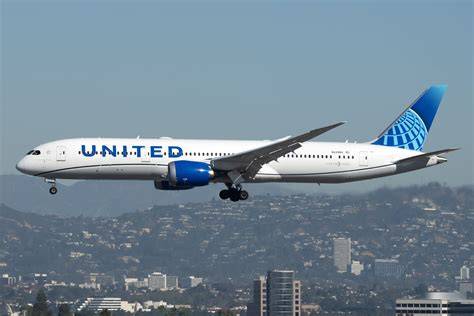
The global fleets of major airlines demonstrate that there is no single winner for every mission. United Airlines has become one of the largest 787 operators, with 91 aircraft cited in the supplied material and plans to eventually operate 221 Dreamliners. All Nippon Airways, the original launch customer, also operates a substantial 787 fleet.
American Airlines is another major 787 operator, particularly with the 787-8. The widespread adoption of the Dreamliner reflects the aircraft’s ability to support long-haul routes without requiring the enormous passenger volumes associated with larger widebodies.
On the Airbus side, Delta Air Lines is the largest A330-900 operator and the only U.S. airline identified in the reference material as operating an A330neo. Delta’s fleet strategy illustrates why the A330neo remains relevant even in a market where the 787 has established a considerable lead.
The difference in fleet size is partly explained by timing. The 787 entered service years before the A330neo, giving Boeing a significant head start in accumulating orders and deliveries. Airbus entered the market with an aircraft based on a platform that was already mature, but by then many airlines had already committed to the Dreamliner.
Corporate Versions Push Prices Much Higher
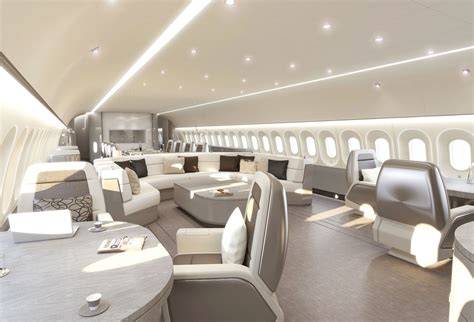
The economics change dramatically when these aircraft are transformed from airline workhorses into private or government transports. Airbus Corporate Jets offers the ACJ330neo in both the -800 and -900 configurations, while Boeing Business Jets offers the BBJ 787 family.
An ACJ330-800 starts at roughly $260 million, while an ACJ330-900 can start around $300 million. The BBJ 787-8 has been listed at approximately $239 million before extensive customization.
The aircraft itself, however, is only part of the final bill. Corporate and government customers can install private bedrooms, conference rooms, lounges, enhanced communications systems, security equipment, and highly customized interiors. Once those modifications begin, the final cost can move far beyond the underlying aircraft price.
Which Aircraft Offers Better Value?
There is no universal answer because value depends on the airline’s mission. The 787-9 is exceptionally strong for carriers that prioritize range, flexibility, and proven demand. Its combination of capacity and long-distance capability has made it one of the most successful widebody aircraft of the modern era.
The A330-900, meanwhile, can be attractive to airlines that value high passenger capacity and competitive operating economics while taking advantage of Airbus’s mature A330 platform. Its lower development cost also demonstrates how an intelligently modernized aircraft can remain commercially relevant against a newer clean-sheet design.
The published figures make the 787-9 and A330-900 especially interesting. Their list prices are almost identical, at approximately $293 million and $296 million, respectively. Yet their real-world financial profiles can differ substantially depending on negotiated discounts, engine arrangements, maintenance contracts, financing, utilization, and route structure.
The Real Cost Goes Beyond the Purchase Price
Ultimately, the question of how much a Boeing 787 costs compared with an Airbus A330neo cannot be answered with a single number. A 787-8 may have a lower published price than an A330-800, while a 787-10 can cost considerably more than an A330-900. But the price paid by an airline can be dramatically different from the manufacturer’s list price.
More importantly, the aircraft must earn its keep after delivery. Fuel burn, seat capacity, maintenance, utilization, depreciation, crew costs, financing, and route performance all contribute to the long-term cost of ownership.
The 787’s enormous order book shows that airlines continue to place significant value on its range and efficiency. The A330neo, despite entering the market later, has carved out its own niche by offering modern engines, strong capacity, and competitive economics without requiring Airbus to develop an entirely new airframe.
For airlines, that makes the decision less about choosing the aircraft with the lowest sticker price and more about choosing the aircraft that produces the best financial result across an entire network. In that respect, the Boeing 787 and Airbus A330neo remain two of the most compelling widebody options in commercial aviation—and their close pricing is only the beginning of the story.