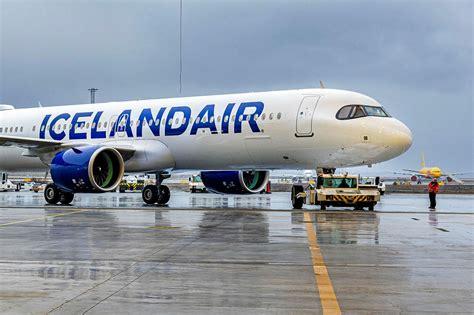
Icelandair is ending its Reykjavík Keflavík–Halifax route, removing one of the shortest links between Iceland and Canada from its future network. The airline had planned to resume the service in June 2027, but all scheduled flights between Keflavík International Airport (KEF) and Halifax Stanfield International Airport (YHZ) have now been removed.
The cancellation comes during a period of contraction for Halifax’s transatlantic network. WestJet has also announced the ending of two European routes from the Nova Scotia airport, making Icelandair’s decision another significant reduction for passengers seeking nonstop or one-stop international connections from Halifax.
The route covered approximately 1,785 nautical miles (3,306 kilometers) each way, making it Icelandair’s shortest service to either Canada or the United States. Despite the relatively short distance, the route had a much longer history than its latest operation suggests. Icelandair previously operated KEF-YHZ from 2007 through 2018, primarily using the Boeing 757-200.

Icelandair Halifax Route Was Already Shrinking
The Halifax service returned in May 2024, this time operated by Icelandair’s 160-seat Boeing 737 MAX 8. The aircraft became the sole equipment type used on the route after its relaunch, giving Halifax the carrier’s smallest-capacity jet in regular service.
Capacity had already been moving downward before the cancellation. During the peak summer season of 2025, Icelandair offered three weekly flights between KEF and YHZ. That schedule fell to only two weekly departures in summer 2026, while the number of seats available for sale also declined.
Icelandair offered approximately 18,880 seats in 2024, followed by 13,120 in 2025 and just 12,800 in 2026. The reduction was not entirely isolated to Halifax, because Icelandair’s overall North American capacity was also lower in 2026 than the previous year. Nevertheless, the steady decline on KEF-YHZ provides an important indication of how the route had been performing within the airline’s network.
The cancellation is particularly notable because the airline had already published a schedule for the following summer. Flights were due to return on June 3, 2027, operating on Thursdays and Sundays. Icelandair had planned FI607 to leave Keflavík at 6:35 p.m. and arrive in Halifax at 8:25 p.m., a scheduled flying time of 4 hours and 50 minutes. The return FI606 was scheduled to depart Halifax at 9:25 p.m. and reach Keflavík at 4:45 a.m. the following morning after approximately 4 hours and 20 minutes in the air.
Why Halifax Was Important to Icelandair’s Network
The Halifax route was not simply a point-to-point service. Icelandair’s business model relies heavily on connecting passengers through Keflavík, allowing travelers from North America to continue to destinations across Europe. That connecting role was especially important on the Halifax route.
OAG Traffic Analyzer data indicates that approximately 10,700 passengers traveled between Halifax and Keflavík in 2025, from 13,120 round-trip seats offered. That equates to an estimated 82% load factor. However, a high load factor alone does not establish whether a route is profitable, because fares, connecting revenue, fuel expenses, aircraft costs and other operating factors all influence the financial result.
Nearly six in ten passengers on the route connected onward through Keflavík. Major connecting markets included Oslo, Amsterdam, Frankfurt, Copenhagen, Munich, Berlin, Stockholm, Zurich, London and Helsinki. This demonstrates how the service functioned as part of Icelandair’s broader transatlantic network rather than simply as a Canada-Iceland tourism route.
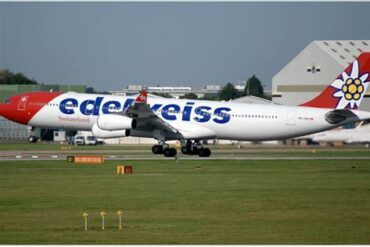
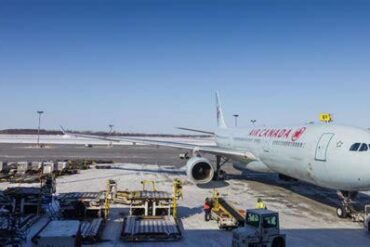
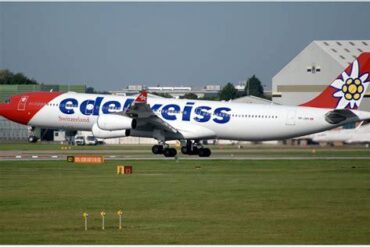
Several of those destinations already have nonstop options from Halifax. Amsterdam is served by WestJet, Frankfurt by Discover Airlines, London Heathrow by Air Canada and London Gatwick by WestJet, while Zurich has service from Edelweiss. That competitive environment reduces the unique value of connecting through Iceland for some travelers.
Icelandair Will Serve Just Two Canadian Cities in 2027
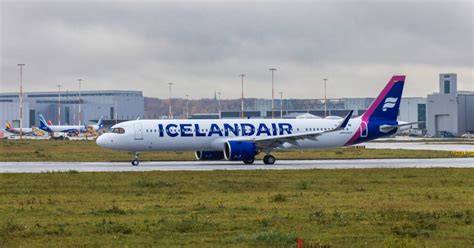
With Halifax removed, Icelandair’s planned Canadian network for the 2027 peak summer season will be concentrated on Toronto and Vancouver. Toronto is scheduled to receive 13 weekly departures, all operated by the Boeing 737 MAX 8, while Vancouver is scheduled for six weekly flights using the Airbus A321LR.
Capacity is also changing between the two remaining destinations. Seats available to and from Toronto are expected to be approximately 4% lower than during the peak summer of 2026, while Vancouver capacity is scheduled to rise by 17%.
The airline has previously served several other Canadian markets. Edmonton was part of Icelandair’s network from 2014 until 2020, while Montreal operated from 2016 to 2020 and returned briefly in 2022. Those historical services demonstrate that Icelandair’s Canadian footprint has contracted considerably from earlier periods.
The wider Canadian market will still include services from other airlines. During the 2027 peak summer period, Calgary and Edmonton are scheduled to have WestJet service to Iceland, while Montreal and Toronto are scheduled to have Air Canada flights. Winnipeg is also served by WestJet following the airline’s launch there in 2026. Air Transat’s plans for returning to Iceland from Montreal remain uncertain.
The cancellation of KEF-YHZ therefore marks more than the disappearance of a roughly five-hour flight. It represents another adjustment in Icelandair’s North American strategy, with capacity increasingly concentrated on markets where the airline sees greater network value. For Halifax passengers, the loss means fewer opportunities to use Iceland as a gateway to Europe, while Icelandair’s Canadian operation becomes focused on two major markets: Toronto and Vancouver.