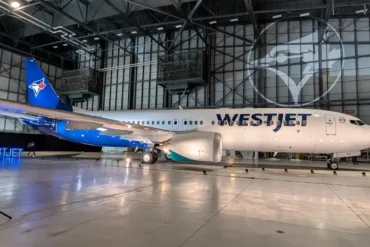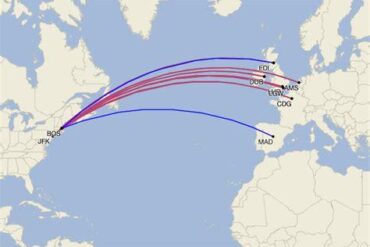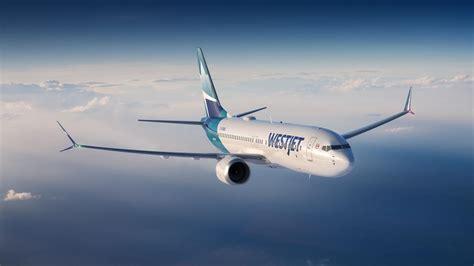
Canada’s transatlantic aviation landscape has taken a decisive step forward with WestJet’s launch of a nonstop Halifax–Copenhagen route, a seasonal service that blends strategic geography with next-generation narrowbody efficiency. Operating four times weekly between late May and late September, the new connection links Halifax Stanfield International Airport (YHZ) directly with Copenhagen Airport (CPH)—a pairing that signals both ambition and precision in route planning.
This is not merely another European addition. It is a calculated expansion that underscores Halifax’s rising status as a transatlantic gateway uniquely positioned on North America’s eastern edge, where shorter oceanic crossings become commercially viable even for narrowbody aircraft. With block times averaging 6 hours 40 minutes eastbound and 7 hours 30 minutes westbound, the route pushes the envelope of what passengers expect from single-aisle long-haul travel.
By bridging a 3,287-mile (5,291 km) gap, WestJet has quietly introduced a service that is both geographically significant and operationally efficient. The route stands as the only nonstop connection between the Canadian Maritimes and Denmark, while also becoming the shortest transatlantic route ever linking Denmark with North America—a distinction that adds both prestige and strategic weight.
A Precision-Timed Transatlantic Operation
The scheduling of the Halifax–Copenhagen flights reflects a deep understanding of passenger flow and aircraft utilization. Departures from Halifax occur late in the evening, allowing travelers to maximize daytime hours before boarding an overnight crossing to Europe. Arrivals in Copenhagen land mid-morning, aligning seamlessly with onward connections across Scandinavia and continental Europe.
Return services depart Denmark before midday, reaching Halifax in the early afternoon—an ideal window for domestic connections or same-day arrivals without the fatigue of late-night landings. This rhythm of operations transforms what could be a taxing journey into a well-calibrated transatlantic experience, optimized for both leisure and business travelers.
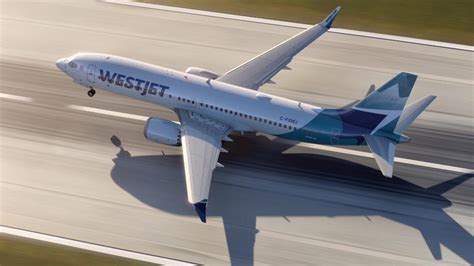
The Boeing 737 MAX 8: Narrowbody, Long-Haul Confidence
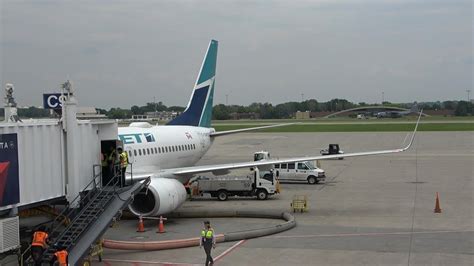
At the heart of this route lies the Boeing 737 MAX 8, an aircraft that continues to redefine long-haul possibilities for airlines willing to rethink traditional widebody dominance. Its range and fuel efficiency allow carriers like WestJet to unlock thinner, underserved transatlantic markets without the economic burden of larger aircraft.
The MAX 8’s deployment on a near eight-hour route is not just a technical achievement—it is a statement. It proves that long-haul travel no longer requires widebody scale to deliver viability, particularly when paired with geographically advantageous hubs like Halifax.
Passengers can expect a cabin configured for comfort within the constraints of a single-aisle jet, where modern interiors, improved pressurization, and quieter engines contribute to a more refined journey than previous generations of narrowbody aircraft could offer.
Halifax’s Evolution Into a European Gateway
WestJet’s latest route does not exist in isolation; it is part of a broader transformation that has positioned Halifax as a key North American launch point for European travel. The airline has steadily expanded its footprint at YHZ, leveraging the airport’s location to build one of the most diverse transatlantic networks in Eastern Canada.
This summer, WestJet is operating flights from Halifax to nine European destinations, including major hubs such as Amsterdam, Paris, and Dublin. The addition of Copenhagen strengthens this portfolio, extending reach into Northern Europe and the Nordic region.
What makes Halifax particularly compelling is its ability to support narrowbody transatlantic operations with minimal compromise. Shorter distances to Europe reduce fuel requirements and flight times, allowing airlines to experiment with routes that would be less feasible from inland cities.

A Record-Breaking Summer for Transatlantic Capacity
The launch of the Copenhagen service coincides with an unprecedented surge in transatlantic capacity at Halifax. This season, the airport is expected to handle over 519,000 one-way seats to Europe, marking a significant increase from previous years and solidifying its role as a high-growth international hub.
This expansion is not driven by WestJet alone. Other carriers are contributing to the momentum, creating a competitive and diverse network. Air Canada continues to operate routes to major European cities, while Icelandair leverages its Reykjavik hub to offer flexible one-stop connections. Meanwhile, Discover Airlines introduces widebody service to Frankfurt, adding another dimension to Halifax’s connectivity.
The result is a layered ecosystem of transatlantic travel options, where passengers can choose between nonstop efficiency and one-stop flexibility depending on their priorities.
Strategic Implications for WestJet’s European Ambitions
WestJet’s decision to launch the Halifax–Copenhagen route reflects a broader strategic shift toward targeted, high-impact European expansion. Rather than competing head-on in saturated markets, the airline is identifying underserved city pairs where demand exists but competition is limited.
Copenhagen represents a particularly astute choice. As a gateway to Scandinavia and Northern Europe, it offers strong inbound tourism potential while also serving outbound Canadian travelers seeking alternatives to traditional Western European destinations.
The route also enhances WestJet’s brand positioning, reinforcing its ability to operate innovative long-haul services using efficient narrowbody aircraft. This approach not only reduces costs but also allows for greater flexibility in adjusting capacity based on seasonal demand.
Redefining the Future of Transatlantic Travel
The introduction of an 8-hour narrowbody transatlantic flight is more than a milestone—it is a signal of where the industry is heading. Airlines are increasingly moving toward right-sized aircraft and precision network planning, prioritizing efficiency over sheer scale.
WestJet’s Halifax–Copenhagen service embodies this evolution. It demonstrates that long-haul connectivity can be both accessible and economically sustainable, even on routes that would have been considered marginal just a decade ago.
As passengers board a Boeing 737 MAX 8 in Halifax and step off in Copenhagen the next morning, they are participating in a quiet revolution—one where geography, technology, and strategy converge to reshape the very definition of long-haul travel.