JetBlue’s expansion across the Atlantic is no longer a side story—it has become one of the most compelling shifts in modern aviation. With 13 European routes connecting the United States to key cities across the continent, the airline has carved out a distinctive position in a market long dominated by legacy giants. What makes this evolution remarkable isn’t just the scale, but the strategy: premium-focused service delivered through efficient narrowbody aircraft, unlocking routes that balance cost, comfort, and frequency.
Operating primarily from Boston Logan International Airport (BOS) and New York John F. Kennedy International Airport (JFK), JetBlue’s transatlantic network reflects a deliberate focus on high-demand, high-yield corridors. These aren’t experimental routes—they are carefully selected gateways where passenger demand meets operational efficiency. The result is a network that spans iconic destinations like London, Paris, Amsterdam, and Dublin, alongside newer additions that hint at even broader ambitions.
The timing couldn’t be sharper. As international travel demand rebounds and travelers become more discerning, JetBlue positions itself as a hybrid alternative: neither ultra-low-cost nor traditional full-service, but something intriguingly in between.
Two New European Routes Signal Strategic Expansion
JetBlue’s latest additions—Boston to Barcelona (BCN) and Boston to Milan Malpensa (MXP)—highlight how the airline is pushing deeper into Southern Europe. These routes aren’t just geographic expansions; they reflect a calculated move into markets with strong leisure and business demand.
The Boston–Barcelona route, launched in April 2026, operates daily through late October, offering nearly eight hours and 48 minutes of flight time on the return leg. Milan follows closely behind, with a slightly shorter block time despite a longer distance—an operational nuance shaped by airport congestion and routing efficiencies.
These new services reinforce a broader pattern: JetBlue isn’t chasing sheer volume. Instead, it is targeting routes where premium leisure travelers and transatlantic business passengers overlap, creating consistent demand throughout the season.
Mapping JetBlue’s 13 Transatlantic Connections
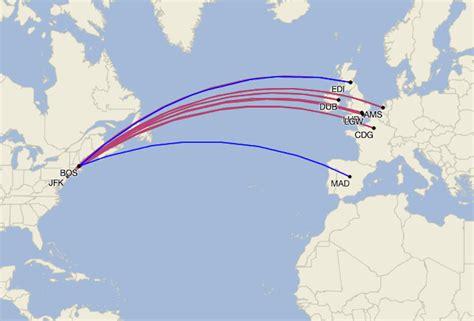
The full European network reveals a carefully layered structure. At the top sits New York–London Heathrow (LHR), the airline’s most frequent and competitive route, operating twice daily year-round. Close behind are daily services linking New York and Boston to Paris Charles de Gaulle (CDG) and London, forming the backbone of JetBlue’s European presence.
Beyond these flagship routes, the airline expands into secondary but highly strategic cities:
- Amsterdam (AMS) from Boston, nearly daily year-round
- Dublin (DUB) and Edinburgh (EDI) from both Boston and JFK
- Madrid (MAD) and Barcelona (BCN) from Boston
- London Gatwick (LGW) as a complementary UK gateway
This network design allows JetBlue to capture both primary and underserved markets, offering flexibility while avoiding direct saturation in overly crowded corridors.

Up To 9-Hour Flights: Efficiency Meets Comfort
JetBlue’s longest European route—Paris to New York JFK—reaches a block time of nearly eight hours and 55 minutes, brushing close to the nine-hour mark. For a narrowbody aircraft, that duration might raise eyebrows, but JetBlue has leaned into this challenge with a product designed to compete.
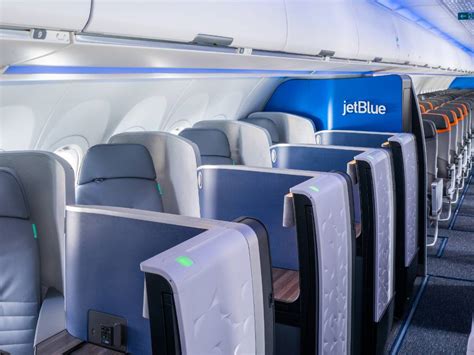
At the heart of this experience is the airline’s Mint business class, featuring private suites in a 1-1 configuration. This setup delivers a level of privacy typically reserved for widebody aircraft, effectively redefining expectations for single-aisle travel.
Economy passengers aren’t left behind either. The cabins emphasize modern design, improved legroom, and upgraded in-flight entertainment, creating a cohesive onboard experience that feels intentionally curated rather than cost-cut.
The Airbus A321LR: A Game-Changer for Transatlantic Routes
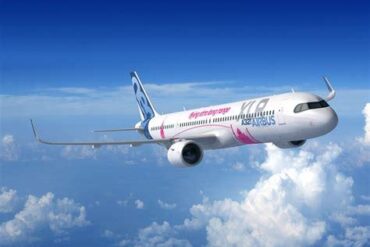
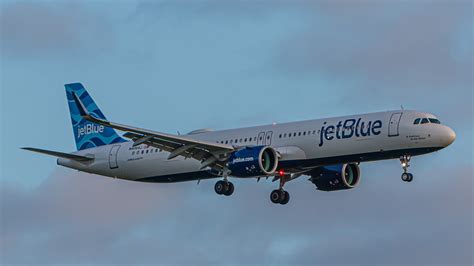
JetBlue’s reliance on the Airbus A321LR is central to its strategy. These aircraft make up over 76% of its Europe-bound departures, underscoring their importance in enabling long-haul narrowbody operations.
With 24 Mint suites and 114 economy seats, the A321LR strikes a balance between premium density and operational efficiency. Its relatively young fleet—averaging under three years—adds another layer of appeal, ensuring reliability and modern cabin standards.
Complementing this is the standard A321neo, configured with a higher seat count but still retaining premium elements. While it offers fewer Mint suites, it maintains the same two-abreast layout, preserving a sense of exclusivity even in a denser cabin.
This dual-aircraft approach allows JetBlue to match capacity with demand, deploying the right configuration depending on route dynamics and seasonal shifts.
Competing With Legacy Carriers on Experience, Not Size
JetBlue’s European playbook doesn’t rely on scale—it relies on differentiation. Legacy airlines dominate with vast fleets and alliance networks, but JetBlue counters with design-driven cabins, transparent pricing, and a consistent onboard product.
This approach resonates particularly well with travelers who value comfort without the complexity of traditional premium travel. By simplifying the experience while elevating key touchpoints, JetBlue has created a niche that feels both accessible and aspirational.
The airline’s CEO has emphasized this positioning, highlighting “thoughtful design, privacy, and hospitality” as defining features. In practice, that translates into an experience where passengers feel the upgrade—not just see it on a fare chart.
A Transatlantic Future Built on Precision
JetBlue’s 13 European routes represent more than a network—they signal a shift in how transatlantic travel can be structured. By leveraging efficient aircraft, targeted destinations, and a refined onboard product, the airline has proven that smaller planes can deliver big impact.
As competition intensifies and travelers demand more value from long-haul flights, JetBlue’s model offers a compelling blueprint. It’s not about flying the most routes or carrying the most passengers. It’s about flying smarter, designing better, and delivering an experience that stands out in a crowded sky.
And if nearly nine hours in a narrowbody aircraft once sounded like a compromise, JetBlue is making a persuasive case that it might just be the future.