JetBlue’s Airbus A220 Fleet Is Taking Narrowbody Flights Further Than Ever
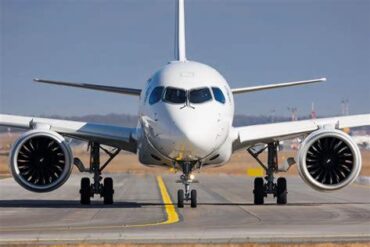
The idea of a narrowbody aircraft operating flights lasting nearly seven hours would have seemed unusual only a few decades ago. Traditionally, airlines relied on larger aircraft for longer routes because widebody jets offered the range, passenger capacity, and economics needed for extended missions. However, modern aircraft technology has changed that equation. The Airbus A220-300 has become one of the most capable small narrowbody aircraft in commercial aviation, allowing airlines to connect thinner markets with longer nonstop services.
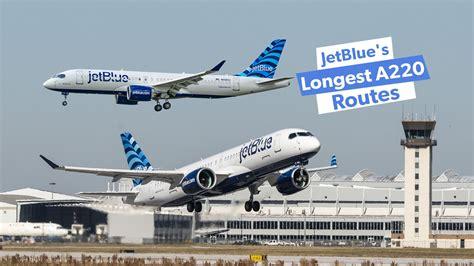
JetBlue Airways has embraced this flexibility by using its A220 fleet on some surprisingly long domestic routes. According to aviation schedule data, the airline’s longest A220 service approaches seven hours of scheduled block time, proving that smaller aircraft can now compete on routes once dominated by larger jets.
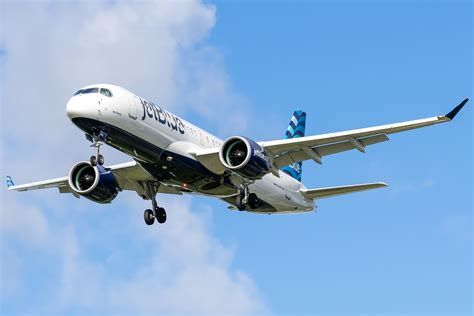
The aircraft’s efficiency, range capability, and passenger-friendly design have made it an important part of JetBlue’s strategy. Instead of operating larger aircraft with more seats than a market may require, the airline can use the A220 to match capacity with demand while still offering long-distance connectivity.
JetBlue’s Longest Airbus A220 Routes Include Nearly Seven-Hour Flights
JetBlue operates an all-narrowbody fleet consisting primarily of aircraft from the Airbus A220 and Airbus A320 families. While the airline is also known for operating longer-range Airbus A321 aircraft on transatlantic and high-demand routes, the A220-300 has created new opportunities for routes where passenger numbers do not justify a larger aircraft.
The longest scheduled A220 operation in JetBlue’s network is the route between New York John F. Kennedy International Airport (JFK) and Reno-Tahoe International Airport (RNO). The service reaches a block time of approximately 6 hours and 32 minutes, making it one of the longest nonstop missions performed by an A220 anywhere in the world.
Other long-distance A220 routes in JetBlue’s schedule also exceed five hours, highlighting the aircraft’s ability to serve markets across the United States. These flights demonstrate how airlines can use smaller aircraft to maintain frequency and provide nonstop service without committing to larger equipment.
On several routes, JetBlue’s A220 operations also complement larger aircraft flying on the same city pairs. For example, between Boston and Portland, the airline can use the A220 alongside the A321, giving passengers more schedule choices while adjusting capacity to match demand throughout the day.
Why the Airbus A220 Can Handle Long-Distance Flights
The Airbus A220 was originally developed as the Bombardier C Series before Airbus became involved with the program. Unlike traditional regional aircraft, the A220 was designed from the beginning as a modern mainline aircraft capable of efficient longer-distance operations.
The larger A220-300 model can carry up to 160 passengers in a standard high-density configuration and offers a maximum range of around 3,400 nautical miles (6,300 kilometers). This capability allows it to operate routes that overlap with larger aircraft such as the Airbus A320neo and Boeing 737 MAX families.
Compared with other popular narrowbody jets, the A220 occupies a unique position. It does not carry as many passengers as larger aircraft like the Airbus A321neo or Boeing 737 MAX 10, but its efficiency and range make it attractive for airlines serving markets with moderate demand.
The aircraft also benefits from advanced technology, including lightweight materials, highly efficient engines, and improved aerodynamics. These features reduce fuel consumption while maintaining the performance needed for longer flights.
For airlines, this creates an important advantage. A larger aircraft may offer more seats, but if those seats are not filled, operating costs increase. The A220 allows carriers to provide nonstop flights with a smaller financial risk.
JetBlue’s A220 Configuration Improves Range and Passenger Comfort
JetBlue has optimized its Airbus A220-300 fleet differently from the aircraft’s maximum certified capacity. According to aircraft configuration data, JetBlue’s A220s are arranged for approximately 140 passengers, fewer than the aircraft’s maximum exit-limited capacity.
Reducing passenger numbers lowers aircraft weight, which can improve operational flexibility. The saved weight can help support longer flights while allowing JetBlue to include passenger-focused features such as larger overhead storage bins, power outlets, USB charging ports, onboard WiFi, and entertainment systems.
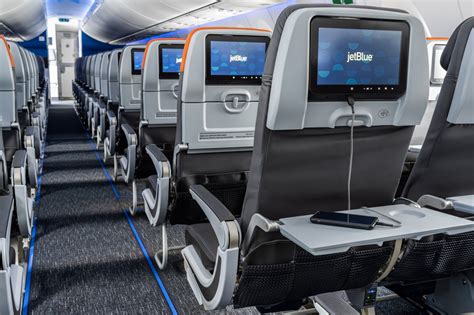
This approach reflects a broader trend in aviation. Airlines are increasingly focused on finding the right aircraft size rather than simply choosing the largest available option. A smaller aircraft with excellent efficiency can sometimes deliver better economics than a larger jet flying with empty seats.
The A220’s cabin design also helps improve the passenger experience. The aircraft features wider seats and larger windows compared with many older narrowbody jets, creating a more comfortable environment during longer flights.
The A220 Gives Airlines More Network Flexibility
The rise of the Airbus A220 shows how aircraft design is changing airline network planning. Previously, airlines often had limited choices: operate a larger aircraft or avoid serving a route. Modern narrowbody aircraft have expanded those possibilities.
For JetBlue, the A220 provides the ability to experiment with longer routes while controlling capacity. The airline can serve markets that may not generate enough demand for an Airbus A321 but still require nonstop connections.
This flexibility is especially valuable in a competitive aviation environment where airlines must carefully manage costs while responding to changing passenger demand. The A220 allows JetBlue to maintain frequency, improve scheduling options, and operate efficiently across a diverse network.
JetBlue’s Long A220 Flights Show the Future of Narrowbody Aviation
The fact that a JetBlue Airbus A220 can fly for almost seven hours highlights a major shift in commercial aviation. Aircraft size is no longer the only factor determining route capability. Efficiency, range, and smart fleet planning have become equally important.
As airlines continue searching for ways to operate profitable routes with changing passenger demand, aircraft like the Airbus A220-300 will likely play an increasingly important role. JetBlue’s longest nonstop A220 flights demonstrate that the future of long-distance travel is not limited to large aircraft.
The era of the long narrowbody flight has arrived, and the A220 is one of the aircraft leading that transformation.