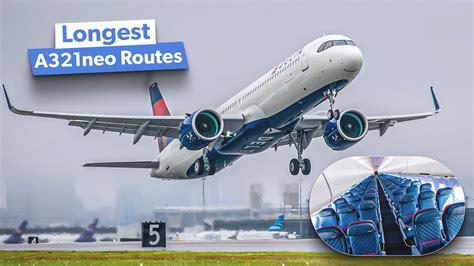
The Airbus A321neo has transformed expectations for what a single-aisle aircraft can achieve. Once considered primarily a short- and medium-haul workhorse, the aircraft is now regularly operating missions that were traditionally associated with larger jets. In 2026, several US domestic routes push the A321neo close to its operational limits, with flights stretching beyond 2,300 nautical miles (4,260 km) and producing westbound flight times approaching seven hours.
According to Cirium schedule data for 2026, American Airlines and Delta Air Lines operate seven of the longest US A321neo routes. These services connect mainland hubs with distant destinations such as Hawaii and Alaska, where geography creates some of the most demanding narrowbody missions in the country. The longest route, Dallas/Fort Worth to Anchorage, covers 2,643 nautical miles (4,894 km) and can require more than seven hours in the air when flying against strong winds.
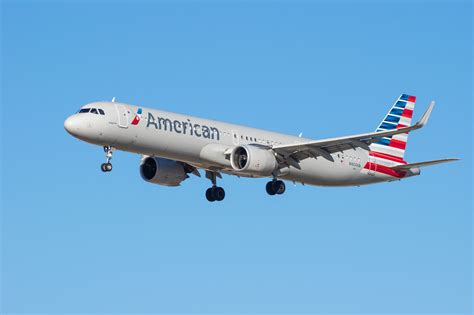
The rise of these routes highlights how modern aircraft technology has changed airline network planning. Improvements in fuel efficiency, advanced engines, aerodynamic refinements, and increased range capability allow airlines to deploy narrowbody aircraft on missions that once required Boeing 757s, Boeing 767s, or widebody aircraft.
The standard A321neo is not the same as the longer-range A321LR or A321XLR variants designed specifically for extended missions, yet its performance is impressive enough for some of the longest domestic sectors in the United States. The aircraft’s ability to combine lower operating costs with long-range capability has made it especially attractive for routes where passenger demand does not justify a larger aircraft.
Miami to Seattle: A Transcontinental A321neo Mission
At 2,367 nautical miles (4,384 km), the Miami to Seattle route is the shortest of the seven longest US A321neo operations in 2026. However, it remains a significant narrowbody mission, with westbound flights lasting approximately 6 hours and 40 minutes.
Both American Airlines and Delta Air Lines operate the route using the A321neo, making it unique among the seven longest services. American schedules around 370 flights in each direction during the year, while Delta operates a similar number with approximately 364 to 365 flights annually.
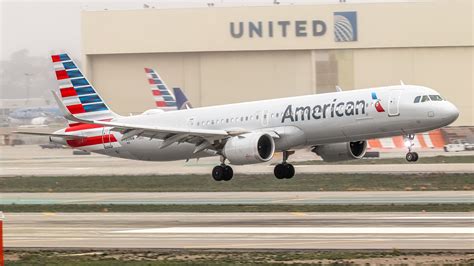
The route connects two strategically important cities rather than simply serving local passenger demand. Miami is one of American Airlines’ most important hubs, providing extensive connections throughout the Caribbean and Latin America. Seattle, meanwhile, serves as a major gateway for Delta’s Pacific and international network.
For travelers from Seattle, the Miami connection creates access to destinations throughout Central America, South America, and the Caribbean. For Miami passengers, Seattle provides additional connectivity toward Asia-Pacific markets.
The route demonstrates one of the biggest advantages of the A321neo: airlines can maintain long-distance connectivity without operating larger aircraft that may have excessive capacity. A flight that once might have required a widebody aircraft can now be efficiently operated by a modern narrowbody.
Phoenix to Kahului: The A321neo’s Highest-Frequency Hawaii Route
The Phoenix to Kahului, Maui service covers 2,472 nautical miles (4,579 km) and represents the busiest Hawaii route among the longest A321neo operations. American Airlines schedules approximately 538 flights in each direction during 2026, making it the highest-frequency route on this list.
Westbound flights generally take between 6 hours and 30 minutes and 6 hours 50 minutes, while eastbound flights benefit from favorable winds and usually complete the journey in around 5 hours 30 minutes to 5 hours 45 minutes.
The popularity of this route reflects both Hawaii’s strong tourism market and Phoenix’s importance as an American Airlines hub. Passengers from cities throughout the Southwest and Mountain West can connect through Phoenix before continuing to Maui.
The A321neo replaced older aircraft types such as the Boeing 757 and Boeing 767 on many Hawaii services. The change allowed American Airlines to reduce operating costs while maintaining the range needed for long overwater flights.
Kahului Airport’s runway length of 6,995 feet (2,132 meters) is sufficient for A321neo operations at the weights required for this route. The aircraft’s fuel capacity, combined with modern engine efficiency, allows it to complete the Pacific crossing with appropriate reserves.
Chicago O’Hare to Anchorage: Seasonal Alaska Connectivity
The route between Chicago O’Hare and Anchorage covers 2,473 nautical miles (4,580 km) and represents one of the most interesting seasonal A321neo operations in the United States.
American Airlines schedules approximately 137 flights in each direction for 2026, with service concentrated during Alaska’s busy summer tourism season. During peak months, the airline operates the A321neo on the route instead of the Boeing 737 MAX 8 used during other periods.
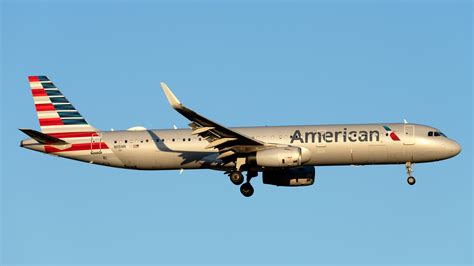
The route exists primarily because of Alaska’s summer travel demand. Anchorage acts as a gateway for visitors heading toward Denali National Park, glacier excursions, cruise departures, and wilderness destinations throughout the state.
The A321neo provides additional capacity during the busiest travel months. Compared with the 737 MAX 8, the aircraft allows American Airlines to add approximately 24 seats per departure, helping meet seasonal demand.
Unlike year-round mainland routes, Chicago-Anchorage depends heavily on tourism patterns. Winter demand is significantly lower, making daily nonstop service from the Midwest less economically attractive. This seasonal approach demonstrates how airlines use aircraft flexibility to match capacity with market conditions.
Phoenix to Kona: Reaching Hawaii’s Big Island
American Airlines operates the only nonstop A321neo service between Phoenix and Kona, covering 2,485 nautical miles (4,603 km). The airline schedules around 384 flights in each direction during 2026.
The westbound journey usually requires between 6 hours and 35 minutes and 6 hours 50 minutes, while eastbound flights typically take about six hours due to favorable wind conditions.
Kona represents a different Hawaii market compared with Honolulu or Maui. While Honolulu serves as Hawaii’s largest aviation gateway and Maui attracts a broad resort audience, the Big Island focuses heavily on outdoor experiences.
Visitors travel to Kona for destinations including Hawaii Volcanoes National Park, Mauna Kea, coastal resorts, and marine activities. The route therefore attracts a more leisure-focused passenger base.
The aircraft operates comfortably at Ellison Onizuka Kona International Airport, which features an 11,000-foot runway. The airport’s unusual open-air terminal environment also provides a distinctive arrival experience compared with traditional enclosed terminals.
Phoenix to Honolulu: The Core Mainland-Hawaii Link
The Phoenix to Honolulu route ranks third among the longest A321neo services at 2,535 nautical miles (4,696 km). American Airlines schedules approximately 515 flights in each direction for 2026.
Honolulu is the most important aviation gateway in Hawaii, serving both local passengers and visitors traveling onward throughout the islands. Unlike airports focused mainly on individual resort destinations, Daniel K. Inouye International Airport functions as the central connection point for interisland travel.
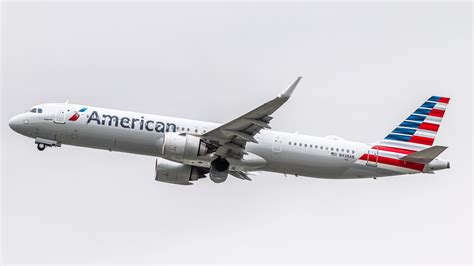
American Airlines operates up to two daily A321neo frequencies during parts of the year, competing with carriers including Southwest Airlines, Alaska Airlines, and Hawaiian Airlines.
The concentration of Hawaii routes from Phoenix is not accidental. Phoenix’s location in the southwestern United States makes it geographically favorable for Pacific crossings compared with many eastern hubs.
Four of the seven longest A321neo routes in the US connect Phoenix with Hawaii destinations, showing how the airport has become a crucial mainland gateway for American Airlines’ narrowbody Pacific operations.
Phoenix to Lihue: The Longest Phoenix-Hawaii A321neo Route
At 2,589 nautical miles (4,796 km), the Phoenix to Lihue route is the second-longest A321neo service in the United States. American Airlines operates approximately 385 flights in each direction during 2026.
The route reaches Kauai, the northernmost of Hawaii’s major islands served by Phoenix nonstop flights. Its additional distance compared with Honolulu, Maui, and Kona places greater demands on aircraft range capability.

Kauai attracts travelers looking for natural landscapes, including the Na Pali Coast, Waimea Canyon, and quieter resort areas. The market is smaller than Honolulu or Maui, which explains why the route operates a single daily frequency rather than multiple daily departures.
Lihue Airport has a runway measuring 6,500 feet (1,981 meters). While shorter than facilities at other Hawaiian airports, it remains suitable for A321neo operations under normal conditions.
The route demonstrates the aircraft’s ability to serve specialized leisure markets that previously depended on larger aircraft or less frequent service.
Dallas/Fort Worth to Anchorage: The Longest US Airbus A321neo Route
The longest Airbus A321neo route in the United States in 2026 is Dallas/Fort Worth to Anchorage, covering 2,643 nautical miles (4,894 km).
American Airlines is the sole operator of nonstop A321neo service on the route, scheduling approximately 400 flights in each direction during the year. Westbound flights can require between 6 hours 50 minutes and 7 hours 10 minutes, while eastbound returns usually take around 6 hours 30 minutes to 6 hours 40 minutes.
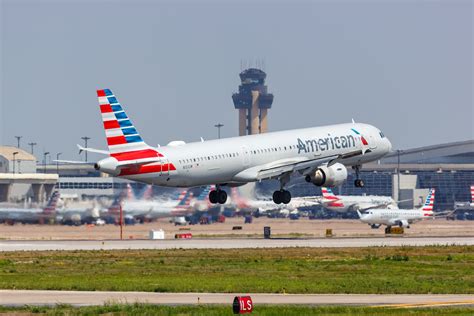
The route connects American’s largest hub with Alaska’s largest city, creating a long-distance domestic service that rivals some international narrowbody missions.
The distance exceeds many routes commonly associated with transatlantic narrowbody flying. It is longer than several European city pairs that airlines plan to operate with the Airbus A321XLR.
The success of DFW-Anchorage demonstrates the changing role of narrowbody aircraft. Modern single-aisle jets are no longer limited by the short domestic routes they traditionally served. Instead, they can now connect distant markets while offering airlines improved economics.
Dallas/Fort Worth provides another advantage: its enormous connecting network. Passengers from across the southern and eastern United States can connect through DFW before continuing to Alaska, making the route valuable beyond local Dallas demand.
How The A321neo Changed Long-Distance Domestic Flying
The seven longest US A321neo routes in 2026 reveal a major shift in airline strategy. Instead of automatically using larger aircraft for long distances, carriers now evaluate aircraft economics, passenger demand, and operational flexibility.
The A321neo succeeds because it combines lower fuel consumption, strong passenger capacity, and impressive range. For markets like Hawaii and Alaska, where demand can fluctuate seasonally, the aircraft provides the right balance between efficiency and capability.
These seven routes show that the modern narrowbody aircraft is no longer simply a regional machine. With the right conditions, the A321neo can perform flights lasting nearly seven hours, crossing oceans and vast stretches of North America while delivering the efficiency airlines need.
As airlines continue receiving advanced aircraft and expanding their networks, the boundary between narrowbody and widebody missions will continue to change. In 2026, the Airbus A321neo stands as one of the clearest examples of how technology has rewritten the possibilities of domestic air travel.