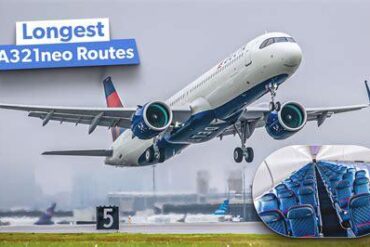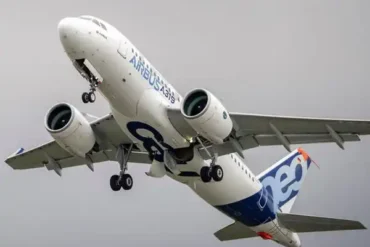
The idea that a single-aisle aircraft can stretch into territory once dominated by widebody jets would have sounded improbable two decades ago. Yet the Airbus A321neo has quietly rewritten those assumptions. With improved engines, advanced aerodynamics, and efficient cabin layouts, the aircraft has become a powerful tool for airlines seeking to balance range, capacity, and profitability. For the largest airlines in the United States—American Airlines, Delta Air Lines, and United Airlines—the aircraft now plays a crucial role in connecting distant cities that previously required larger aircraft.
Instead of treating narrowbody aircraft strictly as short-haul machines, these carriers have started exploring the outer limits of the A321neo’s operational range. Flights approaching or exceeding 3,000 miles are no longer unusual, and in some cases the aircraft is used to serve niche transcontinental or island markets where demand does not justify a widebody jet.
The competition among the three airlines provides an illuminating case study of how modern fleets shape airline networks. Each carrier has its own strategy for deploying the aircraft, and the longest A321neo routes reveal subtle differences in how they view efficiency, passenger demand, and long-distance narrowbody flying.
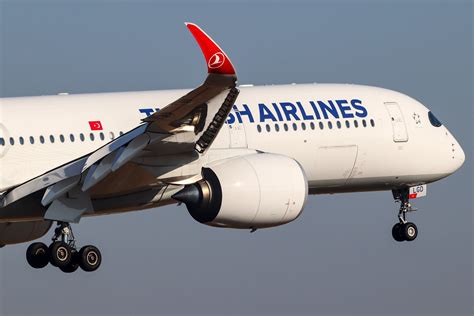
The Aircraft That Redefined Narrowbody Range
The Airbus A321neo represents the largest and most capable member of the A320neo family. Designed as an evolution of the earlier A321ceo, the aircraft incorporates a series of technological upgrades that dramatically improve performance. These improvements include more efficient engines, aerodynamic refinements, and weight optimizations that together reduce fuel consumption while extending range.
Airlines can choose between two primary engine options: the CFM International LEAP-1A and the Pratt & Whitney PW1100G geared turbofan. Both engines deliver substantial fuel efficiency improvements over earlier models while also reducing noise and emissions. The geared turbofan design, in particular, allows the engine fan and turbine to operate at different speeds, improving efficiency in a way that was not possible in previous designs.
One of the most visually distinctive features of the aircraft is its sharklet winglets, which curve upward from the wingtips. These aerodynamic structures reduce drag and improve fuel efficiency, allowing the aircraft to travel farther on the same amount of fuel. When combined with optimized flight management systems and lighter materials, the result is a narrowbody jet capable of traveling well over 3,000 miles in many configurations.
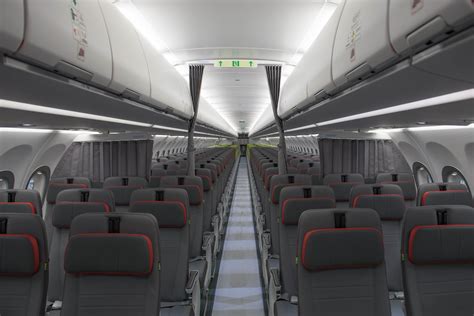
Most airlines configure the aircraft with seating for 180 to 220 passengers, although the exact layout depends on cabin class distribution and service strategy. Some carriers emphasize high-density layouts for leisure markets, while others design premium-heavy cabins aimed at business travelers on long domestic routes.
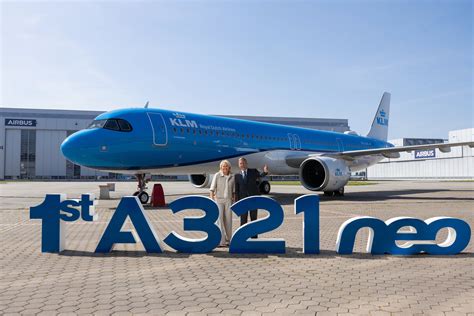
The aircraft’s flexibility has made it one of the most popular models in modern airline fleets. It can handle short regional routes just as easily as long transcontinental flights, allowing airlines to standardize fleets while maintaining operational versatility. For network planners, that flexibility is pure gold.
Why Airlines Are Pushing Narrowbody Flights Longer
Airline route planning often revolves around a deceptively simple problem: matching aircraft capacity with passenger demand. A route might have steady demand but not enough passengers to justify a widebody aircraft with 250 to 350 seats. In the past, airlines faced a difficult choice—either deploy a larger aircraft with empty seats or abandon the route entirely.
The Airbus A321neo solves this puzzle by providing enough range to connect distant cities while carrying fewer passengers than a widebody. This makes it ideal for so-called “long and thin” routes, where passenger demand exists but is not strong enough to support larger aircraft.
Another strategic advantage lies in frequency. Airlines often prefer multiple daily flights rather than a single large aircraft departure. More departures give passengers flexibility, which is especially valuable for business travelers. A fleet of efficient narrowbody aircraft allows airlines to provide that frequency without dramatically increasing operating costs.
The aircraft also fits well into the competitive environment of major airline hubs. At airports where takeoff and landing slots are limited, increasing aircraft size without jumping to widebody operations can be a clever way to increase capacity.
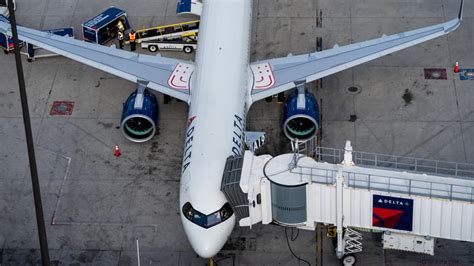
Against this backdrop, the three largest U.S. legacy carriers have incorporated the aircraft into their networks in slightly different ways. The longest A321neo routes operated by each airline illustrate how these strategies diverge.
American Airlines and Its Long-Range A321neo Strategy
Among the three carriers, American Airlines stands out for pushing the A321neo the farthest in terms of raw distance. The airline has been willing to explore routes that stretch the aircraft’s range close to its operational limits.
One of the most remarkable examples is the service connecting New York John F. Kennedy International Airport (JFK) and Edinburgh Airport (EDI). The route spans approximately 3,256 miles, placing it among the longest flights ever attempted by a standard A321neo configuration. While narrowbody aircraft have occasionally crossed the Atlantic before, using them on scheduled long-distance services was historically uncommon.
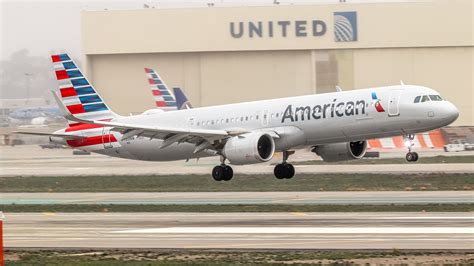
This route demonstrates a key aspect of American’s strategy: serving niche international markets that generate premium demand but may not justify widebody aircraft. Travelers between New York and Edinburgh include business passengers, tourists, and visiting families. A narrowbody aircraft allows the airline to operate the route profitably while avoiding the risk of flying a half-empty widebody.
American also uses the aircraft extensively on long domestic routes. One of the longest is the Anchorage (ANC) to Dallas/Fort Worth (DFW) service, which covers about 3,042 miles. Alaska routes like this one present unique operational challenges because winds and payload restrictions can influence aircraft performance.
The airline’s Phoenix hub plays another critical role in its A321neo network. From Phoenix Sky Harbor International Airport, American operates several long flights to Hawaii:
- Phoenix to Lihue – about 2,980 miles
- Phoenix to Honolulu – about 2,918 miles
- Phoenix to Kona – about 2,845 miles
- Phoenix to Kahului (Maui) – about 2,845 miles
These routes illustrate how the A321neo supports leisure travel to island destinations. Hawaii routes are particularly well suited for the aircraft because they involve high demand but seasonal fluctuations.
American also deploys the jet on transcontinental routes such as Miami to Seattle, a distance of roughly 2,724 miles. Flights like this demonstrate how the airline uses the aircraft as a bridge between major coastal markets.
United Airlines and the Hub-Focused Approach
While American appears comfortable pushing the aircraft’s range envelope, United Airlines takes a somewhat different approach. The airline tends to focus on using the A321neo as a high-capacity domestic connector rather than a long-distance experimental platform.
The longest scheduled route in United’s A321neo network links Washington Dulles International Airport (IAD) and San Francisco International Airport (SFO). This route measures about 2,419 miles, although the aircraft is not frequently scheduled on it.
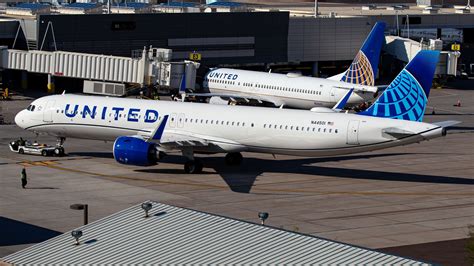
More representative of United’s strategy is the airline’s service from Chicago O’Hare International Airport (ORD) to San Juan, Puerto Rico (SJU). At around 2,072 miles, the route combines leisure demand with hub connectivity. Hundreds of flights operate annually, demonstrating that the airline values consistent utilization rather than occasional ultra-long flights.
Chicago plays a central role in United’s A321neo operations. The airline frequently deploys the aircraft on routes connecting the Midwest hub to major coastal cities, particularly San Francisco and Los Angeles. These high-volume corridors benefit from the aircraft’s increased seating capacity compared with older narrowbody models.
Another important operational base for the aircraft is Denver International Airport. United uses Denver as a central hub linking east and west coast markets, and the A321neo helps increase capacity without requiring widebody aircraft.
United’s strategy can be summarized as optimization rather than experimentation. The airline prefers using the aircraft where it provides maximum economic advantage—dense domestic corridors and hub-to-hub routes.
Delta Air Lines and the Premium Transcontinental Model
Delta Air Lines occupies an interesting middle ground between the strategies used by American and United. The airline emphasizes premium service and often deploys the A321neo on routes that combine long distance with high-yield passenger demand.
The longest A321neo route in Delta’s network connects Anchorage, Alaska (ANC) with Detroit Metropolitan Wayne County Airport (DTW). This flight covers approximately 2,985 miles, placing it among the longest narrowbody routes operated by a U.S. airline.
Seattle plays an especially important role in Delta’s long-distance narrowbody operations. The airline frequently operates A321neo flights between Seattle-Tacoma International Airport (SEA) and major destinations across the United States.
Many of these routes extend to cities in Florida, including Miami and other leisure destinations. The aircraft’s capacity and efficiency make it ideal for transporting passengers between the Pacific Northwest and the southeastern United States.
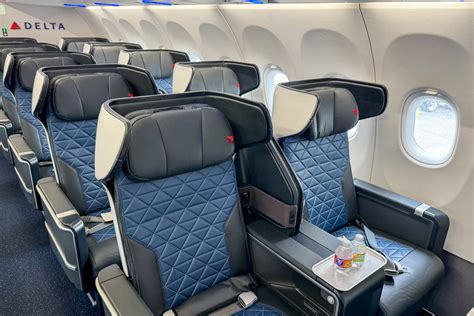
Delta also places the aircraft on premium transcontinental routes. One example is the Boston Logan International Airport (BOS) to San Francisco International Airport (SFO) service, which covers approximately 2,704 miles. Business travelers dominate these routes, and the airline configures its cabins accordingly with premium seating and upgraded in-flight amenities.
The airline’s approach highlights an important principle of airline economics: long flights are most profitable when they attract passengers willing to pay higher fares. By focusing on premium routes, Delta ensures that the aircraft’s capabilities translate directly into revenue.
The Strategic Meaning of the Longest A321neo Flights
Looking at these routes together reveals a broader story about the transformation of airline networks. The Airbus A321neo is not merely a replacement for older narrowbody jets; it is reshaping how airlines think about distance, capacity, and competition.
For decades, routes longer than about 2,500 miles typically required widebody aircraft. These larger jets were designed for long distances, but they also carried far more passengers. When demand fell below a certain threshold, airlines simply avoided opening the route.
Today, the economics have changed. Narrowbody aircraft with extended range allow airlines to experiment with routes that previously would have been financially impossible. This has led to new nonstop flights connecting cities that once required a connection through a major hub.
Another consequence is the growing importance of fleet flexibility. Airlines can shift aircraft between short domestic routes and long transcontinental services depending on demand. A single aircraft type capable of both missions simplifies scheduling and reduces maintenance complexity.
For passengers, the result is a broader network of nonstop flights. Travelers benefit from more direct connections, although they sometimes experience narrower cabins compared with widebody aircraft.
Which Airline Truly Operates the Longest A321neo Flights?
When comparing the three airlines purely on distance, American Airlines currently holds the crown. Its JFK to Edinburgh route, stretching over 3,250 miles, represents the longest Airbus A321neo operation among the three major U.S. carriers.
Delta follows closely with routes approaching the 3,000-mile range, such as the Anchorage to Detroit service. United’s longest routes are somewhat shorter, reflecting the airline’s preference for high-frequency domestic operations rather than extreme range missions.
Yet distance alone does not fully capture the story. Each airline uses the aircraft to support a distinct network philosophy:
- American Airlines pushes the aircraft’s range to open niche long-distance routes.
- Delta Air Lines deploys the jet on premium-heavy transcontinental and leisure markets.
- United Airlines focuses on hub connectivity and high-capacity domestic corridors.
All three strategies highlight the same fundamental truth: the A321neo has become one of the most versatile aircraft in modern aviation.
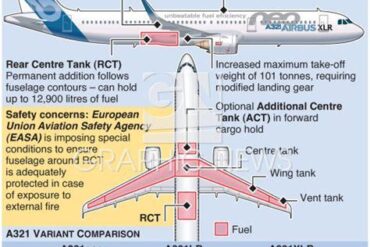
The aircraft’s ability to travel long distances while maintaining narrowbody economics is quietly reshaping airline networks around the world. As extended-range variants like the A321LR and A321XLR enter service, the boundaries will likely expand even further. Routes that once required massive twin-aisle jets may increasingly be flown by sleek single-aisle aircraft slicing across oceans and continents with surprising efficiency.
Aviation has a habit of evolving in ways that seem obvious only after the fact. The A321neo is one of those evolutionary leaps—an aircraft that quietly stretched the definition of what a narrowbody jet can do, and in the process changed how airlines connect the planet.