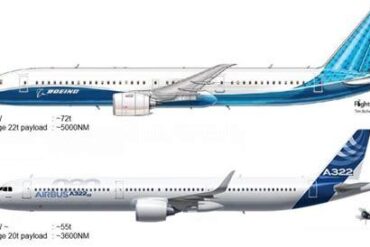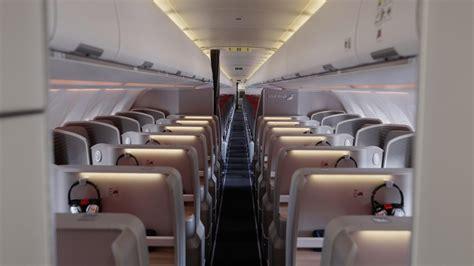
The Airbus A320 and Boeing 737 have defined modern commercial aviation for nearly half a century. These two aircraft families dominate short- and medium-haul routes worldwide, connecting millions of passengers every day while forming the backbone of airline fleets from low-cost carriers to global network operators. Their success has been built on a combination of efficiency, reliability, operational flexibility, and decades of continuous improvement.
However, aviation is approaching a major transition point. Both aircraft families are reaching the limits of their current designs, and the industry is preparing for the arrival of a new generation of single-aisle jets. Airbus and Boeing are now developing clean-sheet replacements that could enter service in the late 2030s, creating one of the most important technological competitions in commercial aviation history.
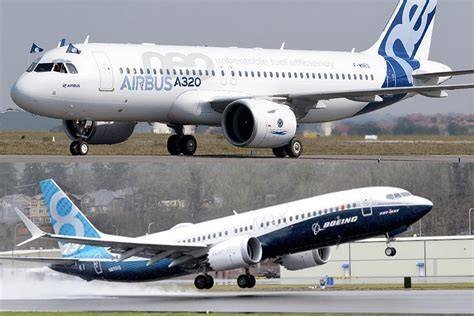
The challenge is enormous because the A320 and 737 are not simply successful aircraft; they are aviation institutions. The Airbus A320 family has evolved for almost 40 years, while the Boeing 737 lineage stretches back nearly 60 years. Both aircraft have survived multiple generations of technology changes because their basic designs were exceptionally strong.
The next generation of narrowbody aircraft must deliver dramatic improvements in fuel efficiency, emissions reduction, passenger comfort, and operating economics while maintaining the reliability airlines have come to expect. Replacing these aircraft will require more than installing new engines or improving existing systems. Airbus and Boeing will need entirely new approaches to aircraft design.
The Current Narrowbody Aircraft Market: Airbus A320neo vs Boeing 737 MAX
Today’s single-aisle market is dominated by two modernized versions of these legendary aircraft families: the Airbus A320neo and the Boeing 737 MAX.
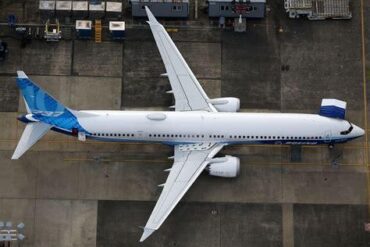
The Boeing 737 MAX entered commercial service in 2017 and currently includes several variants, including the 737 MAX 7, 737 MAX 8, 737 MAX 9, and 737 MAX 10. The aircraft uses the CFM International LEAP-1B engine, a powerplant specifically optimized for the 737 MAX platform.
Airbus launched the A320neo family in 2016, offering the A319neo, A320neo, and A321neo. Unlike Boeing’s approach, Airbus provides engine choices, with customers able to select either the CFM LEAP-1A or the Pratt & Whitney PW1100G geared turbofan.
The latest-generation aircraft have achieved impressive efficiency improvements compared with previous models. However, their biggest advantage comes from evolutionary design rather than revolutionary technology. Both the A320neo and 737 MAX rely heavily on proven airframes that have been updated with modern engines, improved aerodynamics, and upgraded systems.
The commercial battle between the two families has shifted significantly in recent years. Airbus has gained a major advantage through the popularity of the A321neo, which has become one of the most successful commercial aircraft variants ever created.
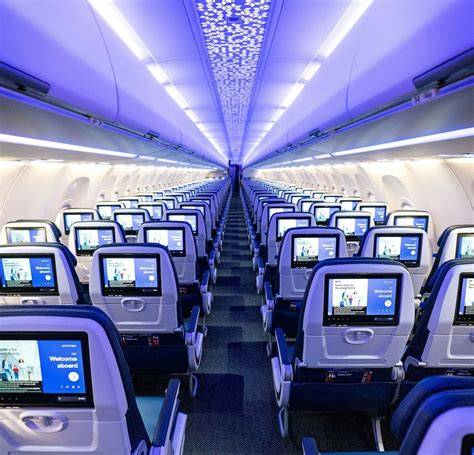
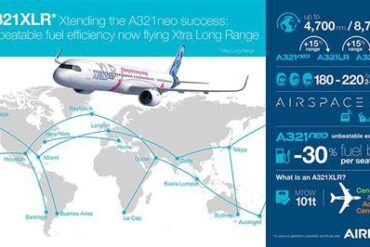
The A321neo combines high passenger capacity with impressive range, especially in its A321LR and A321XLR versions. These aircraft can operate routes that were previously dominated by larger widebody aircraft, allowing airlines to open thinner international markets with lower financial risk.
The success of the A321neo has created a strategic challenge for Boeing. While the 737 MAX 10 competes directly with the A321neo in size and operating economics, Airbus has already established a strong market position.
This competitive pressure is one of the main reasons Boeing is preparing a completely new aircraft rather than continuing to stretch the 737 platform.
Boeing’s New Small Airplane: A Clean-Sheet Successor to the 737 MAX
Boeing’s future narrowbody replacement project, often referred to as the New Small Airplane (NSA), represents the company’s attempt to regain leadership in the single-aisle market.
The program has not yet officially launched, but Boeing has been studying a new aircraft design aimed at entering service during the late 2030s. The company is expected to begin major development work after completing certification of the 777X program.
Unlike the 737 MAX, which is based on an airframe architecture dating back to the 1960s, the NSA would be a completely new aircraft. Boeing is reportedly targeting the upper end of the narrowbody segment, closer in size to the former Boeing 757-200 rather than the current 737 MAX 10.
This strategy reflects changing airline demand. Carriers increasingly want aircraft that can carry more passengers while offering longer range and lower seat costs. The success of the A321XLR demonstrates that airlines value flexibility as much as pure capacity.
The NSA is expected to feature a traditional single-aisle fuselage design but with major aerodynamic improvements. A new wing, longer and thinner than current narrowbody wings, would improve efficiency. Folding wingtips could allow the aircraft to operate from existing airport gates without requiring expensive infrastructure changes.
Advanced materials would likely play a larger role as well. Boeing’s experience with composite structures from the 787 Dreamliner and other programs could influence the design, reducing weight while improving durability.
However, Boeing faces a difficult product strategy. The 737 MAX 8 remains the most popular member of the MAX family, meaning Boeing cannot simply replace the entire 737 lineup with a larger aircraft. A future NSA family may require multiple versions, including a smaller model capable of replacing the MAX 8.
Airbus Next-Generation Single-Aisle Aircraft: The NGSA Program
Airbus is also preparing its own clean-sheet replacement known as the Next-Generation Single Aisle (NGSA) aircraft.
The European manufacturer has provided more details about its future narrowbody strategy than Boeing. Airbus plans to officially launch the program around the early 2030s, with entry into service expected in the late 2030s.
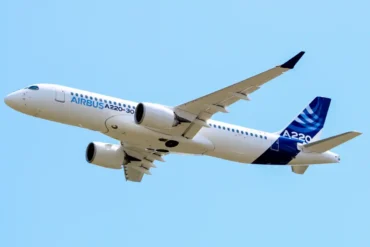
Like Boeing, Airbus is initially focusing on the larger end of the market. The first NGSA model is expected to replace the role currently occupied by the A321neo, while the smaller A320 replacement could be supported by the existing Airbus A220 family.
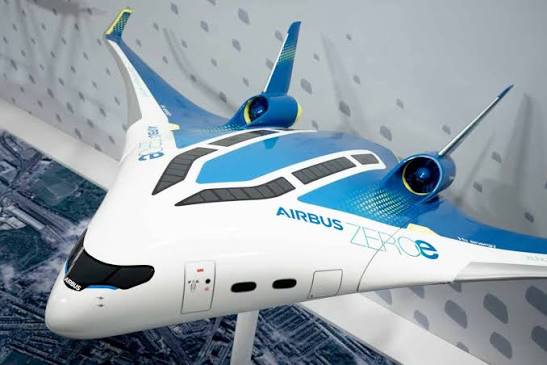
One of Airbus’ biggest advantages is its ongoing research through the Wing of Tomorrow project. The company has been testing new wing technologies designed to improve aerodynamic efficiency while reducing manufacturing complexity.
The future NGSA wing is expected to be longer, thinner, and more efficient than the current A321neo wing. Folding wingtips would allow the aircraft to maintain compatibility with existing airport infrastructure.
Airbus is also exploring lightweight materials, advanced digital systems, and electrical technologies that could reduce fuel consumption. While fully electric commercial aviation remains unrealistic for large passenger jets, hybrid systems and improved onboard energy management could contribute to efficiency gains.
The biggest question surrounding Airbus’ future aircraft is the engine choice.
The Engine Revolution: CFM RISE, Pratt & Whitney, and Rolls-Royce
For future single-aisle aircraft, engines will determine whether manufacturers achieve the next major leap in efficiency.
Airbus is closely connected with the CFM International RISE program, an advanced propulsion technology initiative designed to deliver major reductions in fuel consumption and emissions.
The RISE concept includes an open-rotor configuration, which could provide significant efficiency improvements compared with traditional turbofan engines. Airbus plans to test RISE technology using an Airbus A380 demonstrator before the end of the decade.
However, open-rotor technology presents challenges. Noise reduction, durability, maintenance requirements, and passenger acceptance remain important questions. Airlines will only adopt a revolutionary engine if it proves reliable and economically attractive.
Boeing has shown less interest in using an open-rotor engine for its future NSA aircraft. Instead, a more conventional ducted version of advanced engine technology may become the preferred solution.
CFM is likely to remain a strong competitor because Boeing has relied almost exclusively on CFM engines for the 737 family since the 1980s. Meanwhile, Pratt & Whitney is expected to compete aggressively after developing geared turbofan technology for the A320neo and Airbus A220.
Another company to watch is Rolls-Royce. Although the manufacturer has not supplied a narrowbody engine since the days of the IAE V2500 program, its UltraFan technology could potentially be adapted for future single-aisle aircraft.
The competition between engine manufacturers could become as important as the competition between Airbus and Boeing themselves.
Why Replacing the A320 and 737 Will Be Extremely Difficult
Creating a better aircraft on paper is not the hardest part of replacing the A320 and 737. The real challenge is matching their unmatched operational history.
Airlines operate narrowbody aircraft intensively. A single aircraft may complete several flights every day, placing enormous stress on engines, landing gear, and airframes. Reliability is therefore just as important as fuel efficiency.
Airbus and Boeing also benefit from enormous production systems. Airbus produces dozens of A320 family aircraft every month, while Boeing maintains a large-scale 737 production network. These manufacturing systems reduce costs and provide airlines with predictable deliveries.
A brand-new aircraft must overcome years of production learning, supplier development, and operational experience. Even excellent aircraft can face difficulties when introduced into service.
The Airbus A220 provides an example of these challenges. The aircraft itself has been praised for its efficiency and passenger experience, but production growth and engine-related issues have complicated its success.
Future aircraft must therefore combine innovation with maturity. Airlines cannot afford unreliable technology, especially when narrowbody jets represent the majority of many fleets.
The Future of Commercial Aviation’s Most Important Market Segment
The race to replace the Airbus A320 and Boeing 737 will define commercial aviation for decades. These aircraft are not just new products; they represent the future foundation of global air travel.
The winning design will likely combine advanced engines, lightweight materials, smarter digital systems, improved aerodynamics, and greater environmental efficiency. Yet success will ultimately depend on something simpler: whether airlines can operate these aircraft profitably every day.
By the late 2030s, passengers may see a new generation of single-aisle jets entering service. Airbus and Boeing will be competing not only for airline orders but for the future direction of aviation itself.
The A320 and 737 became legends because they balanced technology, economics, and reliability. Their replacements will need to achieve the same impossible-looking balance while pushing aviation into a cleaner and more efficient era.