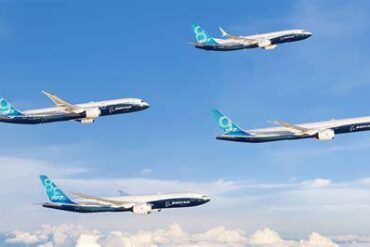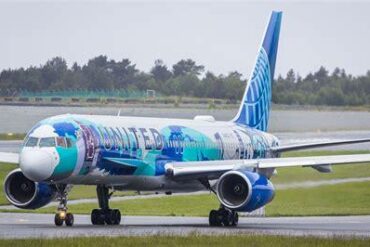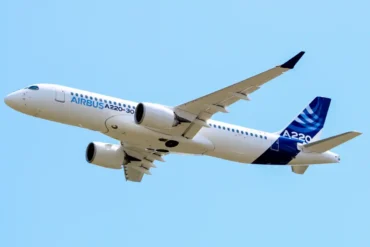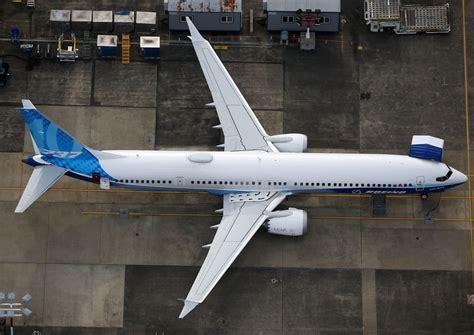
The Boeing 737 MAX 10 has emerged as a central figure in Boeing’s push to reclaim dominance in the single-aisle market. Positioned as the flagship of the MAX family, its appeal lies in promises of exceptional seat-mile economics, high capacity, and fleet commonality. But does it truly hold the title of the world’s most profitable large single-aisle aircraft? The answer remains far from definitive.
Profitability Claims Without Operational Proof
Despite Boeing’s confident marketing, the MAX 10 has yet to enter commercial service. This crucial fact renders all profitability assertions theoretical. Boeing touts the aircraft’s lowest seat-mile costs, but these are projections derived from modeling rather than operational data. Real-world profitability involves variables such as route structure, utilization rates, and shifting market dynamics—none of which can be simulated with full accuracy.
The aerospace industry has seen similar hype before. Previous extended variants like the 737-900ER and A321ceo promised unit-cost leadership, but actual returns varied significantly. As such, Boeing’s narrative aligns with a long-standing trend: promoting what is technically possible, not necessarily what is probable in operational settings.
The MAX 10’s Economic Logic – Sound but Narrow
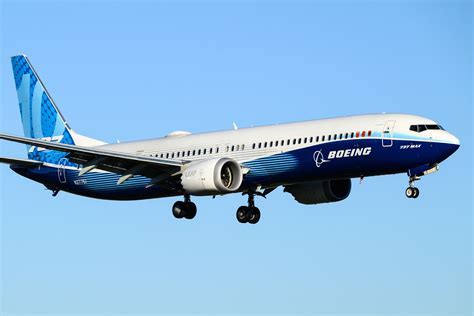
From a manufacturing and operational economics standpoint, the MAX 10 does have a compelling case under specific conditions. It is designed for maximum capacity within the 737 architecture, capable of seating 220–230 passengers in high-density configurations. This allows airlines to spread fixed costs across more seats, lowering unit cost per passenger.
Furthermore, fleet commonality with existing 737 models means reduced costs in training, maintenance, and logistics. For carriers such as United Airlines, the MAX 10 offers a strategic edge on high-demand, short- to medium-haul routes, where aircraft turnaround speed and density are key profit levers.
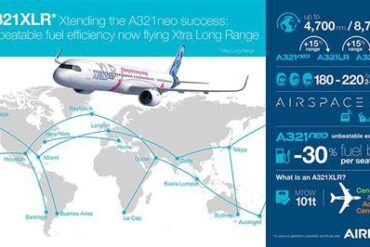
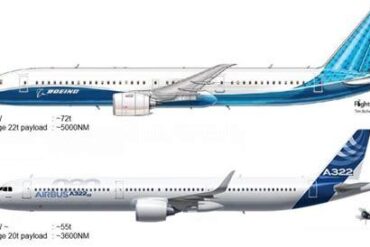
However, this logic unravels under scrutiny. The aircraft’s advertised range of 3,100 nautical miles significantly limits its versatility compared to rivals like the Airbus A321neo, which offers up to 4,000–4,700 nautical miles in its LR and XLR variants. As a result, while the MAX 10 may thrive in select networks, it is less adaptable to a broad spectrum of routes.
Fleet Decisions Shaped by Risk and Timing
One of the most significant constraints facing the MAX 10 is its ongoing certification delays. Initially planned for service in 2017, the aircraft’s timeline has slipped repeatedly, with entry into service now projected several years beyond the original target. Each delay erodes Boeing’s credibility and narrows the aircraft’s market window.
For airlines, delayed certification means re-evaluating fleet strategies. Aircraft like the A321neo, already in widespread service, offer certainty. Their residual value, secondary market strength, and proven route adaptability make them a lower-risk investment. The longer the MAX 10 remains grounded in bureaucracy, the more it becomes a gamble rather than a guarantee.
Airbus A321neo Family: A Proven Benchmark
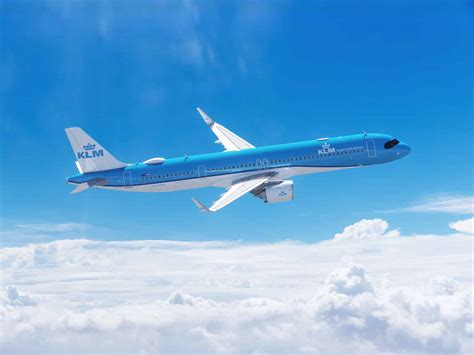
In the absence of operational data from the MAX 10, the Airbus A321neo family stands as the benchmark. The standard A321neo matches the MAX 10’s seating capacity but offers superior range and demonstrated flexibility. The A321LR and A321XLR further extend mission capability, enabling long-haul flights from narrowbody platforms.
These aircraft are already generating revenue across a wide array of markets—domestic high-density, long transcontinental, and even thin long-haul international. This performance record enhances their profitability claim with actual results, not speculative metrics.
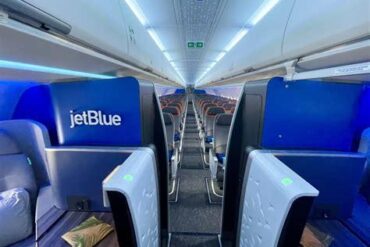
Moreover, A321neo variants are now seen as vital pillars in fleet strategies for numerous carriers, including JetBlue, Wizz Air, and Air Canada. With strong lessor confidence, these aircraft offer compelling options for both operators and financiers.
Operational Context Dictates Profitability
Aircraft profitability is never one-size-fits-all. A jet’s economics hinge on how and where it is deployed. For example, the MAX 10 may outperform all rivals on short-haul, high-density routes operated by airlines with established 737 MAX fleets. Here, its per-seat cost advantage is fully realized.
Conversely, in markets where range and flexibility are critical, the A321 family holds a commanding lead. This includes airlines aiming to connect underserved transcontinental cities or launch long-haul low-cost services—missions beyond the MAX 10’s scope.
Even airport constraints come into play. The MAX 10’s longer fuselage and lower ground clearance restrict operational performance at airports with short runways or hot/high conditions, where payload or range may be compromised. These limitations chip away at the aircraft’s revenue potential in diverse geographies.

Certification Delays and Market Confidence
Regulatory uncertainties cast a shadow over the MAX 10’s financial promise. Repeated certification setbacks not only frustrate airline planning but also diminish lessor appetite and investor confidence. A delayed entry means lost time in market, missed profit opportunities, and increased risk that airline partners pivot to Airbus.
Moreover, the delay affects residual value projections, a crucial factor for carriers relying on leasing. When an aircraft’s future is ambiguous, lease rates rise to offset risk, and operators become reluctant to bet on unproven platforms. This further compounds the MAX 10’s uphill battle.
Future Potential or Marketing Illusion?
Despite its current setbacks, the MAX 10 is not without merit. It still has the potential to emerge as a cost-leader on select routes, especially within fleets that maximize its design advantages. For ultra-high density markets like North American trunk routes or Southeast Asian low-cost corridors, the MAX 10 may well thrive—once certified and operational.
Yet, profitability supremacy requires more than theoretical efficiency. It demands scalability, flexibility, reliability, and most importantly, proof of performance. The A321neo family has already passed that test. The MAX 10 still awaits it.
Final Verdict: Not Yet the King
So, is the Boeing 737 MAX 10 really the most profitable large single-aisle aircraft? Not yet. Boeing’s case is built on sound theoretical underpinnings, but real-world performance remains unproven. The aircraft is still waiting in the wings, while the A321neo leads with presence, range, and results.
Airlines, lessors, and analysts are right to exercise caution. Profitability is context-driven, and the MAX 10’s context is incomplete. If Boeing navigates certification hurdles and airlines find ideal use cases, it could secure its spot in the profitability pantheon. Until then, the crown remains with Airbus.
In aviation, proven performance always trumps projected potential. For the 737 MAX 10, that proving ground has yet to begin.