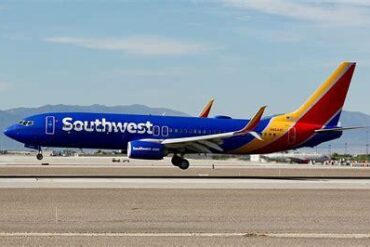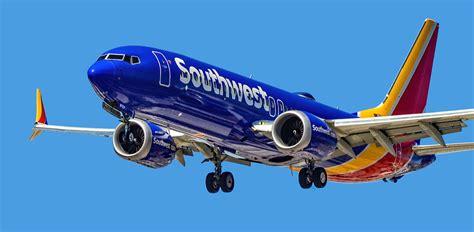
Southwest Airlines, long celebrated for its revolutionary low-cost model, finds itself at a crossroads. Over the past several years, the airline has attempted to convey to investors that it can evolve beyond its ultra-efficient, single-class formula. Assigned seating, extra-legroom rows, and tentative discussions of lounges and premium products suggest an ambition to capture higher-margin revenue. Yet the stark realities of the airline’s fleet and operational philosophy present challenges that may render premium cabins unprofitable, despite the growing importance of high-yield passengers in the U.S. airline market.
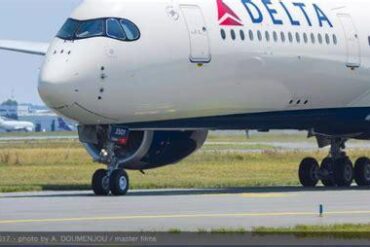
Across the industry, premium revenue has become a central driver of financial performance. Major carriers like Delta Air Lines and United Airlines rely heavily on business and first-class cabins, where fares often generate 30% to 40% of total revenue. International routes, particularly transatlantic flights such as New York JFK to London Heathrow, exemplify this shift, with passengers willing to pay thousands of dollars more for lie-flat seats, enhanced meals, and lounge access. Southwest, by contrast, cannot tap into this lucrative segment due to its all-Boeing 737 fleet and predominantly domestic, short-haul network. Even if the airline were to introduce a domestic first-class cabin, the revenue potential would pale in comparison to what legacy carriers achieve on long-haul routes.
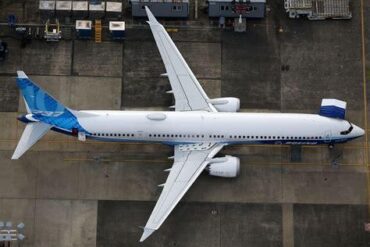
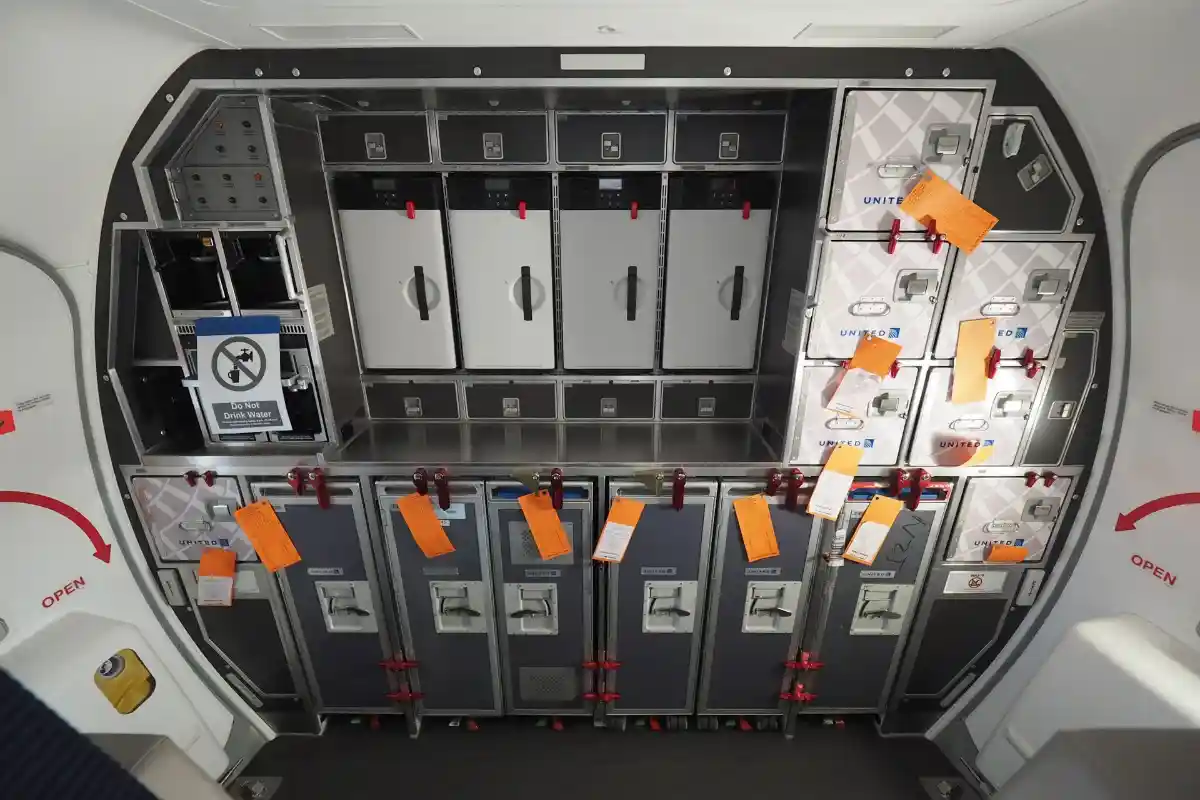
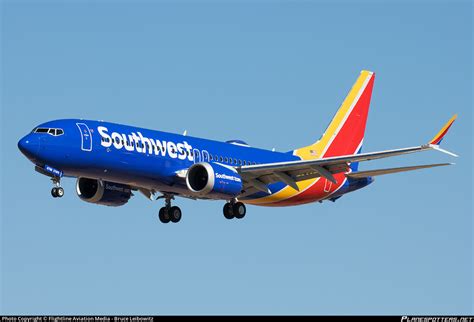
The fundamental issue lies in the design and economics of the Boeing 737. Unlike widebody aircraft, which offer expansive cabins that accommodate multiple classes, premium galleys, and storage, the 737 was engineered for simplicity and rapid utilization. Southwest’s 737-700s feature only small rear galleys, while the 737-800s and MAX 8s use full-size rear galleys but still lack forward galley capacity. Premium cabins require not just larger seats but also additional service infrastructure: ovens, storage for hot meals, and space for flight attendants to prepare an elevated experience. Retrofitting such systems on a 737 is challenging because any added space directly displaces revenue-generating economy seats. Each seat removed from the dense, single-class layout represents lost revenue that must be offset by the premium fares—an equation far less favorable on short domestic flights.
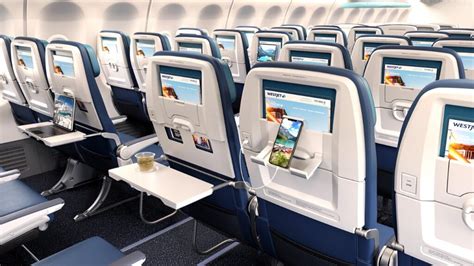
The Premium Revenue Boom Southwest Airlines Cannot Fully Access
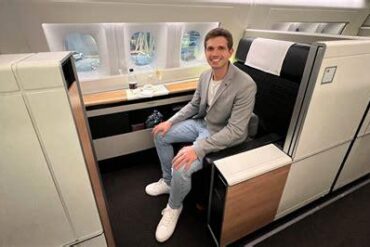
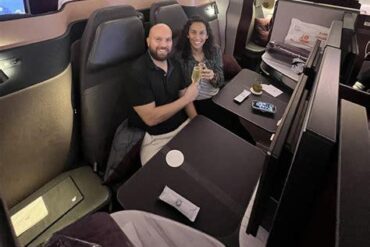
For airlines such as Delta Air Lines, United Airlines, and American Airlines, the premium travel boom has become one of the defining financial trends of the post-pandemic aviation market. Travelers increasingly demonstrate a willingness to pay significantly more for comfort, privacy, and exclusivity. On international routes, the difference between an economy ticket and a business-class seat can easily exceed several thousand dollars. These fare premiums create margins that are often impossible to replicate through economy-class sales alone.
The key distinction is that premium success at the largest U.S. airlines is closely linked to long-haul flying. Flights between North America, Europe, Asia, and the Middle East create ideal conditions for premium products because passengers spend many hours onboard and place substantial value on lie-flat beds, upgraded dining, lounge access, and personalized service. Southwest Airlines operates virtually none of these routes. Its network is overwhelmingly domestic, and its aircraft are optimized for shorter missions where premium amenities have less perceived value.
A passenger flying from Dallas to Miami may appreciate a larger seat and complimentary beverages. However, that customer is unlikely to pay the kind of fare premium seen on a flight from New York to London or Los Angeles to Tokyo. As a result, Southwest faces a structural limitation that competitors with international networks do not.
Why The Boeing 737 Was Never Built For Premium-Cabin Economics
Aircraft design plays a far greater role in airline profitability than many travelers realize. Southwest’s entire business model was built around the Boeing 737 because of its simplicity, reliability, and operational flexibility. For decades, operating a single aircraft family reduced training costs, maintenance complexity, spare-parts inventories, and scheduling challenges.
The downside is that the Boeing 737 was never intended to function as a premium-heavy revenue machine. The aircraft’s narrow fuselage limits cabin flexibility. Every square foot allocated to premium seating, catering equipment, or storage comes directly from the economy cabin. Unlike larger widebody aircraft, there is little excess space available for creative cabin layouts.
Premium passengers increasingly expect services that extend beyond the seat itself. Hot meals, expanded beverage selections, dedicated storage, premium service carts, and upgraded galley facilities all require physical space. Southwest’s fleet was configured primarily for efficiency rather than luxury. Installing additional galley infrastructure would require extensive modifications and would likely remove additional seats from aircraft already operating within carefully optimized layouts.
The Seat Count Problem That Changes The Entire Business Case
The economics become especially challenging when examining seat density. Southwest’s Boeing 737-800 and Boeing 737 MAX 8 aircraft currently feature 175 seats in a single-class arrangement. This configuration is central to the airline’s low-cost strategy because it spreads operating expenses across the largest possible number of passengers.
Introducing a premium cabin would dramatically alter this equation. A realistic domestic first-class section would likely include between 12 and 16 recliner seats. Additional space would be required for partitions, premium storage areas, and potentially expanded galley facilities. Total aircraft capacity could fall to approximately 155 to 162 seats.
At first glance, removing a dozen or so seats may not appear significant. Across hundreds of aircraft operating thousands of daily flights, however, the cumulative impact becomes enormous. Those lost seats represent revenue opportunities that disappear permanently regardless of whether the premium cabin sells out.
The challenge is straightforward. Premium passengers must generate enough additional revenue to compensate not only for their own seating footprint but also for every displaced economy passenger. On international routes, airlines often achieve this because premium fares can be several times higher than economy fares. On domestic routes, the pricing gap is substantially smaller, making the financial equation far less attractive.
Southwest’s Operational Model Was Built Around Simplicity
One of Southwest Airlines’ greatest competitive strengths has always been operational efficiency. The airline became famous for maximizing aircraft utilization through rapid turnarounds and simplified procedures. For decades, these efficiencies helped Southwest maintain lower costs than many competitors.
Premium cabins introduce complexity at nearly every stage of the operation. Boarding procedures become more structured. Premium passengers often expect priority boarding and dedicated service. Flight attendants must manage additional service requirements. Cleaning crews require more time to prepare premium seating areas. Catering logistics become significantly more complicated when hot meals enter the equation.
Even small increases in turnaround time can have major consequences throughout a network. Southwest relies heavily on aircraft completing multiple flight segments each day. A delay of just a few minutes at one airport can cascade through subsequent flights, creating network-wide disruptions.
The cumulative effect is that premium service threatens one of Southwest’s most valuable assets: operational simplicity. What appears attractive from a revenue perspective may prove damaging from a cost perspective.
Short Flights Limit The Value Of Premium Experiences
Network structure is another major obstacle. Southwest’s average flight duration is relatively short compared with many premium-heavy operations. Most passengers spend approximately 90 minutes onboard. That limited timeframe significantly reduces the value proposition of premium travel.
Comfort enhancements become more valuable as flight duration increases. A wider seat, upgraded meal, and additional workspace have obvious appeal during a six-hour transcontinental journey. On a flight lasting little more than an hour, many travelers are unwilling to pay a substantial premium for those benefits.
This is why premium products perform particularly well on routes such as Boston to Seattle, New York to Los Angeles, and international long-haul sectors. Travelers have enough time to enjoy the experience and justify the additional expense.
Southwest’s route map focuses on high-frequency domestic flying rather than extended journeys. Consequently, the airline operates in a market segment where premium demand is naturally more limited.
Catering Expectations Create Additional Challenges
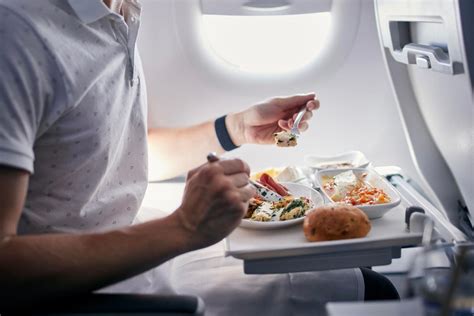
Modern premium travelers expect far more than larger seats. Dining has become a crucial element of airline differentiation. Legacy carriers increasingly market chef-designed menus, premium beverages, and upgraded service experiences as part of their premium offerings.
Southwest’s current onboard service is intentionally simple. The airline offers snacks and beverages that align with its quick-turnaround philosophy. Transitioning to a more elaborate service model would require significant investment in equipment, training, logistics, and infrastructure.
Aircraft ovens, food storage facilities, catering carts, and servicing procedures would all need to be introduced or expanded. These changes carry direct costs while simultaneously reducing available cabin space. Unlike airlines operating larger aircraft, Southwest has little room to absorb these additions without sacrificing passenger capacity.
The challenge extends beyond installation costs. Every additional service component creates recurring operational expenses that must be recovered through premium ticket sales.
Competing Against Established Premium Giants
Even if Southwest successfully solved the fleet and operational challenges, another obstacle remains: competition.
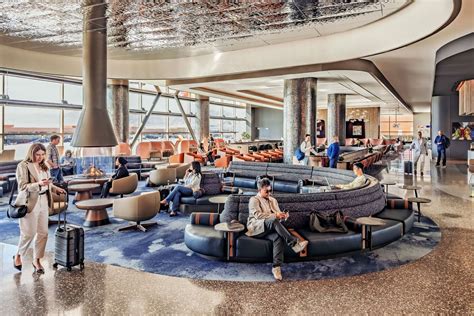
American Airlines, Delta Air Lines, and United Airlines have spent decades building sophisticated premium ecosystems. These airlines offer extensive lounge networks, elite loyalty benefits, corporate travel agreements, premium check-in facilities, and dedicated customer service channels.
Premium passengers increasingly purchase an entire travel experience rather than simply a larger seat. Lounge access, loyalty rewards, seamless connections, and airport services all contribute to the perceived value of premium travel.
Southwest currently lacks much of this infrastructure. Building it would require substantial capital investment extending well beyond aircraft interiors. The airline would effectively be entering a mature market where competitors already possess powerful advantages and deeply established customer relationships.
Creating a credible premium brand requires years of investment and consistent execution. Installing premium seats alone would not be enough to convince travelers to switch from airlines that already offer comprehensive premium ecosystems.
The Risks Of Moving Away From Southwest’s Core Identity
Perhaps the most overlooked challenge is brand positioning. Southwest became one of the world’s most successful airlines by focusing relentlessly on affordability, convenience, and simplicity. Customers know what the brand represents.
A significant premium expansion could create strategic tension within that identity. Existing customers may question fare increases or perceive resources being redirected toward products they do not use. Meanwhile, premium travelers accustomed to established business-class experiences may still prefer legacy carriers.
This creates a difficult balancing act. Southwest must generate enough premium revenue to justify the investment without weakening the characteristics that made the airline successful in the first place.
For decades, the airline’s formula centered on high-density cabins, fast aircraft utilization, simplified operations, and straightforward pricing. Premium cabins move in the opposite direction, emphasizing exclusivity, lower seat density, additional services, and greater complexity.
Why Southwest’s Boeing 737 Fleet Creates A Structural Barrier To Premium Success
Southwest Airlines’ interest in higher-margin revenue is understandable. Premium travel has become one of the most profitable segments of the airline industry, and investors increasingly expect carriers to participate in that growth. Yet the underlying economics reveal why Southwest faces a uniquely difficult challenge.
Its all-Boeing 737 fleet was optimized for efficiency rather than luxury. Its network emphasizes short domestic routes rather than long-haul journeys. Its operational model depends on speed and simplicity rather than personalized service. Its brand has historically been built around accessibility rather than exclusivity.
Taken individually, each factor presents a manageable obstacle. Combined, they form a powerful structural barrier. Premium cabins can certainly be installed on Boeing 737 aircraft, as several competitors have demonstrated. The real question is whether those cabins can generate enough revenue to compensate for lost seats, higher operating costs, slower turnarounds, increased complexity, and significant infrastructure investments.
For Southwest Airlines, the answer is far less obvious than it appears. The airline’s greatest strengths are the very reasons premium cabins may struggle to deliver meaningful profits. In many ways, the Boeing 737 fleet that helped build Southwest into the world’s largest low-cost carrier is also the reason a successful premium transformation remains so difficult to achieve.