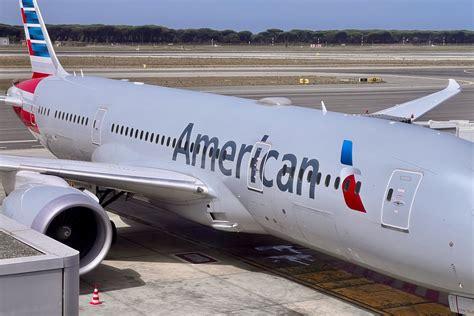
American Airlines is undergoing a seismic transformation in its domestic strategy, following the official shutdown of its Raleigh-Durham (RDU) hub. This pivotal move is not merely a retreat from a secondary market but a recalibration of its national footprint aimed at boosting profitability, strengthening competitive positioning, and anchoring long-term dominance in high-performing U.S. markets.
The decision marks a bold pivot from legacy-era commitments to a modern, profit-driven hub strategy that puts revenue optimization and operational efficiency at the center of American’s expansion blueprint.
Raleigh’s Rise and Rapid Decline: A Strategic Reassessment
Once a rising star in American Airlines’ East Coast network, the Raleigh-Durham hub played a crucial role during the 1980s and 1990s when regional connectivity was a key component of growth. But the airline’s priorities have shifted dramatically in recent years. Post-pandemic recovery pressures, evolving customer behavior, and aggressive market plays by competitors like Delta and Southwest have forced American to rethink the viability of certain mid-tier operations.
RDU’s closure wasn’t driven by a lack of local demand. The Triangle region—anchored by Raleigh, Durham, and Chapel Hill—is a tech and education powerhouse, with consistent population and economic growth. However, the hub’s limitations stemmed from its failure to drive sufficient connecting traffic and high operating costs, particularly in comparison with other mega-hubs like Charlotte and Dallas/Fort Worth.
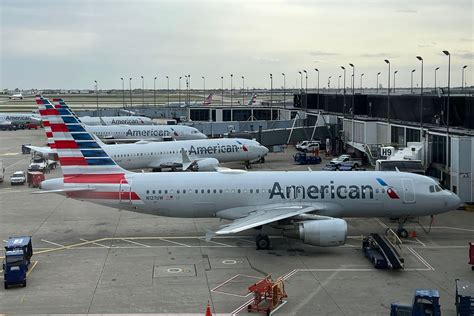
The Math Behind the Move: Yield Over Volume
American’s leadership has doubled down on unit revenue and network profitability. In an internal analysis, executives determined that flights through RDU delivered lower yield per seat mile compared to similar operations routed through larger hubs. Despite RDU’s strategic location, the economies of scale weren’t sufficient to justify its continued use as a connecting hub.
Instead, American is channeling those same resources—aircraft, crew, and gate space—into high-revenue transcontinental and long-haul domestic routes. By consolidating traffic through Dallas/Fort Worth, Charlotte, and Phoenix, the airline can offer higher frequency, improved aircraft utilization, and a more streamlined customer experience.
This move also aligns with a larger industry trend: the death of the mid-size hub. As low-cost carriers scoop up point-to-point demand and business travelers seek direct flights, airlines are increasingly focusing on fortifying mega-hub structures that offer scalability, better connectivity, and the potential for ancillary revenue growth.
Operational Realignment and Crew Redistribution
The RDU hub closure is part of a multi-layered restructuring effort that includes redistributing crews, aircraft, and route rights across more profitable destinations. American has reassigned its crew bases to Charlotte and Miami, two markets that are not only larger but also significantly more efficient in generating both domestic and international feed.
While some layoffs occurred in the RDU area, most affected employees were offered relocation opportunities or incentives for transition, underscoring American’s emphasis on preserving institutional knowledge amid a broader strategic shift.

Reinforcing Strategic Hubs: Dallas, Charlotte, and Miami
American Airlines is now investing heavily in three cornerstone hubs—Dallas/Fort Worth (DFW), Charlotte Douglas International (CLT), and Miami International Airport (MIA). Each location offers unique benefits that Raleigh could not replicate:
- Dallas/Fort Worth: Central geographic location, large O&D market, and high-frequency connections.
- Charlotte: Lower operating costs, ideal for East Coast connections, and high leisure/business travel mix.
- Miami: Strong international gateway, especially for Latin America and Caribbean-bound travel.
These hubs serve as network multipliers—each one capable of supporting a complex mesh of domestic and international traffic that drives exponential revenue per departure. The hub-and-spoke model remains alive, but it’s evolving into hub-and-superhub, with fewer, denser, and more profitable nodes.
Rebuilding from the Center Outward: Connecting the Right Dots
Instead of scattering capacity across dozens of underperforming routes, American is re-centralizing operations to maximize aircraft efficiency and frequency. One major gain has come in the form of reduced block times and improved departure punctuality, thanks to a concentration of gate operations at its core facilities.
In real terms, the RDU aircraft that once flew to marginally profitable cities like Akron or Syracuse are now deployed on ultra-dense corridors like DFW to Los Angeles or Charlotte to Chicago, where yields are higher, and competition can be met with scale.
Competitor Pressure and Market Dynamics
American’s hub realignment is also a direct response to growing pressure from Delta Air Lines and United Airlines, both of whom have successfully entrenched their operations in Atlanta, New York, and Chicago, respectively. Meanwhile, Southwest Airlines continues to challenge American’s short-haul dominance with aggressive pricing and point-to-point frequency.
By eliminating RDU and reinvesting in its power hubs, American is playing offense, ensuring its core markets are too dense, too efficient, and too valuable for competitors to replicate easily.
The Customer Impact: Fewer Connections, Better Flights
While the closure may be seen as a loss for travelers in North Carolina, it may ultimately improve the overall customer experience. Passengers originating in the Southeast will now benefit from more direct long-haul flights, fewer aircraft swaps, and better schedules from Charlotte or DFW.
Moreover, frequent flyers will notice enhanced cabin consistency and upgraded in-flight services, especially as newer narrowbody aircraft replace older regional jets. These updates are part of a broader push to deliver a premium experience to high-value customers, particularly on coast-to-coast and sunbelt routes.
A Post-RDU Strategy Rooted in Financial Discipline
American Airlines’ CEO Robert Isom emphasized that the decision was not reactive, but part of a long-planned financial blueprint. “We’re not in the business of nostalgia. We’re in the business of running a network that works—for our shareholders, our employees, and our passengers,” he stated in a recent investor call.
By shuttering less efficient nodes, American expects to save over $120 million annually, funds that will be redirected into fleet modernization, digital check-in upgrades, and international route development.

The Bigger Picture: Setting the Stage for Global Ambitions
Beyond American’s domestic recalibration, the RDU closure is a signal of more aggressive global ambitions. Freed from the drag of marginal hubs, American is looking to expand its international presence, especially in Europe and South America.
The airline recently added new nonstop service from Miami to Buenos Aires, and seasonal flights from Dallas to Rome, both of which rely heavily on strong domestic feed. Without hubs like RDU diluting network capacity, American is able to support these global ambitions with stronger load factors and higher yields.
This strategy also positions the carrier to better capitalize on international partnerships, such as its joint ventures with British Airways and Japan Airlines, which are crucial to long-haul success.
Conclusion: A Blueprint for the Modern Airline Network
The closure of Raleigh-Durham as a hub is not a retreat, but a refinement of American Airlines’ broader network vision. It represents the emergence of a leaner, smarter airline, one that understands that success in modern aviation isn’t just about serving every city, but about serving the right cities profitably, frequently, and with strategic intent.
As American Airlines doubles down on its strongest hubs, reassigns its assets, and streamlines its operations, it is doing more than just adapting—it is actively reshaping the U.S. air travel landscape.
The decision to close RDU may have clipped a wing of the airline’s legacy, but it has also given lift to a new era of precision-focused, high-performance aviation strategy that may very well redefine what dominance in the skies looks like.