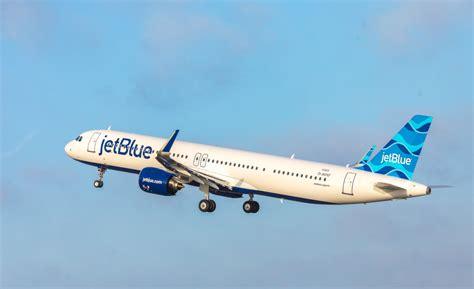
JetBlue Airways has quietly but definitively cut its transatlantic route between New York JFK and Amsterdam Schiphol, marking a major strategic pivot in its European ambitions. This decision, which surfaced following a schedule update to aviation data platform Cirium Diio, comes amid shifting slot dynamics, legal wrangling, and competitive pressure on the transatlantic front.
JetBlue’s JFK to Amsterdam Service Comes to an End
JetBlue’s ambitious launch of nonstop Airbus A321LR service from JFK to Amsterdam in August 2023 marked its bold expansion into continental Europe. This 3,166-nautical-mile route was its longest European operation to date, and at the time, symbolized the airline’s commitment to challenging legacy carriers on prized transatlantic links.
But now, less than two years later, the route has been axed. Scheduled to return for the summer 2026 season on March 29, flights have instead been scrubbed from the calendar entirely. The carrier’s attention has firmly shifted to its Boston base, which is fast becoming JetBlue’s dominant European gateway.

This is not the airline’s first retreat from a high-profile European route. The New York to London Gatwick link was previously abandoned, raising questions about route sustainability, slot access, and whether JetBlue’s A321LR fleet can consistently compete against widebody giants on longer-haul flights.
The Fight for Amsterdam: Slots, Legal Tensions & Reallocation
The termination of the JFK-Amsterdam route is particularly surprising given JetBlue’s previous legal battle to secure slots at Schiphol Airport, one of the most congested and regulated in Europe. In a move that turned heads across the industry, JetBlue had threatened legal action against Dutch authorities to obtain access.
However, slot possession and route viability are two entirely different challenges. While JetBlue succeeded in breaking into Amsterdam with summer-only rights, its load factor performance never matched expectations. Data from the U.S. Department of Transportation for January to September 2025 showed JetBlue carried 59,400 round-trip passengers, with an average seat load factor of 79%—two points below its European average.
In stark contrast, competitors on the same route fared better: Delta recorded an 86% load factor, while KLM clocked in at 88%. The subpar figures for JetBlue paint a picture of a carrier struggling to gain market traction despite the allure of the Dutch capital.
A Seasonal Struggle and Performance Disparities
JetBlue’s initial intention to operate JFK–Amsterdam year-round quickly morphed into a seasonal experiment. The route showed significant volatility. In May, the load factor slumped to 73%, and both January and February hovered at a weak 77%. While August did bring a peak of 86%—matching the European average—it was only the airline’s sixth-best performing European route for the month.
Seasonal demand fluctuations, combined with the high cost of transatlantic operations on a narrowbody aircraft, meant JetBlue faced consistent challenges in keeping this route profitable and competitive. This prompted the airline to pivot to seasonal scheduling, but even that couldn’t justify a return in 2026.

A Strategic Shift: Boston Becomes JetBlue’s Transatlantic Powerhouse
While New York is the airline’s historic stronghold, JetBlue has been methodically turning Boston Logan International Airport into its European springboard. As of July 2026, JetBlue will operate 14 daily transatlantic flights, with a whopping 64% of those departing from Boston.
This trend represents a staggering evolution:
- July 2023: Boston accounted for 33% of JetBlue’s European flights
- July 2024: 38%
- July 2025: 54%
- July 2026 (projected): 64%
With JFK-Amsterdam gone, Boston now hosts the airline’s only link to the Dutch capital. Even more significantly, JetBlue has announced brand-new routes from Boston to both Barcelona and Milan Malpensa, starting in 2026. These will be the carrier’s longest scheduled European services, eclipsing even the JFK-Amsterdam stretch.
Implications for JFK and the Future of JetBlue in New York
JetBlue’s European footprint at JFK is now reduced to just four routes:
- London Heathrow
- Paris Charles de Gaulle
- Dublin
- Edinburgh
While still robust, this marks a clear retrenchment from what was once seen as an aggressive push into the transatlantic market from New York. Notably, Edinburgh and Dublin are seasonal routes, making JetBlue’s year-round European reach from JFK even more limited.
Adding to the competitive pressure, American Airlines is expected to introduce Airbus A321XLR service to Edinburgh from JFK in 2026, which will only intensify the struggle for market share in the mid-tier transatlantic segment.
This contraction may also hint at broader strategic recalibrations. JetBlue’s reliance on A321LR aircraft—while innovative—has shown limitations over ultra-long transatlantic routes, especially in markets already saturated by widebody-equipped legacy carriers offering greater flexibility, cargo capacity, and premium cabins.
The Curious Case of Amsterdam-Boston Scheduling
While the JFK-Amsterdam route is shelved, JetBlue is maintaining service from Boston to Amsterdam, albeit with an unusual seasonal pattern. Initially operated year-round, the route flipped to summer-only, and now, for the 2025/2026 season, it will switch back to a winter-only operation.
This pattern reveals an intelligent reallocation of resources. With no JFK service in the winter, JetBlue effectively halves its operational burden while maintaining a presence in the lucrative Amsterdam market. Whether this rhythm continues into 2026 and beyond will depend on load factors and the airline’s overall European strategy.
Slot Wars at Schiphol: What Happens Now?
JetBlue’s withdrawal from JFK-Amsterdam opens the door for other carriers eager to access Schiphol’s tightly regulated slots. Etihad Airways, for instance, has only secured slots for its second-daily Amsterdam service through March 28, 2026. With JetBlue’s summer slots now available, Etihad or other contenders may swoop in.
Slot allocation at Schiphol remains one of the most politically and operationally contentious issues in European aviation. Dutch authorities have floated proposals to reduce flight movements at the airport, which could place pressure on even well-performing routes.
JetBlue’s exit underscores how volatile the intersection of legal access, slot management, and financial performance can be, particularly in a post-pandemic aviation world.
Will Boston-Lisbon Be Next?
As Boston cements its role as JetBlue’s European base, the next question looms: Will Lisbon be added to the map? JetBlue previously signaled frustration over lack of access to Lisbon’s Humberto Delgado Airport, even hinting at legal action similar to its Amsterdam push.
Should those access challenges be overcome, Boston-Lisbon could become a natural addition. The city already supports robust service to Western European leisure markets, and Lisbon offers strong year-round demand, favorable for JetBlue’s model.
Final Thoughts: A Calculated Exit in a Ruthless Market
JetBlue’s decision to pull the plug on its JFK to Amsterdam route is a pragmatic acknowledgment of market realities. Despite securing access and launching with fanfare, the airline could not overcome the low load factors, stiff competition, and seasonal variability.
Instead, it is doubling down where it sees strategic strength: Boston. The city’s increasingly dominant role in JetBlue’s European expansion reflects a shift in focus to routes with greater profitability and growth potential. With Barcelona and Milan on the way, and Lisbon potentially in the pipeline, JetBlue’s European journey is far from over—but the road no longer leads through JFK to Amsterdam.