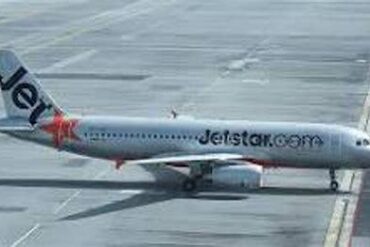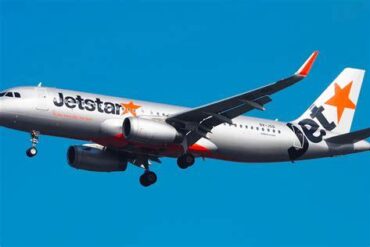
Singapore’s aviation sector is undergoing a major transformation as Jetstar Asia, the long-serving low-cost airline, prepares to exit the regional market. The shock move, effective from July 31, 2025, paves the way for Singapore Airlines and its budget arm Scoot to take over and aggressively expand into key Asian destinations—many of which were previously exclusive to Jetstar Asia. From Okinawa to Labuan Bajo, Medan, and beyond, travelers can expect broader route options, upgraded aircraft, and a more robust connectivity network across Southeast and East Asia.
Jetstar Asia’s Exit Marks a Turning Point in Southeast Asian Aviation
After over two decades of continuous service, Jetstar Asia’s sudden departure stems from escalating challenges within the low-cost airline sector. According to corporate statements, the key reasons for closure include rising fuel prices, escalating airport and security fees, and increased competition in an already saturated budget market.
In 2024 alone, Jetstar Asia transported 2.3 million passengers, accounting for 3% of Changi Airport’s total traffic, operating 180 flights weekly across 16 routes. These destinations spanned Malaysia, Thailand, Japan, Indonesia, the Philippines, and Australia. While the airline’s closure deals a blow to budget-conscious travelers, it also affects approximately 500 employees, whose roles will be eliminated.
Scoot Rapidly Fills the Void With New Destinations
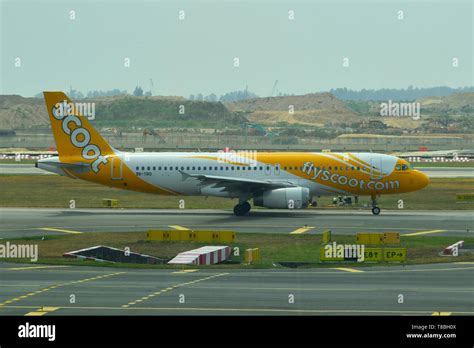
In response to Jetstar Asia’s exit, Scoot—the budget carrier wholly owned by Singapore Airlines Group—has announced strategic expansion plans to absorb the lost market share. Scoot will launch brand-new flights to Okinawa (Japan) and Labuan Bajo (Indonesia), both of which were uniquely served by Jetstar Asia. These routes are scheduled to commence between October 2025 and March 2026, subject to regulatory approvals.
- Okinawa: 4 weekly flights from Singapore
- Labuan Bajo: 2 weekly flights from Singapore
These additions will be critical, especially for tourism-linked cities like Labuan Bajo, which serves as a gateway to Komodo National Park—a UNESCO heritage site and a major draw for ecotourists.

Scoot will also expand its reach to Medan, Indonesia’s fourth-largest city, by initiating daily flights, a move aimed at increasing direct access to Sumatra.
Aggressive Frequency Expansion to Meet Demand
Scoot is not only opening new routes but also increasing flight frequencies on existing high-demand sectors:
- Bangkok: Weekly flights will rise from 35 to 42 by October 26, 2025.
- Penang: Flights will expand from 21 to 28 weekly.
- Clark (Philippines): Will see an increase from 5 to 7 flights weekly.
Additionally, Scoot is upgrading aircraft capacity on several busy routes. The Singapore–Manila route, for instance, will be partly serviced by the Boeing 787 Dreamliner, which offers over 300 seats, significantly more than the Airbus A320 and A321 currently used.
Singapore Airlines Steps Up With Complementary Enhancements
While Scoot targets value-seeking passengers, the full-service arm Singapore Airlines (SIA) is stepping in to cover premium travel demand by adjusting its own flight schedules. Between October 2025 and March 2026, SIA will:
- Increase services to Colombo (Sri Lanka)
- Add more flights to Jakarta (Indonesia)
- Boost Phuket (Thailand) frequencies
This complements Scoot’s network expansion and allows the Singapore Airlines Group to offer a comprehensive range of price points and service levels across the region.
Furthermore, the Singapore–Manila corridor will now be covered with 35 weekly SIA flights, up from 28, providing a strong business-class alternative to Scoot’s budget offering.
Support for Displaced Jetstar Asia Workers
Beyond route expansions, Singapore Airlines Group is addressing the human cost of Jetstar Asia’s shutdown. Over 500 staff members, including flight crew and ground staff, are being affected. However, SIA is stepping in with a proactive employment and compensation plan:
- 100 pilot roles and 200 cabin crew positions will be made available within Scoot and SIA.
- Redundant employees will receive severance benefits, including:
- Four weeks of pay per year of service
- Year-end bonus
- Gratitude payment
- Extended travel privileges reflecting tenure
This not only mitigates economic disruption but reflects the group’s commitment to retaining skilled talent within its aviation ecosystem.
Implications for Passengers: More Options and Bigger Planes
Travelers across Asia will feel the impact of this reshuffling almost immediately. While Jetstar Asia’s closure removes a player from the budget segment, the injection of capacity from Scoot and Singapore Airlines promises a robust recovery of service availability.
Key passenger benefits include:
- New travel destinations such as Okinawa and Labuan Bajo open up direct from Singapore.
- Larger aircraft like the Boeing 787 Dreamliner on busy routes offer greater comfort and capacity.
- Increased competition between Scoot, SIA, and remaining budget carriers may help moderate fares.
However, gaps still remain. For instance, Jetstar Asia’s exclusive routes to Broome (Australia) and Wuxi (China) have yet to be adopted by other airlines, leaving some regions temporarily underserved.
A Broader Restructuring of Asian Aviation
Jetstar Asia’s exit signals a deeper trend affecting the regional aviation market: the vulnerability of low-cost carriers in volatile economic climates. From fuel surges to airport surcharges and post-pandemic recovery challenges, LCCs have been under intense pressure.
Despite this, the Singapore Airlines Group’s multi-brand strategy—balancing Scoot for affordability and SIA for premium services—is proving to be resilient and scalable. By seizing new routes, upgrading aircraft, and offering employment lifelines, the group is not just patching holes but building a stronger and more versatile network.
Looking Ahead: October 2025 to March 2026 Will Redefine the Region’s Skyways
The months ahead will be pivotal. With over a dozen adjustments coming into effect during the October 2025–March 2026 window, passengers can expect a significantly recalibrated flight network from Singapore.
Scoot’s and SIA’s responses are more than reactive—they represent long-term positioning strategies aimed at securing dominance in Asia’s fiercely competitive travel market. The upgrades, increased destinations, and operational continuity for affected staff solidify Singapore’s role as a central aviation hub amid industry flux.
As skies get busier and new connections emerge, passengers will not only benefit from better routing and availability, but may also enjoy more dynamic fare structures, all while flying under enhanced operational frameworks.
The exit of one airline has opened the door for an even more interconnected Asia-Pacific—with Singapore Airlines and Scoot right at the heart of this new chapter.