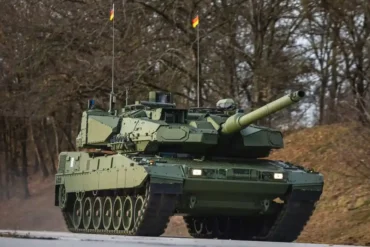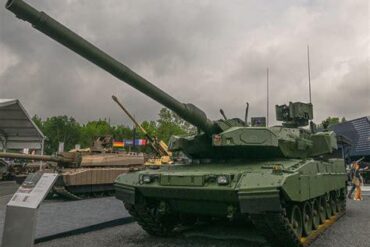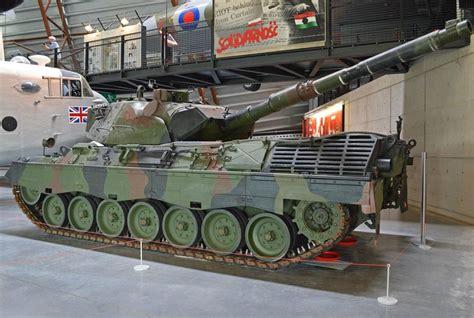
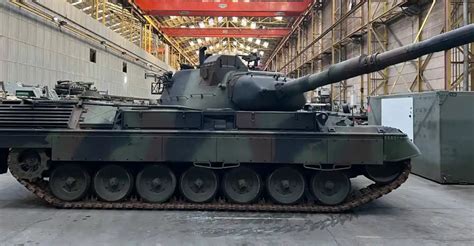
Swiss defense company RUAG has officially concluded the sale of its remaining 25 Leopard 1 tanks to Germany’s Rheinmetall Landsysteme GmbH, marking a decisive chapter in the company’s transformation and legacy asset divestiture. The move also includes the complete shutdown of RUAG’s Italian warehouse, which had long served as a storage and logistics hub for these Cold War-era armored vehicles.
The Leopard 1 tanks—once cutting-edge military hardware of the West German Army—were part of RUAG’s inventory for several years following legacy contracts and logistical entanglements dating back to the early 2000s. While the specific terms of the financial transaction have not been disclosed, RUAG has emphasized the “economically viable” nature of the deal and its strategic significance in concluding one of its most complex legacy obligations.
Legacy Complications and the GLS Legal Dispute
Before the sale to Rheinmetall Landsysteme GmbH could proceed, RUAG was embroiled in a legal dispute with Global Logistics Support GmbH (GLS), which claimed prior rights to the same batch of tanks. The matter was resolved through an out-of-court settlement, wherein GLS formally relinquished all claims to the 25 Leopard 1 vehicles. This legal clarification cleared the path for the German defense giant Rheinmetall to exercise its contractual right of first refusal.
This clause, embedded in prior contractual frameworks, granted Rheinmetall the opportunity to purchase the vehicles once ownership ambiguities were resolved. The acquisition took place in full compliance with all political, regulatory, and export control mandates, a crucial requirement given the heightened scrutiny surrounding international arms transfers—especially in the European defense ecosystem post-Ukraine invasion.
Strategic Impact on RUAG’s Transformation
The Leopard 1 deal signals more than a mere arms transaction. It represents RUAG’s continuing withdrawal from legacy platforms and facilities, a policy anchored in its transformation into a leaner, innovation-focused defense and aerospace entity. According to Dr. Jürg Rötheli, Chairman of the Board of Directors of RUAG MRO Holding AG, the closure of the Italian depot is a “critical milestone” in the firm’s restructuring process.
“We have now been able to completely close the warehouse in Italy and thus bring a complex and burdensome chapter to a close,” Rötheli stated in the official release.
The warehouse in Italy, once pivotal in RUAG’s European logistics chain, had become a costly operational burden. Shutting it down relieves the company of maintenance expenses, security obligations, and long-term storage costs tied to decommissioned military assets. It also symbolizes a broader shift by RUAG to distance itself from its past as a logistics handler and arms stockpile manager and rebrand itself as a modern defense technology partner.

Rheinmetall’s Broader Strategy and Market Position
For Rheinmetall, the acquisition of Leopard 1 tanks falls in line with its broader strategy of maintaining, refurbishing, and exporting surplus armored vehicles. With the Leopard 2 now the dominant MBT (main battle tank) in many NATO armies, the Leopard 1 is often viewed as surplus—but still valuable, especially for training, modernization, or resale to emerging markets.
The tanks acquired from RUAG may now be:
- Refurbished and upgraded for third-party sale to countries seeking low-cost armor
- Used in Rheinmetall’s own R&D and modernization initiatives
- Offered as part of bundled military aid packages in geopolitical hot spots
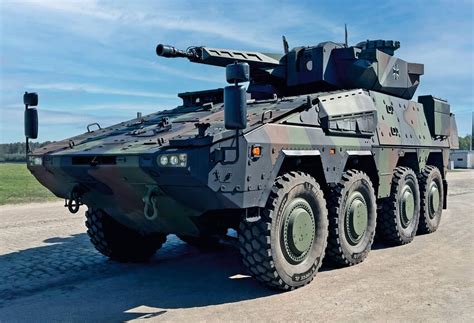
This transaction reinforces Rheinmetall’s role as Europe’s preeminent land systems integrator, with production and support capability stretching across tracked and wheeled armored vehicles, artillery systems, and tactical logistics.
Historical Significance of the Leopard 1 Platform
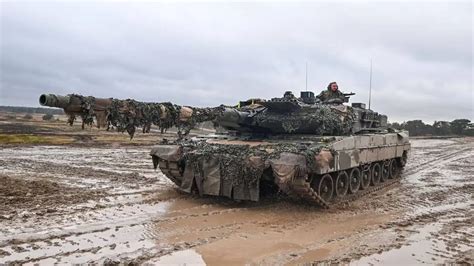
The Leopard 1, introduced in the mid-1960s, was Germany’s first post-WWII main battle tank and a cornerstone of Cold War NATO defense doctrine. Built for mobility and firepower rather than heavy armor, it was designed to counter Soviet threats across the European Central Front. Over 4,000 Leopard 1 units were produced in various variants, with deployments spanning Germany, Italy, Belgium, Brazil, and Canada.
Italy, in particular, operated its Leopard 1 fleet extensively during the late 20th century, and RUAG inherited some of these units via logistics contracts and cross-border equipment agreements. Although outdated by modern standards, the Leopard 1’s modular architecture and reliability still make it relevant for roles in secondary theaters, training environments, or as donor platforms for spare parts.
Political Sensitivities and Arms Compliance
Given the volatile global environment and increased scrutiny over arms transfers, the sale of 25 main battle tanks, even decommissioned ones, triggers a range of political oversight mechanisms. The Swiss government maintains strict export controls, particularly concerning military-grade hardware.
RUAG confirmed that the transaction met all relevant national and international regulatory protocols, including those concerning end-user certifications, re-export bans, and political approvals. Such transparency is essential for Switzerland’s neutrality posture and global image as a responsible arms producer.
Economic Context: Turning Assets into Opportunities
From a business standpoint, the deal allows RUAG to unlock the residual value of idle assets while avoiding the sunk costs associated with indefinite storage. By converting static inventory into capital, RUAG can reinvest in strategic domains such as aerospace engineering, space payload systems, and cybersecurity—areas far more aligned with its 21st-century ambitions.
The closure of the Italian warehouse marks more than a logistical footnote; it is part of a cost-cutting and asset optimization campaign that RUAG has championed in recent years. By removing costly non-core facilities from its balance sheet, the company improves its operating margins and positions itself for sustainable growth in high-tech defense markets.
What This Means for the European Defense Landscape
This transaction occurs at a time when European defense actors are rapidly recalibrating their inventories in response to Russia’s war in Ukraine, NATO realignments, and global strategic uncertainty. Even outdated platforms such as the Leopard 1 have found renewed demand in third-party and training markets. With defense budgets expanding across Eastern Europe and partner states in Africa and South America, vehicles like the Leopard 1 offer a low-cost stopgap solution until more modern systems can be acquired.
Rheinmetall’s continued acquisitions position it to play a central role in fulfilling this demand, while RUAG’s retreat from legacy assets ensures it will not remain weighed down by static capital or outdated equipment.
Conclusion: A Pragmatic End to a Legacy Burden
The sale of 25 Leopard 1 tanks from RUAG to Rheinmetall Landsysteme GmbH, alongside the closure of RUAG’s Italian warehouse, encapsulates a moment of strategic clarity and operational streamlining. It marks the conclusion of a complex, resource-draining legacy and the embrace of a future built on agility, technological innovation, and financial prudence.
By resolving legal entanglements, adhering to compliance standards, and leveraging market dynamics, both RUAG and Rheinmetall emerge from the transaction stronger and better positioned. For the broader European defense sector, the deal is yet another sign that even aging military assets can find new utility—if handled with foresight and precision.